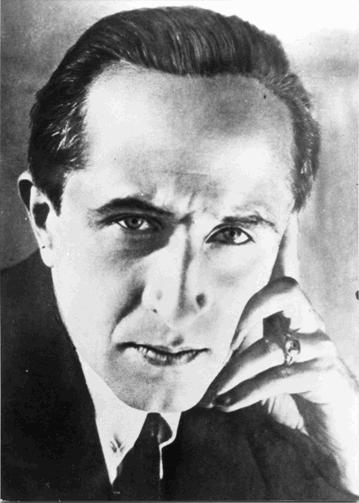
Lev Kuleshov
Soviet filmmakerWikipedia
34
MENTIONS
14
EPISODES
13
PODCASTS
Search complete. 34 mentions across 14 episodes found for "Lev Kuleshov".
Oct 2, 2026

November KellyHOST
It's, it, it's...
November KellyHOST
If you want a film studies version of this, it's the way that they teach the, the, the Kuleshov effect, right, of-
Abigail ThornHOST
Yeah
November KellyHOST
... you, you sort of, uh, you know, as a theory of montage-

NathanielHOST
The director was trying to be very coy and, and subtle with the meaning of this film that meant a lot to Rachel, enough to make her cry and die?
Jeffrey NicholsHOST
You know, they s- they do something interesting with the Kuleshov effect, where they record the faces of, uh, Greg and Earl and her mother.
Jeffrey NicholsHOST
And then they cut to, um, the video of her taking off her-
NathanielHOST
Mm
NathanielHOST
Mm-hmm.
Jeffrey NicholsHOST
When people tell her she looks beautiful, um, she can't believe them because she sees herself in the mirror and she, all she sees is, uh, her wasting away.
Jeffrey NicholsHOST
And so, um, I'm sure that that instance of the Kuleshov effect...
Jeffrey NicholsHOST
And for those of you that don't know in the audience, the Kuleshov effect is where you have, um- Two clips, two, um, images that on their own mean, like, independent things.

speaker_3HOST
Correct, and that is the genius of it.
speaker_3HOST
The terror relies on a psychological phenomenon related to the Kuleshov effect and persistence of vision.
speaker_3HOST
In the shower scene, Hitchcock utilizes editing as an act of physical violence.
speaker_2HOST
Oh, wow.

William BibbianiHOST
Against Brad Pitt's performance or against the flashback of a war zone.
William BibbianiHOST
And then we sort of Kuleshov effect.
William BibbianiHOST
We are aware now of some depth, but really it's an editing trick.
William BibbianiHOST
The dog isn't doing anything.

speaker_1HOST
Barnet was operating as a visionary documentary filmmaker within a narrative comedy.
speaker_1HOST
He takes the Kuleshov effect, the idea that you derive meaning by juxtaposing two separate shots, and he applies it to geography.
speaker_0HOST
That's a massive reach, even for you.
speaker_1HOST
He juxtaposes the artificial oppressive dollhouse of the tenement with the sprawling breathing reality of the real Moscow streets.
speaker_1HOST
It demands respect.
speaker_1HOST
Barnet wasn't just some hack winging it.
speaker_1HOST
He was trained in the workshop of the great Lev Kuleshov.
speaker_0HOST
I know who Kuleshov is.

speaker_9SOUNDBITE_SPEAKER
I am?
Matt SingerHOST
At some point in the 19- teens, a Soviet editor and theorist named Lev Kuleshov performed an experiment.
Matt SingerHOST
He spliced together a shot of a man's blank face with various other images, maybe a bowl of soup, maybe a, a dead body.
Matt SingerHOST
Audiences were asked to describe the actor's expression, and Kuleshov discovered that viewers read emotions into the blank face depending on whatever it was juxtaposed with.
Matt SingerHOST
The man seemed hungry if the shot was cut with the bowl of soup.
Matt SingerHOST
He seemed sad if he was seemingly looking at a dead body.
Matt SingerHOST
This idea that combinations of images can create combinations of ideas became known as the Kuleshov effect, and it became a foundational concept in early filmmaking and in the development of montage editing.
Matt SingerHOST
Now, about 20 years later, psychologists at Harvard University, including a man named Henry Murray, invented something called the Thematic Apperception Test.

speaker_20SOUNDBITE_SPEAKER
The study who explores the secrets of the human mind.
Matt SingerHOST
At some point in the 19-teens, a Soviet editor and theorist named Lev Kuleshov performed an experiment.
Matt SingerHOST
He spliced together a shot of a man's blank face with various other images, maybe a bowl of soup, maybe a dead body.
Matt SingerHOST
Audiences were asked to describe the actor's expression, and Kuleshov discovered that viewers read emotions into the blank face depending on whatever it was juxtaposed with.
Matt SingerHOST
The man seemed hungry if the shot was cut with the bowl of soup.
Matt SingerHOST
He seemed sad if he was seemingly looking at a dead body.
Matt SingerHOST
This idea that combinations of images can create combinations of ideas became known as the Kuleshov effect, and it became a foundational concept in early filmmaking and in the development of montage editing.
Matt SingerHOST
Now, about 20 years later, psychologists at Harvard University, including a man named Henry Murray, invented something called the thematic apperception test.

EthanHOST
It's wonderful.
DavidGUEST
It's kind of like, what was it? The Kuleshov effect or whatever, where you're watching her watch her husband do his crossword puzzle while she's thinking all these thoughts.
DavidGUEST
Yeah.
DavidGUEST
And it makes me feel differently about the shots of him.

Ali PittsHOST
My local cinema, the magnificent Ultimate Picture Palace in Oxford, is showing 1926 Japanese psychological horror A Page of Madness with a live score by Hugo Max, and that's on Wednesday the 7th of October.
Ali PittsHOST
This also seems like an opportune moment to trail the fact that the subject of the next regular episode of this show will be Lev Kuleshov's startling 1926 Gothic Western, By the Law.
Ali PittsHOST
I don't have a release date for that yet, not least because I haven't recorded it.
Ali PittsHOST
But I am scheduled to do that in October.

Mark SolomonGUEST
We make patterns in our brains, the way we stayed safe as cavemen and the way we make sense of the world as it is today.
Mark SolomonGUEST
One clear expression of this was the Kuleshov experiment.
Mark SolomonGUEST
Kuleshov was a Russian filmmaker in the early 20th century who found this still photo of an actor here.
Mark SolomonGUEST
that he used to make an experiment with how an audience would see images make sense.
Mark SolomonGUEST
He showed the picture of the man, and then a bowl of soup, and then the man again.
4 more episodes mention Lev Kuleshov.
Create an account to see the whole feed, search across every transcript, and follow the entities you care about.