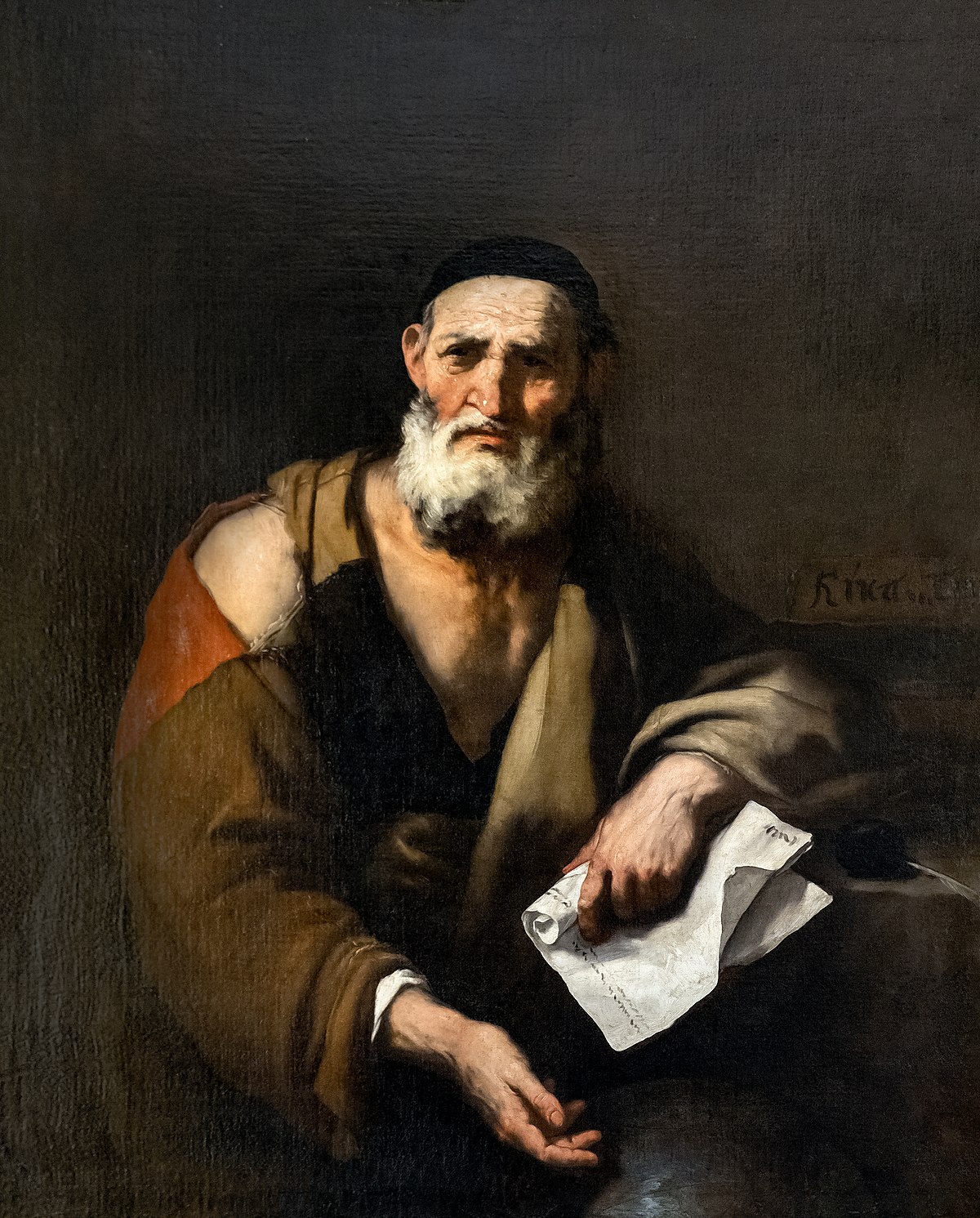
Leucippus
PhilosopherWikipedia
76
MENTIONS
19
EPISODES
16
PODCASTS
Search complete. 76 mentions across 19 episodes found for "Leucippus".
Oct 12, 2026

Leon MireNARRATOR
Aristotle had passed away in 322, and with him closed the great constructive era of Greek thought.
Leon MireNARRATOR
The Ionian philosophers had speculated on the physical constitution of the universe, the Pythagoreans on the mystical properties of numbers, Heraclitus had propounded his philosophy of fire, Democritus and Leucippus had struck out a rude form of the atomic theory, Socrates had raised questions relating to man, Plato had discussed them with all the freedom of the dialogue, while Aristotle had systematically worked them out.
Leon MireNARRATOR
the later schools did not add much to the body of philosophy.
Leon MireNARRATOR
What they did was to emphasize different sides of the doctrine of their predecessors, and to drive views to their logical consequences.

Pamela NagamiNARRATOR
Evidently the atom of Greek philosophy is an incomparably more meager idea than the atom of modern science with its formidable outfit of energies conceived as endowed with gravitation, cohesion, elasticity, radioactivity, electromagnetic properties, and chemical affinities.
Pamela NagamiNARRATOR
At the same time we must remember that all this elaborate mechanism has been built up, stone by stone, on the simple foundations supplied by the constructive genius of two Ionian Greeks, Leucippus, whose birthplace is unknown, and Democritus, a native of Abdera on the barbarous Thracian coast, enjoying little popularity in their lifetime and unhonored after death, even by the inheritors who traded most successfully on their discoveries.
Pamela NagamiNARRATOR
9.
Pamela NagamiNARRATOR
Leucippus From the scanty information supplied to us on the subject, it appears that Leucippus, the real founder of atomism, lived a little after Empedocles and Melissus.
Pamela NagamiNARRATOR
Generalizing from the doctrine of subtle material emanations as the cause of external perception put forward by the one, he would form the conception of multitudinous invisible particles as the basis of all real existence.
Pamela NagamiNARRATOR
And the infinite space of the other, dissociated from its material contents, would supply him with the equally essential conception of a void, giving full scope for their movement and interplay.
Pamela NagamiNARRATOR
For the original cause of motion, Greek atomism refers us to weight, which at that time seemed to be an inseparable quality of matter.
Pamela NagamiNARRATOR
It had not yet been discovered that the fall of heavy bodies was connected with a tendency to move towards the center of the earth, nor was it known that bodies falling in a vacuum move with equal velocities, so that collisions between them cannot occur.

JakeHOST
The universe is pure fire and chaos.
JakeHOST
So, how do you reconcile these two? How do you explain a world that clearly changes, like Heraclitus said, but also has stable, permanent structures, like Parmenides wanted? Enter Democritus and his mentor, a mysterious figure named Leucippus.
JakeHOST
We know almost nothing about Leucippus.
JakeHOST
Some historians even joke that Leucippus didn't actually exist and was just a pen name for Democritus.
JakeHOST
But Aristotle has credited them both.
JakeHOST
Together, they pulled off one of the greatest intellectual judo moves in history.

Beeswax CandleNARRATOR
In the Italian school, the order of succession is as follows.
Beeswax CandleNARRATOR
First, Pherecydes, next Pythagoras, next his son Telauges, then Xenophanes, Parmenides, Zeno of Elea, Leucippus, Democritus, who had many pupils, in particular Nausiphanes and Nausicydes, who were teachers of Epicurus.
Beeswax CandleNARRATOR
Philosophers may be divided into dogmatists and sceptics.
Beeswax CandleNARRATOR
All those who make assertions about things assuming that they can be known are dogmatists, while all who suspend their judgment on the ground that things are unknowable are sceptics.
Geoffrey EdwardsNARRATOR
Again, what is it that moves the infinite? If it moves itself it must be animate, but how can it possibly be conceived as an infinite animal? And if there is something else that moves it, there will be two infinites, that which moves and that which is moved, differing in their form and power.
Geoffrey EdwardsNARRATOR
If the whole is not continuous, but exists as Democritus and Leucippus think in the form of parts separated by void, there must necessarily be one movement of all the multitude.
Geoffrey EdwardsNARRATOR
They are distinguished, we are told, from one another by their figures.
Geoffrey EdwardsNARRATOR
But their nature is one, like many pieces of gold separated from one another.
2 HRS 52 MINS LATER
Geoffrey EdwardsNARRATOR
So the moving thing must stop somewhere, and there rest not by constraint but naturally.
Geoffrey EdwardsNARRATOR
But a natural rest proves a natural movement to the place of rest.
Geoffrey EdwardsNARRATOR
Hence Leucippus and Democritus, who say that the primary bodies are in perpetual movement in the void or infinite, may be asked to explain the manner of their motion and the kind of movement which is natural to them.
Geoffrey EdwardsNARRATOR
For if the various elements are constrained by one another to move as they do, each must still have a natural movement which the constrained contravenes, and the prime mover must cause motion not by constraint but naturally.

Pamela NagamiNARRATOR
Evidently the atom of Greek philosophy is an incomparably more meager idea than the atom of modern science with its formidable outfit of energies conceived as endowed with gravitation, cohesion, elasticity, radioactivity, electromagnetic properties, and chemical affinities.
Pamela NagamiNARRATOR
At the same time we must remember that all this elaborate mechanism has been built up, stone by stone, on the simple foundations supplied by the constructive genius of two Ionian Greeks, Leucippus, whose birthplace is unknown, and Democritus, a native of Abdera on the barbarous Thracian coast, enjoying little popularity in their lifetime and unhonored after death even by the inheritors who traded most successfully on their discoveries.
Pamela NagamiNARRATOR
Nine.
Pamela NagamiNARRATOR
Leucippus.
Pamela NagamiNARRATOR
From the scanty information supplied to us on the subject, it appears that Leucippus, the real founder of atomism, lived a little after Empedocles and Melissus.
Pamela NagamiNARRATOR
Generalizing from the doctrine of subtle material emanations as the cause of external perception put forward by the one, he would form the conception of multitudinous invisible particles as the basis of all real existence; and the infinite space of the other, dissociated from its material contents, would supply him with the equally essential conception of a void giving full scope for their movement and interplay.
Pamela NagamiNARRATOR
By a remarkable anticipation of what is now called atomicity, he supposed that these particles, or at least some of them, were supplied with little hooks by which they became woven into chains and membranes, ultimately forming, so to speak, the cell-wall of a closed universe, within which the cosmic evolution of order out of chaos was conducted.
Pamela NagamiNARRATOR
For the original cause of motion, Greek atomism refers us to weight, which at that time seemed to be an inseparable quality of matter.

Leon MeyerNARRATOR
Aristotle had passed away in 322, and with him closed the great constructive era of Greek thought.
Leon MeyerNARRATOR
The Ionian philosophers had speculated on the physical constitution of the universe, the Pythagoreans on the mystical properties of numbers, Heraclitus had propounded his philosophy of fire, Democritus and Leucippus had struck out a rude form of the atomic theory, Socrates had raised questions relating to man, Plato had discussed them with all the freedom of the dialogue, while Aristotle had systematically worked them out.
Leon MeyerNARRATOR
the later schools did not add much to the body of philosophy.
Leon MeyerNARRATOR
What they did was to emphasize different sides of the doctrine of their predecessors, and to drive views to their logical consequences.

speaker_1NARRATOR
They may be compared with the so-called motes in the air, which are seen in the sunbeams that enter through our windows.
speaker_1NARRATOR
The aggregate of such seeds, he tells us, forms the constituent elements of the whole of nature, and herein he agrees with Leucippus, while those of them which are spherical form the soul, because such figures most easily find their way through everything, and, being themselves in motion, set other things in motion.
speaker_1NARRATOR
The atomists assume that it is the soul which imparts motion to animals.
speaker_1NARRATOR
It is for this reason that they make life depend upon respiration.

Geoffrey EdwardsNARRATOR
But those who make the matter of things more than one must distinguish coming-to-be from alteration.
Geoffrey EdwardsNARRATOR
To this latter class belong Empedocles, Anaxagoras, and Leucippus.
Geoffrey EdwardsNARRATOR
And yet Anaxagoras himself failed to understand his own utterance.
Geoffrey EdwardsNARRATOR
He says, at all events, that coming-to-be and passing-away are the same as being altered; yet in common with other thinkers he affirms that the elements are many.
Geoffrey EdwardsNARRATOR
Thus Empedocles holds that the corporeal elements are four, while all the elements, including those which initiate movement, are six in number; whereas Anaxagoras agrees with Leucippus and Democritus that the elements are infinite.
Geoffrey EdwardsNARRATOR
Anaxagoras posits as elements the homeomeries, viz., bone, flesh, marrow, and everything else which is such that part and whole are the same in name and nature; while Democritus and Leucippus say that there are indivisible bodies, infinite both in number and in the varieties of their shapes, of which everything else is composed, the compounds differing one from another according to the shapes, positions, and groupings of their constituents.
Geoffrey EdwardsNARRATOR
For the views of the school of Anaxagoras seem diametrically opposed to those of the followers of Empedocles.
Geoffrey EdwardsNARRATOR
Empedocles says that fire, water air and earth are four elements and are thus simple rather than flesh bone and bodies which like these are homeomeries but the followers of anaxagoras regard the homeomeries as simple and elements whilst they affirm that earth fire water and air are composite for each of these is according to them a common seminary of all the homeomeries those then who construct all things out of a single element must maintain that coming to be and passing away are alteration for they must affirm that the underlying something always remains identical and one and change of such a substratum is what we call altering those on the other hand who make the ultimate kinds of things more than one must maintain that alteration is distinct from coming to be for coming to be and passing away result from the consilience and the dissolution of the many kinds that is why empedocles too uses language to this effect when he says there is no coming to be of anything but only a mingling and a divorce of what has been mingled thus it is clear one that to describe coming to be and passing away in these terms is in accordance with their fundamental assumption and two that they do in fact so describe them nevertheless they too must recognize alteration as a fact distinct from coming to be though it is impossible for them to do so consistently with what they say that we are right in this criticism is easy to perceive for alteration is a fact of observation while the substance of the thing remains unchanged we see it altering just as we see in it the changes of magnitude called growth and diminution nevertheless the statements of those who posit more original reals than one make alteration impossible for alteration as we assert takes place in respect to certain qualities and these qualities i mean e g hot cold white black dry moist soft hard and so forth are all of them differences characterizing the elements the actual words of empedocles may be quoted in illustration the sun everywhere bright to see and hot the rain everywhere dark and cold and he distinctively characterizes his remaining elements in a similar manner since therefore it is not possible for fire to become water or water to become earth neither will it be possible for anything white to become black or anything soft to become hard and the same argument applies to all the other qualities yet this is what alteration essentially is it follows as an obvious corollary that a single matter must always be assumed as underlying the contrary poles of any change whether change of place or growth and diminution or alteration further that the being of this matter and the being of alteration stand and fall together for if the change is alteration then the substratum is a single element i e all things which admit of change into one another have a single matter and conversely if the substratum of the changing things is one there is alteration empedocles indeed seems to contradict his own statements as well as the observed facts for he denies that any one of his elements comes to be out of any other insisting on the contrary that they are the things out of which everything else comes to be and yet having brought the entirety of existing things except strife together into one he maintains simultaneously with this denial that each thing once more comes to be out of the one hence it was clearly out of a one that this came to be water and that fire various portions of it being separated off by certain characteristic differences or qualities as indeed he calls the sun white and hot and the earth heavy and hard if therefore these characteristic differences be taken away for they can be taken away since they came to be it will clearly be inevitable for earth to come to be out of water and water out of earth and for each of the other elements to undergo a similar transformation not only then but also now if and because they change their qualities and to judge by what he says the qualities are such that they can be attached to things and can again be separated from them especially since strife and love are still fighting with one another for the mastery it was owing to this same conflict that the elements were generated from a one at the former period i say generated for presumably fire earth and water had no distinctive existence at all while merged in one there is another obscurity in the theory of empedocles are we to regard the one as his original real Or is it the many, i.e. fire and earth, and the bodies coordinate with these? For the one is an element insofar as it underlies the process as matter, as that out of which earth and fire come to be through a change of qualities due to the motion.

Alan ShawNARRATOR
Aphorism fifty-seven.
Alan ShawNARRATOR
Contemplations of nature and of bodies in their simple form break up and distract the understanding; while contemplations of nature and bodies in their composition and configuration overpower and dissolve the understanding; a distinction well seen in the school of Leucippus and Democritus as compared with the other philosophies.
Alan ShawNARRATOR
For that school is so busied with the particles that it hardly attends to the structure; while the others are so lost in admiration of the structure that they do not penetrate to the simplicity of nature.
Alan ShawNARRATOR
These kinds of contemplation should therefore be alternated and taken by turns, so that the understanding may be rendered at once penetrating and comprehensive, and the inconveniences above mentioned with the idols which proceed from them may be avoided.
9 MINS LATER
Alan ShawNARRATOR
Aphorism sixty-three.
Alan ShawNARRATOR
The most conspicuous example of the first class was Aristotle, who corrupted natural philosophy by his logic, fashioning the world out of categories, assigning to the human soul the noblest of substances, a genus from words of the second intention, doing the business of density and rarity, which is to make bodies of greater or less dimensions, that is, occupy greater or less spaces, by the frigid distinction of act and power, asserting that single bodies have each a single and proper motion, and that if they participate in any other, then this results from an external cause, and imposing countless other arbitrary restrictions on the nature of things, being always more solicitous to provide an answer to the question and affirm something positive in words than about the inner truth of things, a failing best shown when his philosophy is compared with other systems of note among the Greeks.
Alan ShawNARRATOR
For the homoiumer of Anaxagoras, the atoms of Leucippus and Democritus, the heaven and earth of Parmenides, the strife and friendship of Empedocles, Heraclitus' doctrine how bodies are resolved into the indifferent nature of fire and remolded into solids, have all of them some taste of the natural philosopher, some savor of the nature of things, and experience, and bodies.
Alan ShawNARRATOR
Whereas in the physics of Aristotle you hear hardly anything but the words of logic, which in his metaphysics also, under a more imposing name, and more forsooth as a realist than a nominalist, he has handled over again.
9 more episodes mention Leucippus.
Create an account to see the whole feed, search across every transcript, and follow the entities you care about.