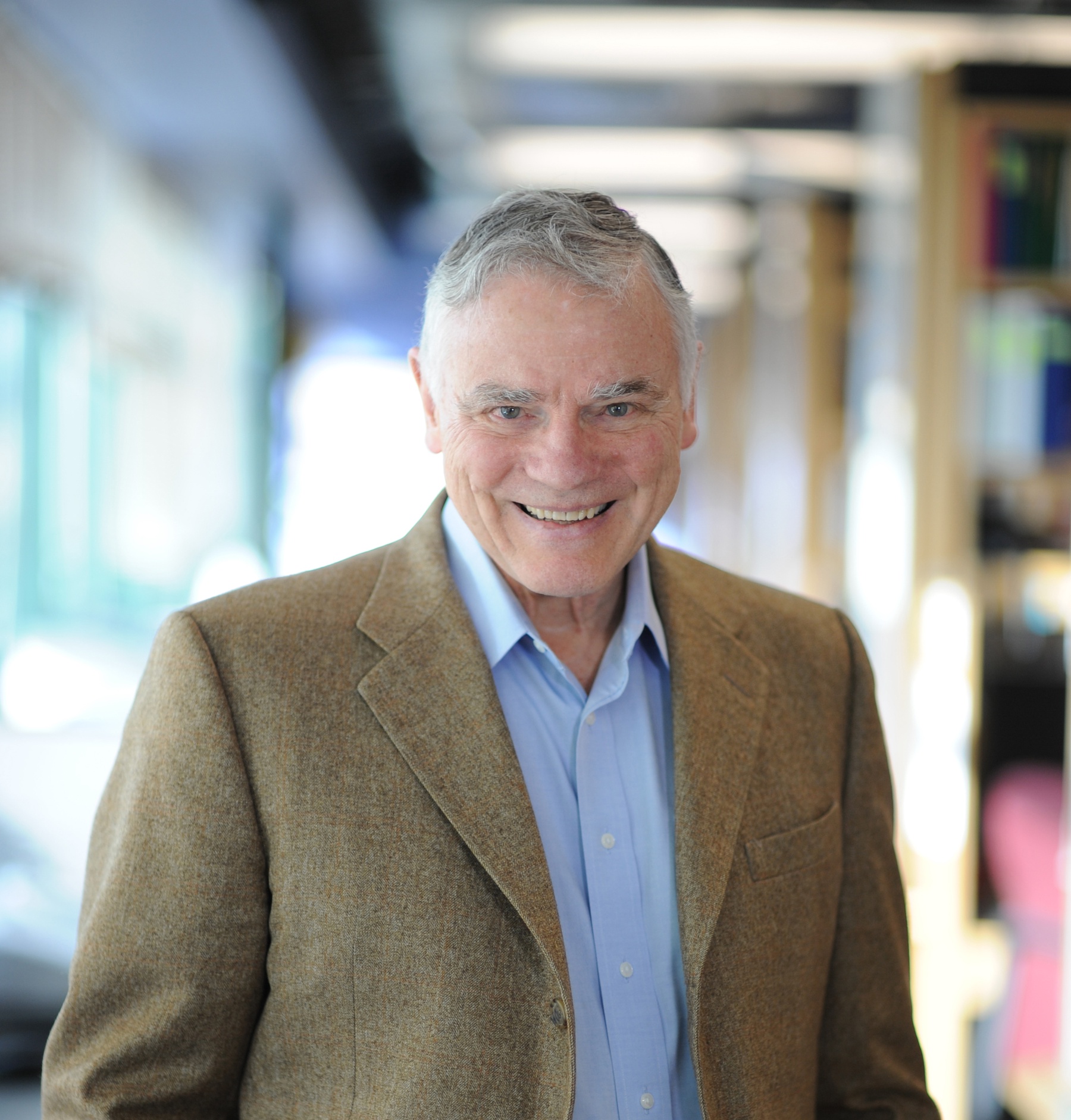
Leroy Hood
American biologistWikipedia
8
MENTIONS
7
EPISODES
7
PODCASTS
Search complete. 8 mentions across 7 episodes found for "Leroy Hood".
Sep 29, 2026

Matt AllenHOST
Right.
Dave SabeyGUEST
And as Dr. Lee Hood, who invented the first automated gene sequencers, calls it systems biology.
Dave SabeyGUEST
You need a chemist.
Dave SabeyGUEST
You need an IT specialist, an AI specialist.
Dave SabeyGUEST
So Booth Gardner appointed me to the board of the University of Washington Medical Center back in the 90s.
Dave SabeyGUEST
Mary Gates was on the big board, and Dr. Fiaco was then deemed.
Dave SabeyGUEST
He went and came down to the board and said, we've got to get this guy, Dr. Lee Hood from Caltech, who invented the first automated gene sequencers and protein sequencers, and we have to get into this new space, genetics.
Dave SabeyGUEST
And so I was always coachable as a football player and whatever else.

Phil KleinHOST
And the four P's, I guess we should talk about them, in P4 medicine stand for predictive, preventive, personalized, and participatory.
Phil KleinHOST
And apparently the framework for P4 medicine, a little trivia, was first described by Dr. Leroy Hood.
Phil KleinHOST
He was a renowned molecular biologist out of Seattle in 2008, which is actually not too far from you, Penny.
Phil KleinHOST
That's right.

Steve BannonHOST
Hang on for a second.
Steve BannonHOST
If we sign this deal that we've deputized Lee Hood to negotiate for two years.
Steve BannonHOST
Right.
Steve BannonHOST
And now we're all set to sign.

Steve KellyHOST
Mm-hmm.
Andrea RomkemaGUEST
Um, we also have GVSU has a large event coming up tomorrow with Dr. Lee Hood, who, uh, was part of the Human Genome Project.
speaker_2HOST
Oh my gosh.
Andrea RomkemaGUEST
He's gonna be speaking.

Octavian FlorescuGUEST
So InDiagnostics, the, the full name is Integrated Diagnostics, and it's kind of interesting 'cause that was the original name of my first company in 2009 when we spun out.
Octavian FlorescuGUEST
But we did a quick check, and, um, there was a company that was already called Integrated Diagnostics up in Seattle run by Leroy Hood.
Octavian FlorescuGUEST
And so we're like, "Oh, man, that's like our dream name," because it's Intel.
Octavian FlorescuGUEST
It's integrated electronics, Integrated Diagnostics.

Stephen MeyerSOUNDBITE_SPEAKER
If that happens, you're gonna degrade the information that's in that code long before you'll ever generate a new, a, a, a software program or operating system.
Stephen MeyerSOUNDBITE_SPEAKER
And, um, Richard Dawkins and many, many others biologists ha- have, have acknowledged that what we have in DNA is akin to machine code or, as Leroy Hood puts it, digital code.
Stephen MeyerSOUNDBITE_SPEAKER
It's th- it's functioning in exactly the same way.
Stephen MeyerSOUNDBITE_SPEAKER
So what we've learned from software writing and using is highly relevant to understanding whether or not the mutation selection mechanism would actually generate, could generate conceivably or realistically new information.

David SinclairHOST
There was only one answer to that one.
Matthew LaPlanteHOST
What if I told you it was not? What if I told you it was the book that I helped Lee Hood write? Would we be done? I wouldn't believe you.
Matthew LaPlanteHOST
Would we get a divorce?
David SinclairHOST
I