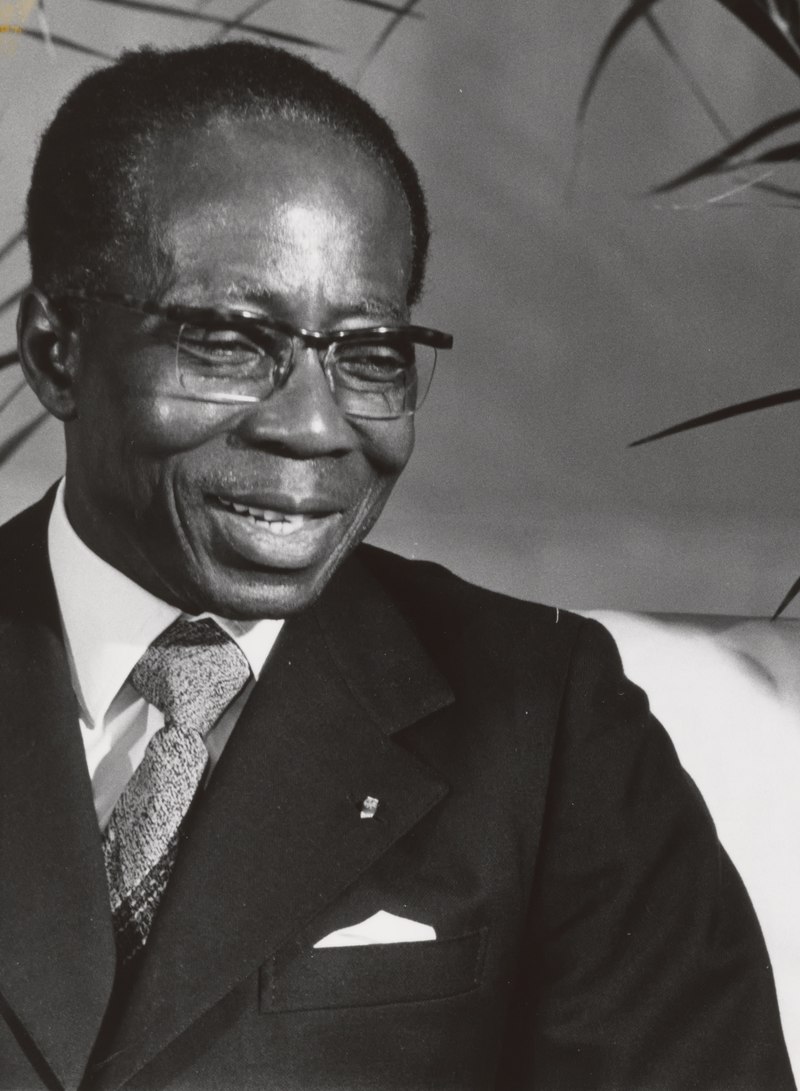
Léopold Sédar Senghor
Senegalese politicianWikipedia
29
MENTIONS
10
EPISODES
10
PODCASTS
Search complete. 29 mentions across 10 episodes found for "Léopold Sédar Senghor".
Oct 19, 2026

Ayodele AdebowaleGUEST
Uh, what is, uh, interesting to note is the day, uh, I would say immediately after the independence, many of, uh, African head of states thought, among them, uh, one of the prominent, uh, uh, head of state was Dr. Kwame Nkrumah, who thought about putting this continent together.
Ayodele AdebowaleGUEST
And the day, the first day the AU, OAU it was at that time, was outdoor, the first word, uh, or s- yeah, the first words pronounced by President Habib Bourguiba and, uh, Senghor of Senegal were, uh, in French is, "Voici enfin vécu ce rêve longtemps rêvé." At last, we are living, uh, this dream or, yeah, something that we've been dreaming of-
Kolawole FaloduHOST
Dreaming of for a long time
Ayodele AdebowaleGUEST
... for a long time.

Pete QuiñonesHOST
I know a couple people who have lived there, Americans who live there.
Pete QuiñonesHOST
E, safety of the president is a direct direct concern with the physical protection of the president, but it also carries out a preventative intelligence function.
Pete QuiñonesHOST
Following the repeated assassination attempts organized by the Organization of American States, OAS, and its affiliated organizations in the early 1960s, this section of the prefecture was was reinforced with carefully screened personnel taken from the entire security apparatus, and a tradition of very careful personnel selection persists.
Pete QuiñonesHOST
The security system of the Élysée Palace would be a serious obstacle to its seizure during a coup.
Pete QuiñonesHOST
And F, the Guard Republican.
Pete QuiñonesHOST
Though controlled by the Prefectur, this is part of the Gendarmerie and is equipped with light infantry weapons and a variety of transport equipment.
Pete QuiñonesHOST
It provides the horse... helmeted and plumed presidential guard on ceremonial occasions, but its two regiments are hard-hitting mobile forces whose neutralization would be an essential requirement in the event of a coup.
John FieldhouseGUEST
Yeah, I apologize for not muting myself earlier.

Pete QuiñonesHOST
New heading, A targets.
Pete QuiñonesHOST
These are the more heavily protected facilities with armed guards and strict access pass control, such as the Royal or Presidential Palace, the Central Police Station, and the Army HQ.
Pete QuiñonesHOST
In times of crisis, of course, such facilities may be provided with full-fledged military defenses, and in many countries, the crisis is permanent.
Pete QuiñonesHOST
Partly in order to minimize bloodshed, which could have a destabilizing effect on the situation, and partly in order to reduce the total manpower required, these targets will have to be seized by sophisticated teams using various blends of infiltration, diversion, and assault.

Elisa ProsperettiGUEST
So that's, that's one project that I'm, I'm pursuing right now.
Elisa ProsperettiGUEST
And then in terms of, um, let's say a, let's say a potential second book project in the offing, uh, I became very fascinated by, um, this politician of the, um, of, of French West Africa, of the RDA, uh, Ouezzin Coulibaly, and he's someone who died quite young and just at the eve of independence, so he hasn't been focused on as much as kind of a, you know, a Senghor or these kinds of people.
Elisa ProsperettiGUEST
But he was really an incredibly erudite intellectual and activist, and he wrote a lot before he passed.
Elisa ProsperettiGUEST
And so I'd really like to spend time thinking through, uh, what he wrote and understand what a kind of Francophone African intellectual history looks like if we move beyond an emphasis on négritude, because while that's extremely important, that's really something that's happening much more in Paris than it is, uh, happening in, in French West Africa at the time.

Elisa ProsperettiGUEST
I really want to know how people experienced colonial ideas about race, how people created their own ideas about race, and how, and in, in, in schooling contexts in particular, and how those experiences, those ideas then produced a new set of kind of intellectuals, um, of Europhone African intellectuals.
Elisa ProsperettiGUEST
So that's, that's one project that I'm, I'm pursuing right now, and then in terms of, um, let's say, let's say a potential second book project in the offing, uh, I became very fascinated by, um, this politician of the, um, of, of French West Africa, of the RDA, uh, Ouezzin Coulibaly, and he's someone who died quite young and just at the eve of independence, so he hasn't been focused on as much as kind of a, you know, a Senghor or these kinds of people, but he was really an incredibly erudite intellectual and activist, and he wrote a lot before he passed.
Elisa ProsperettiGUEST
And so I'd really like to spend time thinking through, uh, what he wrote and understand what a kind of Francophone African intellectual history looks like if we move beyond an emphasis on négritude, because while that's extremely important, that's really something that's happening much more in Paris than it is, uh, happening in, in French West Africa at the time, and so what does an intellectual history of French West Africa look like from French West Africa and not from Paris? I think that's a question I'm really, I'm really interested in pursuing.
Afua Baafi QuarshieHOST
Lovely.

Elisa ProsperettiGUEST
So that's, that's one project that I'm, I'm pursuing right now.
Elisa ProsperettiGUEST
And then in terms of, um, let's say, let's say a potential second book project in the offing, uh, I became very fascinated by, um, this politician of the, um, of, of French West Africa, of the RDA, uh, Ouezzin Coulibaly, and he's someone who died quite young and just at the eve of independence, so he hasn't been focused on as much as kind of a, you know, a Senghor or these kinds of people.
Elisa ProsperettiGUEST
But he was really an incredibly erudite intellectual and activist, and he wrote a lot before he passed.
Elisa ProsperettiGUEST
And so I'd really like to spend time thinking through, uh, what he wrote and understand what a kind of Francophone African intellectual history looks like if we move beyond an emphasis on négritude, because while that's extremely important, that's really something that's happening much more in Paris than it is, uh, happening in, in French West Africa at the time.

Jenny HansenHOST
But before I forget, you were probably right, Mark.
Jenny HansenHOST
It's, um, Leopold Senghor-
Mark LinsenmayerHOST
Okay
Jenny HansenHOST
... who was part of, what were they called, the, don't cancel me, people, this is really what it's called, Negritude movement.

James ButlerHOST
It's in a post-colonial context.
James ButlerHOST
It's in a context where, um, you know, somewhere like India or in, in Africa under, under Senghor or someone like that, you're, you're, you're trying to f- to create, um, a, a national project of some kind, right? So it makes sense there.
James ButlerHOST
And obviously for you, lots of these questions that are raised by Sartre, even though, you know, the context has changed profoundly.
James ButlerHOST
We no longer have the mass parties, we no longer have that, that, that sort of functioning interface between, um, intellectual and mass, as it were, however troublesome it might have been, and Sartre acknowledges [chuckles] that it's troublesome at various points.

Idrissa DiabiraGUEST
...
Idrissa DiabiraGUEST
when, uh, people like, uh, Léopold Sédar Senghor, Aimé Césaire, uh, was, uh, pushing for the negritude and the, the narrative in, in Africa.
Idrissa DiabiraGUEST
And in the other side, uh, people like, uh, Wole Soyinka said that the, the tiger don't claim his, his tigritude, he, he, he balances.
Idrissa DiabiraGUEST
So it is the same way.

Joshua RiversGUEST
So I was watching her performance, and I was thinking about my questions about this film.
Joshua RiversGUEST
So here you have this Léopold Senghor, the first Senegalese president, who was also a poet connected to the Negritude movement.
Joshua RiversGUEST
He is this magisterial figure, and you have this otherwise really an exciting and encha- enchanting moment in world history where world leaders, Black leaders, um, Duke Ellington descends on Dakar for this ostensible celebration of Negro arts.
Joshua RiversGUEST
But as I was watching it, I was so struck by the kind of pomp and ceremony and the pomp and colonial ceremony of the world's first Negro arts fair.