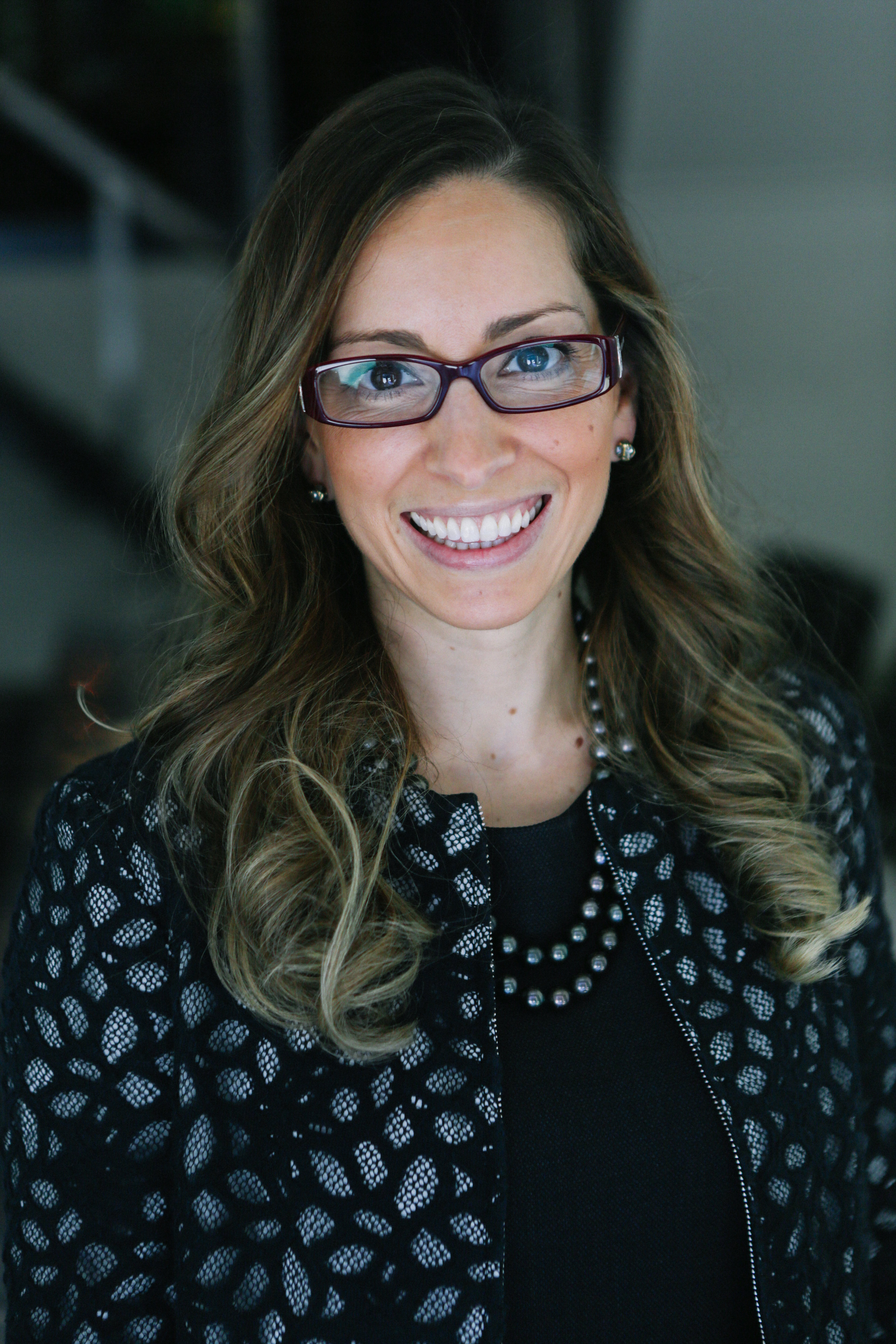
Leah Solivan
Entrepreneur and former CEO of TaskRabbit
16
APPEARANCES
10
PODCASTS
Sep 1, 2026


Mike HoffmanHOST
And I'm curious, how do you see that manifesting itself within organizations and how are you managing it? Leah, let's start with you.

Leah SolivanGUEST
I mean, as an investor, I am certainly seeing sort of the democratization of being able to create, create products, create apps without having to have a deep technical engineering background, which I think is a very good thing.
Leah SolivanGUEST
I also agree with you though, Joanna, like keeping the human in the loop, keeping the empathy.
Leah SolivanGUEST
And what I am excited about is the opportunity for humans to really be there to provide what we are uniquely good at that the AI cannot replace, right? And that's the power.
Leah SolivanGUEST
It's like, let's hand over all the commoditizations and all of the coding and the things that we as humans may not need to do anymore as much.
Leah SolivanGUEST
And I think I have a whole theory too around what kids should be studying in college right now.
20 MINS LATER


Stephanie CartinHOST
Tell me all the things you're up to now and we'll dive into all the good stuff.
Leah SolivanGUEST
I mean, it's so interesting because for so long, I struggled with the fact that I felt like TaskRabbit was my identity.
Leah SolivanGUEST
I'm sure you can relate, right? Like with everything you've built too, it's so hard.
Leah SolivanGUEST
But once I moved over to the investing side and I started backing entrepreneurs myself and working closely with teams, I realized that everything I had built at TaskRabbit gave me the credibility, gave me the value add to be a great investor and to be a great partner.
Stephanie CartinHOST
Would love to hear from you, Leah, of when you're getting pitches from founders, what do you look for and how do you decide who do you want to take a meeting with? And ultimately, how do you decide who you want to invest in?

0:10

So I'm going to ask Leah Sullivan with leahsullivan.com, what is a secret you can share with our listeners?
Leah SolivanGUEST
And if you can approach every conversation, I think with that humility and curiosity, that's when you can make real connections with people.
Leah SolivanGUEST
I think a lot of times it can feel intimidating to talk to you know, leaders that have been really successful.
Leah SolivanGUEST
Yeah, I think one thing that's really interesting just about your model in general, too, and your approach, back to the topic around authenticity, I think that particularly in this day and age, the consumer is looking for not just to buy a product, but is looking to connect with a brand in an authentic way.
Leah SolivanGUEST
And with someone like Lauren, who obviously has incredible taste, right, and an ability to curate, you know, a marketplace, I think consumers are able to find people, influencers that they trust to make those buying decisions and just shop easier and faster.
Leah SolivanGUEST
And, you know, I had growing up as well, just like a lot of discipline, a lot of focus.
Leah SolivanGUEST
And as you meet with organizations, both sort of large and small, do you see opportunities where that framework comes into play and how you incorporate it into your value add as well?

Nate AmidonGUEST
And if you're not aligned on where to go, that's a problem, right? I mean, if you fly faster in the wrong direction, that's not good.

Richard GearhartHOST
So how did it feel to walk into that office at IBM and tell them that you were leaving and starting a new company in a market that really nobody had ever even heard of before?
Leah SolivanGUEST
I started out as a quality engineer, but I had a background and skill set as a programmer, as a developer, C++, Java programming.
Leah SolivanGUEST
And, you know, I felt like at IBM, I was being pushed towards this more managerial track and not a technical track, which I wanted to be on.
Leah SolivanGUEST
I think, honestly, they thought I would be good at managing people, which is like could not be further from the truth.
Richard GearhartHOST
How do you see AI influencing the future of work? Since you are an expert in labor and also an expert in software and AI, what do you see as the future of AI and employment?
Richard GearhartHOST
What was the one decision that you made that changed the trajectory of your business?
Leah SolivanGUEST
And when I decided to leave IBM and founded my company TaskRabbit, I decided to cash out my pension, which was $27,000.


Leah SolivanGUEST
So, one, I have to start by saying I'm generally an optimist, and so I look at everything glass half full.
Leah SolivanGUEST
And so I'm an optimist on AI as well, although I think there are areas people should look more closely at, which we can get into.
Leah SolivanGUEST
So the thing that I'm most excited about is we're at this inflection point, this moment right now, where AI really has already been integrated and changed consumer behavior.
29 MINS LATER
Richard GearhartHOST
So How did it feel to walk into that office at IBM and tell them that you were leaving and starting a new company in a market that really nobody had ever even heard of before?
Leah SolivanGUEST
And the context behind that was that, you know, I had spent eight years there.
Leah SolivanGUEST
I started out as a quality engineer, but I had a background and skill set as a programmer, as a developer, C++, Java programming.
Leah SolivanGUEST
And, you know, I felt like at IBM, I was being pushed towards this more managerial track and not a technical track, which I wanted to be on.
Leah SolivanGUEST
I think, honestly, they thought I would be good at managing people, which is like could not be further from the truth.
Richard GearhartHOST
How do you see AI influencing the future of work? Since you are an expert in labor and also an expert in software and AI, what do you see as the future of AI and employment?


Nassim SayaniHOST
How did that intuition feed into getting the business sold? Take us through what that process for you was or where the lead from IKEA came from and how you worked it through.
Leah SolivanGUEST
Yeah, well, IKEA was a partner that from day one, literally day one, IKEA Furniture Assembly on TaskRabbit was a very popular job.
Leah SolivanGUEST
So I'm always like, wow, it would be great if we could have a partnership with IKEA.
Leah SolivanGUEST
So it took years and years and years to figure out how to get in contact with them.
8 MINS LATER
Nassim SayaniHOST
Tell us about the strategy behind that and what does that become when it grows up?

Leah SolivanGUEST
I pass as white, okay? And so does Amber, right? And last name can sometimes give it away, Sullivan, but we can also go by Sullivan.
16 MINS LATER

Eman JahangirHOST
guess what would you define as success in the next few years, kind of as you're doing what you're doing? Yeah.


Leah SolivanGUEST
But then very quickly, I would say within, I don't know, four years or so, you know, Twitter emerged.
14 MINS LATER


Chris VossHOST
... what future do you see this coming out to be? What's, what do you hope to achieve on both those fronts? And are we on the precipice of a new AI revolutionary age maybe, do you say?
Leah SolivanGUEST
Well, I, I feel every day in the headlines, the word unprecedented is being used today, right? It's like unprecedented times, unprecedented technology.
Leah SolivanGUEST
Whatever is happening, everything right now is unprecedented, and that was the point of starting the fund and the podcast, and it's let's explore.
Leah SolivanGUEST
Let's explore what is happening, what innovations are, are happening, and how precedents are being broken and reset, and entire pieces of our society are being changed in real time.
Leah SolivanGUEST
I think the other big time where technology was at this inflection point was when I started TaskRabbit.
9 MINS LATER


Leah SolivanGUEST
And mine started actually back in Massachusetts, in Central Massachusetts outside of Boston.
9 MINS LATER
Leah SolivanGUEST
I'm excited to interview you a little bit, Iman, because I think that your audience needs to know more about you and who you are, and I think it's so great that you're bringing all these people on to interview as well.
Leah SolivanGUEST
Um, but yeah, let, let's dive in because you've got some incredible things to share.

Shaan SereklieAUDIENCE
Absolutely.
Leah SolivanGUEST
So thinking through can I soften this, are there ways to onboard, are there interactions that become the on-ramp to both couples, I would think through that a little bit more from an app standpoint.You know, I, I would think about where are the couples? But where are they happy and where are they already doing some of this work? Are there couples' retreats? Are there travel, hotels, resorts, something that you could kind of partner with to, you know, offer this as part of their check-in process or part of their package, you know, or something. And so I would just think about, "Okay, where are the couples right now, today, at this moment, you know, that would use this?" Uh, they're, they're probably not in therapy, right? Because they're already, they're already feeling the pain killers.
13 MINS LATER
Alan WardAUDIENCE
That was the original idea, and, um, one thing I've been paying attention to is the rapidly changing educational demographics in our country, and, uh, especially the, the prevalence of home schools, micro-schools, charter schools, and the increasing number of families that are looking for alternatives to the public school experience. And so yeah, I am not tied to the public schools as, as our, uh, market.
Leah SolivanGUEST
Yeah. I mean, I, I think that's good to hear, just because I do think that, you know, from a, from a venture investor standpoint, which is where my brain works, um, you know, the, the industry is so fragmented, uh, it's slow, it's underfunded, uh, and there's not a lot of room, you know, to innovate. Um, and so I think thinking through, you know, other strategies of getting Dynabuddy into the right audience, into, you know, that, that early adopters, as you said, that's really gonna grasp what you're, what you're doing here and, and take it and run with it, um, I think is what you want. I mean, one idea I have for you, Alan, is have you thought about there are a lot of, I think, music teachers or people that are passionate about teaching music to kids. You know, I just wonder if there are ambassadors or people that could utilize this as part of their curriculum and kind of helping to streamline, you know, what they're, what they're teaching and how they're teaching it, and can you make this kind of a, a standard, um, for music teachers who wanna, wanna help kids at that, at that age?