LCROSS
SpacecraftWikipedia
9
MENTIONS
7
EPISODES
7
PODCASTS
Search complete. 9 mentions across 7 episodes found for "LCROSS".
Sep 11, 2026

speaker_13SOUNDBITE_SPEAKER
3, 2, 1.
speaker_13SOUNDBITE_SPEAKER
Main engine ignition and liftoff of the Atlas V rocket with LRO/LCROSS.
Katherine NeishSOUNDBITE_SPEAKER
So the Lunar Reconnaissance Orbiter is a NASA mission which has been in orbit around the Moon since 2009, so we're up to 17 years now.
Katherine NeishSOUNDBITE_SPEAKER
Um, and I've been involved with the mission since, since it began.

Brooks AgnewGUEST
You know, when we talk about colonizing the moon, all we've really done, you know, for the last 50 years is just drop probes and landers and various things on the moon.
Brooks AgnewGUEST
And the most important of which, I think, was the LCROSS mission.
Brooks AgnewGUEST
That's the Lunar Crater Observation and Sensing Satellite that we started building it in 2006.
Brooks AgnewGUEST
We launched it in 2009.

David EpsteinGUEST
One, so one of the first readers of Inside the Box was a guy named Ed Hoffman, who was the first chief knowledge officer at NASA, which mean- he's sort of like a psychologist who's in charge of organizational learning from both mistakes and, and successes.
David EpsteinGUEST
And he was reading and said, "I have to tell you about this project called LCROSS, where the engineers ended up with half the time and the budget that they expected." So what did they do? Well, they complained and said, "We need more time, and we need more money."
Kipp BodnarHOST
[laughs]
David EpsteinGUEST
And then a team leader said, "Well, let's say we were going to solve this.

Nikkiana JonesHOST
I'm like, why would you go to Mars before you go to at least the moon?
Brooks AgnewGUEST
And the LCROSS mission, which discovered the Shackleford Crater, which is in the Schrodinger's Basin, which is on the south pole of the moon.
Brooks AgnewGUEST
It was an experiment that was a, shall we say, a backup plan because the ship that we sent was actually a very advanced spectrometer and it developed a fuel leak and all the fuel leaked out.
Brooks AgnewGUEST
So it could not go around the moon anymore.

Aug 20 · 1 Mention
Rick FisherGUEST
Now, NASA, within the last 12 hours, has released before and after photos of the Falcon 9 upper stage crash site.
Rick FisherGUEST
Those photos were provided by our LCROSS team.
Rick FisherGUEST
lunar orbiting observation surveillance satellite that has been up there for over a decade.
Rick FisherGUEST
So we may not have seen the exact crash, but we were certainly able to monitor what happened or the situation before and then right after the crash.

Jared HeadGUEST
So it's happened in low-Earth orbit before, so we don't want that to happen in lunar orbit, so dispose of it as best you can.
Sarah Al-AhmedHOST
You mentioned the discovery of water at the south pole of the Moon as well, and that brings up the LCROSS mission for me-
Jared HeadGUEST
Mm-hmm
Sarah Al-AhmedHOST
... which was another one of those purposeful crashes into the Moon.
Sarah Al-AhmedHOST
[laughs]
Jared HeadGUEST
And he's, he's a very c- very cool dude, very cool engineer.
Jared HeadGUEST
And, uh, LCROSS was such a neat mission.
Jared HeadGUEST
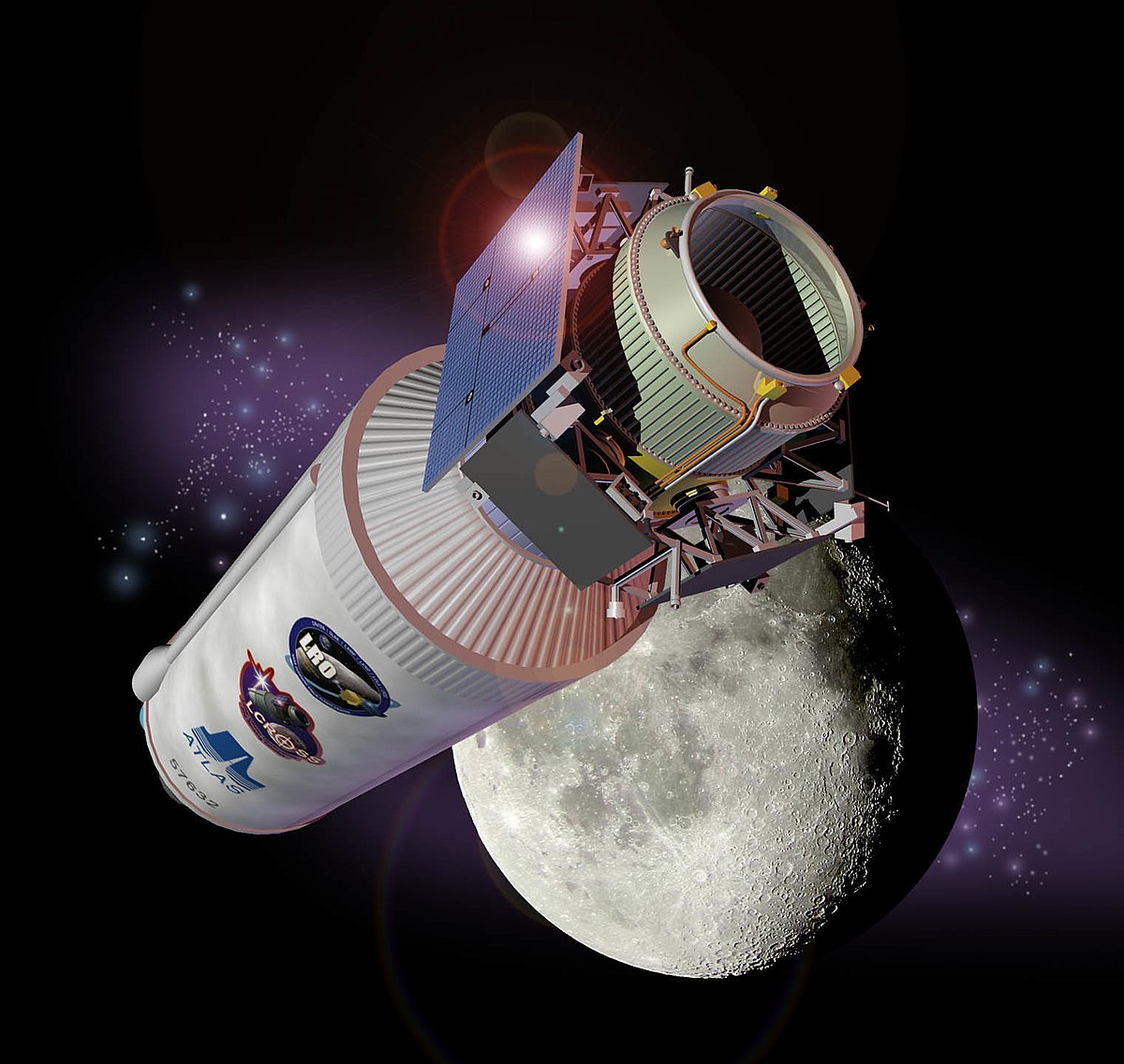
They launched it with Lunar Reconnaissance Orbiter, and it was a spacecraft that was attached to the Centaur upper stage of the Atlas V rocket that had, that had launched it, and they did a pretty, they did a pretty weird orbit kinda hanging around the Earth-Moon system until they finally lined it up using the gravity of the Earth and the Moon together to smack it into the south pole, like you mentioned.