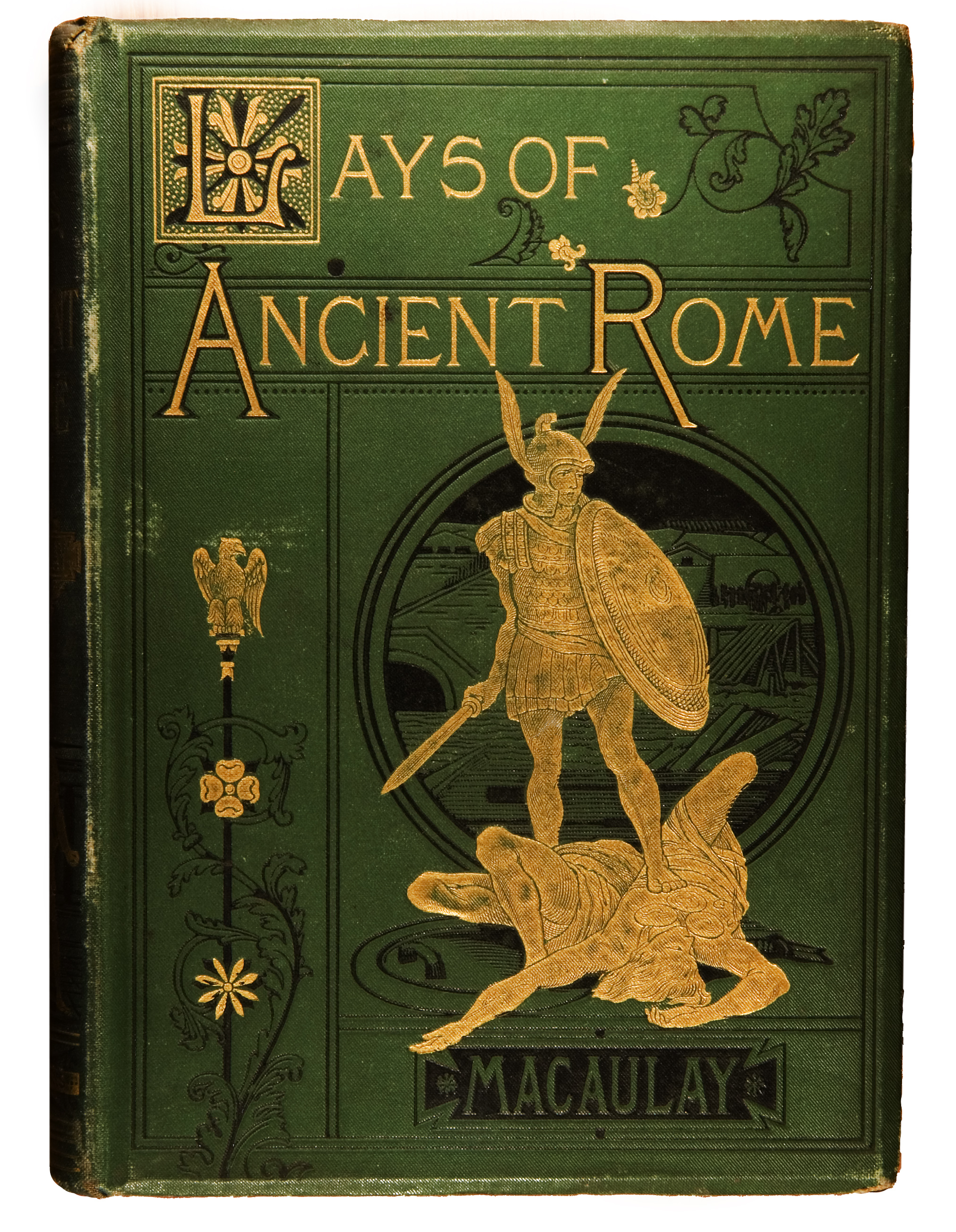
Lays of Ancient Rome
Poem by Thomas Babington MacaulayWikipedia
26
MENTIONS
7
EPISODES
6
PODCASTS
Search complete. 26 mentions across 7 episodes found for "Lays of Ancient Rome".
Sep 7, 2026

speaker_4ADVERTISER
Book your next day with Vrbo now.
David WalesNARRATOR
Preface to Lays of Ancient Rome This is a LibriVox recording.
David WalesNARRATOR
All LibriVox recordings are in the public domain.
David WalesNARRATOR
For more information or to volunteer, please visit LibriVox.org. Lays of Ancient Rome by Thomas Babington Macaulay Preface that what is called the history of the kings and early consuls of Rome is, to a great extent fabulous, few scholars have, since the time of Beaufort, ventured to deny.
David WalesNARRATOR
It is certain that, more than 360 years after the date ordinarily assigned for the foundation of the city, the public records were, with scarcely an exception, destroyed by the Gauls.
David WalesNARRATOR
It is certain that the oldest annals of the Commonwealth were compiled more than a century and a half after this destruction of the records.
39 MINS LATER
David WalesNARRATOR
And again, A modern writer may be content to err in such company.
David WalesNARRATOR
Niebuhr's supposition that each of the three defenders of the bridge was the representative of one of the three Patrician tribes is both ingenious and probable, and has been adopted in the following poem.

Thomas BanksHOST
So yes, uh, Horatius at the Bridge is a poem by Thomas Macaulay, uh, who is principally his- a historian.
Thomas BanksHOST
But he wrote a book of poems called Lays of Ancient Rome, and, um, this is a poem which he adapted from Livy's history, telling the story of the great Roman hero, Horatius, who in one of Rome's wars against her neighbors, um, held a bridge, defended a bridge single-handedly against a much larger force of men.
Thomas BanksHOST
And then, um, when he realized he could not stand there any longer, he jumped and, uh, swam to s-
Angelina StanfordHOST
Swam

Michael Thomas RobinsonNARRATOR
Preface 2.
Michael Thomas RobinsonNARRATOR
Lays of Ancient Rome.
Michael Thomas RobinsonNARRATOR
That what is called the history of the kings and early consuls of Rome is, to a great extent fabulous, few scholars have, since the time of Beaufort, ventured to deny.
Michael Thomas RobinsonNARRATOR
It is certain that, more than three hundred and sixty years after the date ordinarily assigned for the foundation of the city the public records were with scarcely an exception destroyed by the gauls it is certain that the oldest annals of the commonwealth were compiled more than a century and a half after this destruction of the records it is certain therefore that the great latin writers of the augustan age did not possess those materials, without which a trustworthy account of the infancy of the Republic could not possibly be framed.
35 MINS LATER
Michael Thomas RobinsonNARRATOR
a modern writer may be content to err in such company.
Michael Thomas RobinsonNARRATOR
Niebuhr's supposition that each of the three defenders of the bridge was the representative of one of the three Patrician tribes is both ingenious and probable, and has been adopted in the following poem.
Michael Thomas RobinsonNARRATOR
End of Introduction to Horatius Horatius, the first of the Lays of Ancient Rome, by Thomas Babington Macaulay horatius a lay made about the year of the city three hundred and sixty lars porsena of clusium by the nine gods he swore that the great house of tarquin should suffer wrong no more by the nine gods he swore it and named a trysting day and bade his messengers ride forth east and west and south and north to summon his array east and west and south and north the messengers ride fast and tower and town and cottage have heard the trumpets blast shame on the false etruscan who lingers in his home when porsena of clusium is on the march for rome the horsemen and the footmen are pouring in amain from many a stately market-place from many a fruitful plain from many a lonely hamlet which hid by beech and pine like an eagle's nest hangs on the crest of purple apennine from lordly volateri where scowls the far-famed hold piled by the hands of giants for godlike kings of old from sea-girt populonia whose sentinels descry sardinia's snowy mountain-tops fringing the southern sky from the proud mart of pisae queen of the western waves where ride massilia's triremes heavy with fair-haired slaves from where sweet clannis wanders through corn and vines and flowers from where cortona lifts to heaven her diadem of towers tall are the oaks whose acorns drop in dark ousers rill fat are the stags that champ the boughs of the ciminian hill beyond all streams clytumnus is to the herdsman dear best of all pools the fowler loves the great vulcinian mere but now no stroke of woodman is heard by ouser's rill no hunter tracks the stag's green path up the ciminian hill unwatched along clytumnus grazes the milk-white steer unharmed the water-fowl may dip in the bulsinian mere the harvests of aretium this year old men shall reap this year young boys in umbro shall plunge the struggling sheep and in the vats of luna this year the must shall foam round the white feet of laughing girls whose sires have marched to rome there be thirty chosen prophets the wisest of the land who always by lars porsena by morn and evening stand evening and morn the thirty have turned the verses o'er traced from the right on linen white by mighty seers of yore and with one voice the thirty have their glad answer given go forth go forth lars porsena go forth beloved of heaven go and return in glory to clusium's royal dome and hang round nerscia's altars the golden shields of rome and now hath every city sent up her tale of men the foot are fourscore thousand the horse are thousands ten before the gates of sutrium is met the great array a proud man was lars porsena upon the trysting day for all the etruscan armies were ranged beneath his eye and many a banished roman and many a stout ally and with a mighty following to join the muster came the tusculan mamilius prince of the latian name but by the yellow tiber was tumult and affright from all the spacious champaign to rome men took their flight a mile around the city the throng stopped up the ways a fearful sight it was to see through two long nights and days four aged folk on crutches and women great with child and mothers sobbing over babes that clung to them and smiled and sick men born in litters high on the necks of slaves and troops of sun-burned husbandmen with reaping hooks and staves and droves of mules and asses laden with skins of wine and endless flocks of goats and sheep and endless herds of kine and endless trains of wagons that creaked beneath the weight of corn-sacks and of household goods choked every roaring gate now from the rock tarpeian could the wanburgers spy the line of blazing villages red in the midnight sky the fathers of the city they sat all night and day for every hour some horsemen came with tidings of dismay to eastward and to westward have spread the tuscan bands nor house nor fence nor dovecote In Crustomerium stands.
Michael Thomas RobinsonNARRATOR
Verbena down to Ostia Hath wasted all the plain.

Christine RuckerNARRATOR
But many written things must have perished, and in poetry there was certainly a large amount of verse current orally, whether it was ever written down or not.
Christine RuckerNARRATOR
This is the inference drawn from the passages in historian William of Malmesbury, to which Macaulay refers in his preface to the Lays of Ancient Rome, and which Freeman has studied in his essay on the mythical and romantic elements in early English history.
Christine RuckerNARRATOR
The story of Hereward the Wake is extant in Latin.
Christine RuckerNARRATOR
The story of Havelock the Dane and others were probably composed in English verse much earlier than the 13th century, and in much older forms than those which have come down to us.

Betty B.NARRATOR
Mabie, Hamilton Wright, Legends Every Child Should Know.
Betty B.NARRATOR
Macaulay, Thomas B., Lord, Lays of Ancient Rome.
Betty B.NARRATOR
Maude, Constance, Wagner's Heroes.
Betty B.NARRATOR
Maude, Constance, Wagner's Heroines.

Geoffrey EdwardsNARRATOR
Preface to Lays of Ancient Rome This is a LibriVox recording.
Geoffrey EdwardsNARRATOR
All LibriVox recordings are in the public domain.
Geoffrey EdwardsNARRATOR
For more information or to volunteer, please visit LibriVox.org. Lays of Ancient Rome by Thomas Babington Macaulay Preface that what is called the history of the kings and early consuls of Rome is, to a great extent fabulous, few scholars have, since the time of Beaufort, ventured to deny.
Geoffrey EdwardsNARRATOR
It is certain that, more than 360 years after the date ordinarily assigned for the foundation of the city, the public records were, with scarcely an exception, destroyed by the Gauls.
Geoffrey EdwardsNARRATOR
It is certain that the oldest annals of the Commonwealth were compiled more than a century and a half after this destruction of the records.
57 MINS LATER
speaker_4ADVERTISER
when round the lonely cottage roars
Geoffrey EdwardsNARRATOR
loud the tempest's din and the good logs of algadus roar louder yet within when the oldest cask is opened and the largest lamp is lit when the chestnuts glow in the embers and the kid turns on the spit when young and old encircle around the firebrands close when the girls are weaving baskets and the lads are shaping bows when the good man mends his armor and trims his helmet's plume When the good wife's shuttle merrily Goes flashing through the loom, With weeping and with laughter, Still is the story told, How well Horatius kept the bridge In the brave days of old.
Geoffrey EdwardsNARRATOR
End of Horatius Introduction to The Battle of the Lake Regillus The Second of the Lays of Ancient Rome by Thomas Bavington Macaulay.
speaker_1NARRATOR
PREFACE II.
speaker_1NARRATOR
LAYS OF ANCIENT ROME.
speaker_1NARRATOR
that what is called the history of the kings and early consuls of Rome is, to a great extent fabulous, few scholars have, since the time of Beaufort, ventured to deny.
speaker_1NARRATOR
It is certain that, more than 360 years after the date ordinarily assigned for the foundation of the city, the public records were, with scarcely an exception, destroyed by the Gauls.
35 MINS LATER
speaker_1NARRATOR
a modern writer may be content to err in such company.
speaker_1NARRATOR
Niebuhr's supposition that each of the three defenders of the bridge was the representative of one of the three patrician tribes is both ingenious and probable, and has been adopted in the following poem.
speaker_1NARRATOR
End of Introduction to Horatius Horatius, the first of the Lays of Ancient Rome by Thomas Babington Macaulay horatius a lay made about the year of the city three hundred and sixty lars porsena of clusium by the nine gods he swore that the great house of tarquin should suffer wrong no more by the nine gods he swore it and named a trysting day and bade his messengers ride forth east and west and south and north to summon his array east and west and south and north the messengers ride fast and tower and town and cottage have heard the trumpets blast shame on the false etruscan who lingers in his home when porsena of clusium is on the march for rome the horsemen and the footmen are pouring in amain from many a stately market-place from many a fruitful plain from many a lonely hamlet which hid by beech and pine like an eagle's nest hangs on the crest of purple apennine from lordly volateri where scowls the far-famed hold piled by the hands of giants for godlike kings of old from sea-girt populonia whose sentinels descry sardinia's snowy mountain-tops fringing the southern sky from the proud mart of pisae queen of the western waves where ride massilia's triremes heavy with fair-haired slaves from where sweet clannis wanders through corn and vines and flowers from where cortona lifts to heaven her diadem of towers tall are the oaks whose acorns drop in dark ousers rill fat are the stags that champ the boughs of the ciminian hill beyond all streams clytumnus is to the herdsman dear best of all pools the fowler loves the great vulcinian mere but now no stroke of woodman is heard by ouser's rill no hunter tracks the stag's green path up the ciminian hill unwatched along clytumnus grazes the milk-white steer unharmed the water-fowl may dip in the bulsinian mere the harvests of aretium this year old men shall reap this year young boys in umbro shall plunge the struggling sheep and in the vats of luna this year the must shall foam round the white feet of laughing girls whose sires have marched to rome there be thirty chosen prophets the wisest of the land who always by lars porsena by morn and evening stand evening and morn the thirty have turned the verses o'er traced from the right on linen white by mighty seers of yore and with one voice the thirty have their glad answer given go forth go forth lars porsena go forth beloved of heaven go and return in glory to clusium's royal dome and hang round nerscia's altars the golden shields of rome and now hath every city sent up her tale of men the foot are fourscore thousand the horse are thousands ten before the gates of sutrium is met the great array a proud man was lars porsena upon the trysting day for all the etruscan armies were ranged beneath his eye and many a banished roman and many a stout ally and with a mighty following to join the muster came the tusculan mamilius prince of the latian name but by the yellow tiber was tumult and affright from all the spacious champaign to rome men took their flight a mile around the city the throng stopped up the ways a fearful sight it was to see through two long nights and days four aged folk on crutches and women great with child and mothers sobbing over babes that clung to them and smiled and sick men born in litters high on the necks of slaves and troops of sun-burned husbandmen with reaping hooks and staves and droves of mules and asses laden with skins of wine and endless flocks of goats and sheep and endless herds of kine and endless trains of wagons that creaked beneath the weight of corn-sacks and of household goods choked every roaring gate now from the rock tarpeian could the wanburgers spy the line of blazing villages red in the midnight sky the fathers of the city they sat all night and day for every hour some horsemen came with tidings of dismay To eastward and to westward have spread the Tuscan bands, Nor house, nor fence, nor dovecote, in crustamarium stands, For Bena down to Ostia hath wasted all the plain, Astor hath stormed Janiculum, and the stout guards are slain.
speaker_1NARRATOR
I wiss in all the senate there was no heart so bold, But sore it ached and fast it beat when that ill news was told.