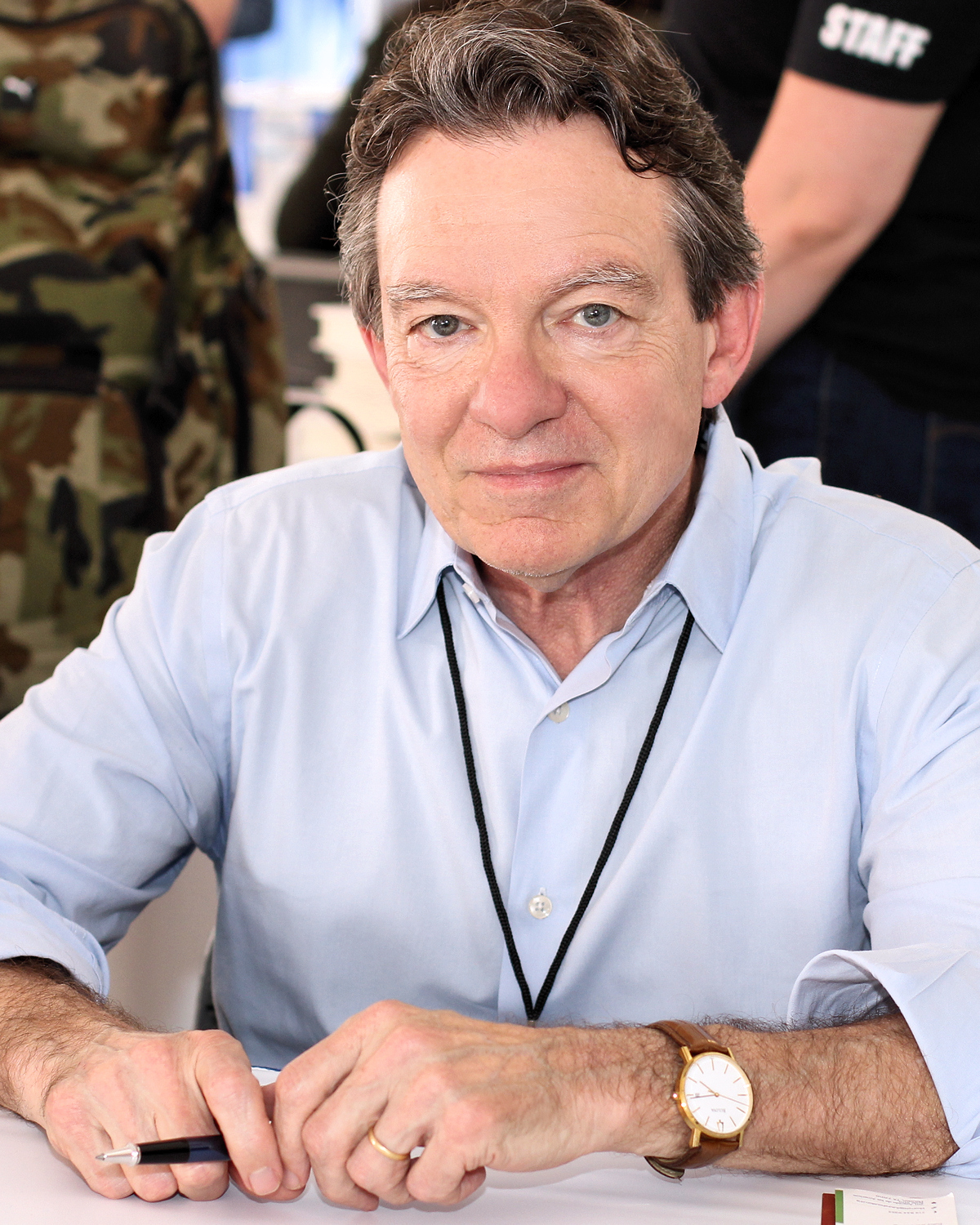
Lawrence Wright
American writer and journalist
7
APPEARANCES
7
PODCASTS
Sep 11, 2026


Lawrence WrightGUEST
An American warship was in the harbor of Aden, Yemen, and it was bombed by al-Qaeda, a suicide bomb.
Lawrence WrightGUEST
And they actually had the Malaysian authorities oversee it, you know, take pictures and so on and follow the participants as they left.
6 MINS LATER

Nick BryantHOST
And I think one of the many tragedies of 9-11, Lawrence, I'd love your views on this, is how that unity that 9-11 brought was very fleeting.

Lawrence WrightGUEST
An American warship was in the harbor of Aden, Yemen, and it was bombed by al-Qaeda, a suicide bomb.
Lawrence WrightGUEST
And they actually had the Malaysian authorities oversee it, take pictures and so on, and follow the participants as they left.
6 MINS LATER
Nick BryantHOST
And I think one of the many tragedies of 9-11, Lawrence, I'd love your views on this, is how that unity that 9-11 brought was very fleeting.


Joe ScarboroughHOST
Tell us, um, what, what your insights are 25 years later about what happened, uh, what you wrote about, what you learned, and what you've learned over the past quarter century.
Lawrence WrightGUEST
I call it in this new forward an unsolved crime because there are th- events that happened that were crimes.
Lawrence WrightGUEST
Um, for instance, the CIA hid the fact that the, there were two Al-Qaeda future hijackers living in San Diego 19 months before, uh, 9/11, and they refused to turn that information over to the FBI.
Lawrence WrightGUEST
Uh, one of the things that troubles me is that in many ways we are as complacent now as we were on 9/10.


John HeilemannHOST
And so I know you've told the story of how you came to write The Looming Tower many times, but I'd be grateful if you'd indulge me in our audience and tell it again here.
Lawrence WrightGUEST
It took me five years to write the book and I was traveling much of that time.
Lawrence WrightGUEST
It was a very lonely period, but the, I had a nice career before 9-11, but I had made a resolution that I would only do things that were important or fun.
6 MINS LATER
John HeilemannHOST
So I'd love for you to talk about all of that because you were someone on the day that 9-11 happened who had those two things in your background that set you up in a lot of ways to be the missionary that you became.

31:57

Here's a part of one of my many conversations over the years with Lawrence Wright.
Lawrence WrightGUEST
He had planned for this, and, uh, he, he got his, uh, subordinates to get a, a, a te- a satellite, uh, connection and a television.
Lawrence WrightGUEST
Uh, but they c- on 9/11, they couldn't get good reception, uh, for the television, so they had to rely on the radio.
Lawrence WrightGUEST
And, uh, bin Laden, you know, they all, you know, praising God, thank-- you know, being so excited, and bin Laden held up his finger and was, you know, two.
Lawrence WrightGUEST
And then, um, then the next plane hits, and everyone thinks that this is, you know, the most miraculous thing.


Ben RhodesHOST
How would you describe, informed by your experience of seeing a series of policy and bureaucratic failures before 9-11 in the looming tower, how would you compare the things that concern you about the state of play today when you look at those same agencies, those same instruments of U.S. government power and intelligence gathering and law enforcement as it relates to the different terrorist threat we're facing?
Lawrence WrightGUEST
You know, it was, I firmly believe till this day, had the Central Intelligence Agency cooperated with the FBI that 9-11 wouldn't have happened.
Lawrence WrightGUEST
You know, the agency knew that two future hijackers were in America, and they came in January of 2000, and the CIA found out about it in March of 2000.
Lawrence WrightGUEST
So a year and a half, they had, you know, knowledge that al-Qaeda was present in America and yet did not tell the FBI.
Lawrence WrightGUEST
There's also the fractures between these two institutions, the FBI and the CIA.
19 MINS LATER
Ben RhodesHOST
I, uh, last thing I just wanna ask you is, uh, uh, 'cause I think this is on a lot of people's minds, certainly on mine right now, um, how did, how did 9/11 change your life?


Lawrence WrightGUEST
You're talking about some of the biggest, best-endowed universities in America, and it's unconscionable because when those institutions that are essentially eternal, they're there through every administration, they have the power and the resources to be strong in any kind of economy, when they give in, they make it tougher on everybody else.
Lawrence WrightGUEST
These are the pillars of America that need to stand up and say, "We're going right to court to fight these attempts to intimidate us, and we're not gonna be a part of this," and it helps everyone else be strong.