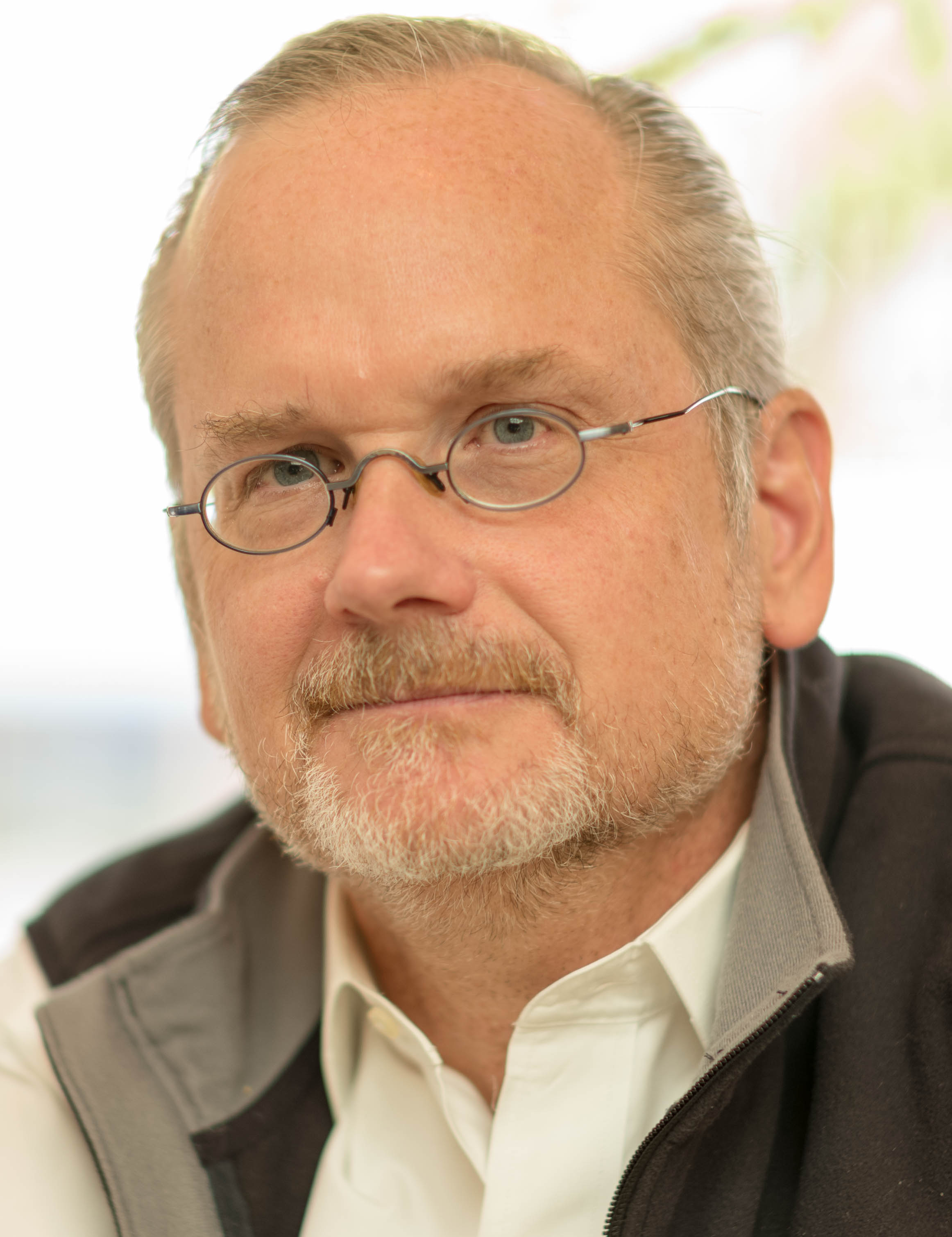
Lawrence Lessig
American legal scholar and political activistWikipedia
21
MENTIONS
17
EPISODES
16
PODCASTS
Search complete. 21 mentions across 17 episodes found for "Lawrence Lessig".
Oct 23, 2026

Astra TaylorGUEST
So, you know, I'm I'm thinking again about the sort of those the the era you just described where they were promising to bring democracy through social media and democracy.
Astra TaylorGUEST
You know, there was, I remember a piece by Lawrence Lessig, who is quite a, you know, influential critic of all the ways our democracy is broken.
Astra TaylorGUEST
But he's essentially saying, you know, we need to cheer on the Googles and Facebooks of the world over the old media dinosaurs.
Astra TaylorGUEST
And it was like, because they're new, right? Because they're new.

Mosheh OinounouHOST
Are you worried though even sort of taking your hat off, right, about the influence that money has on our politics? And I wonder actually where you stand, Citizens United and just the role as we look at midterms and now a 2028 race that could see tens of billions spent.
Reid HoffmanGUEST
Well, I've funded a couple of Larry Lessig projects trying to reduce the amount of money in politics.
Reid HoffmanGUEST
I think it would be better if we had less money in politics.
Reid HoffmanGUEST
But I think that if you say, hey, people who don't care about – Call it your average middle class Americans are going to spend a bunch of money to try to influence politics and you say we should be trying to help all of America be a better society.

Nabiha SyedGUEST
In terms of what technology has taught me about the law, I actually think, you know, this is something that I read it in law school.
Nabiha SyedGUEST
I read like Larry Lessig's sort of treatise of like, you know, code is law.
Nabiha SyedGUEST
At the time, I didn't fully appreciate these are both modalities.
Nabiha SyedGUEST
They are both systems.

Julie SilverbrookHOST
We'll explore the history of Article V conventions, competing perspectives, and their implication for the future of constitutional reform.
Julie SilverbrookHOST
Lawrence Lessig is the Roy L. Fuhrman Professor of Law and Leadership at Harvard Law School.
Julie SilverbrookHOST
He convened the We the People conference and argues that an Article V convention could provide an essential path to constitutional reform, particularly when Congress is unwilling or unable to act.
Julie SilverbrookHOST
Larry, welcome back to We the People.

Larry LessigHOST
This is Larry Lessig.
Larry LessigHOST
This is the second episode of this new podcast series available on Substack, left, right.
Larry LessigHOST
This is a conversation I'm having in my stream with Howard Woodruff.
38 MINS LATER
Howard WoodruffGUEST
Larry, thank you very much.
Howard WoodruffGUEST
It's always a blessing to speak with you too, man.
Larry LessigHOST
That was the second episode of our podcast Left Right with Howard Woodruff and I'm Larry Lessig.
Larry LessigHOST
As I said at the beginning of this podcast, this series is meant to invite many people from many different perspectives to have a similar conversation and to make this happen.
Larry LessigHOST
What we need is a producer.
Larry LessigHOST
This is Larry Lessig.
Larry LessigHOST
This is the second episode of this new podcast series available on Substack, left, right.
Larry LessigHOST
This is a conversation I'm having in my stream with Howard Woodruff.
38 MINS LATER
Howard WoodruffGUEST
Larry, thank you very much.
Howard WoodruffGUEST
It's always a blessing to speak with you too, man.
Larry LessigHOST
That was the second episode of our podcast Left Right with Howard Woodruff and I'm Larry Lessig.
Larry LessigHOST
As I said at the beginning of this podcast, this series is meant to invite many people from many different perspectives to have a similar conversation and to make this happen.
Larry LessigHOST
What we need is a producer.

Michael JohnstonGUEST
You can't ever prove that kind of negatives, but the sort of notion, well, there's a country out there where it's all okay, that doesn't happen.
Michael JohnstonGUEST
is a bundle of activities such as institutional corruption, Lawrence Lessig's arguments about activities that are not illegal.
Michael JohnstonGUEST
They're not clearly illegal, but they abuse public trust.
Michael JohnstonGUEST
Businesses forming quote-unquote research institutes at universities and those institutes turn out uh research results that surprisingly enough end up favoring those companies profits when it comes to regulatory decisions all legal and it abuses the public's trust in science the public's trust in academe which is under assault in in many places here i think mark warren has some important lessons to teach us about the meaning of corruption, especially in a democracy.

Ira PorterHOST
Hurdles include high bar requirements for ratification and uncertainty over who would control a convention's agenda.
Ira PorterHOST
It's supposed to be difficult, but beneath the debate lies a foundational question for a by-the-people democracy: Who gets to shape the nation's governing charter? "If we are a constitutional republic, we should be able to address our Constitution," says legal scholar Lawrence Lessig, "and I think not just the politicians, but ordinary people should be involved in that conversation as well." It's Tuesday, October 20th.
Ira PorterHOST
This is the Monitor Daily Podcast.
Ira PorterHOST
Good morning, I'm Ira Porter.

Oren CassHOST
Uh, but even going back to, well, I mean, even going back to the, the Bush days of, of, uh, questions of legitimacy and challenging electors and so forth, but certainly in the Trump era, the, the somewhat ironic thing is, is Trump was very enthusiastic about these sorts of critiques in 2016 in an election that he won [chuckles] ultimately.
Oren CassHOST
Um, you had a then sort of countervailing case, uh, from the other side, you know, beginning with I, I still remember the kind of Larry Lessig faithless elector push-
Ben GinsbergGUEST
Mm-hmm
Oren CassHOST
... which, given his role as the capital D defender of democracy ever since-

Nuala O'ConnorGUEST
Again, I would say this is also burdening the individual at a ti- at a, in a place where the responsibility is probably best placed with the institution, because they can, with relative ease, imple- implement those kinds of protections for everyone, uh, rather than having customers or, you know, citizens who are of varying levels of time, interest, ability, you know, fear, conversant, you know, with, with technology or not.
Nuala O'ConnorGUEST
Um, and so I'm, I'm, I'm thinking about, uh, you know, the defaults are law, and Larry Lessig said the code is law.
Nuala O'ConnorGUEST
You know, what the defaults are set as, 90% of the people will leave them that way.
Nuala O'ConnorGUEST
And so the call really, the, the call to action for companies is really set your security defaults at a place where the average consumer can trust that the device or the, you know, the item is, is relatively secure without them having to take those extraneous, you know, setting up a server, setting up a, you know, a, a web at, at the house should be, you know, not required.
7 more episodes mention Lawrence Lessig.
Create an account to see the whole feed, search across every transcript, and follow the entities you care about.