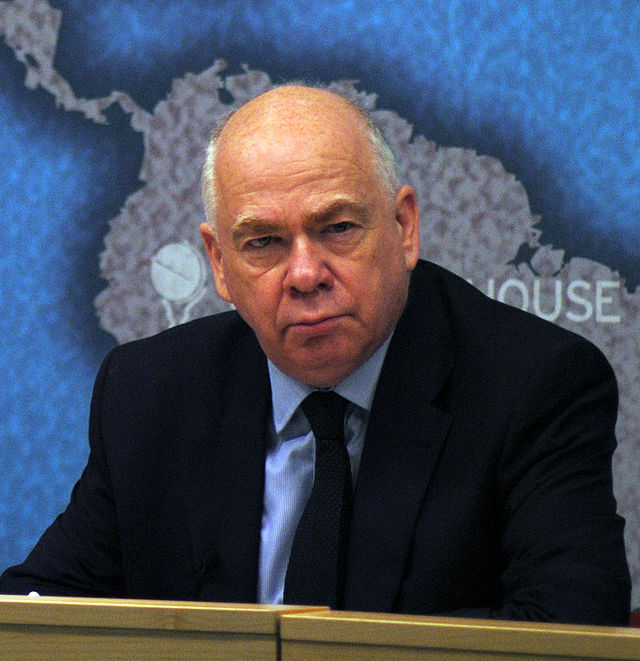
Lawrence Freedman
British academic and historianWikipedia
14
MENTIONS
8
EPISODES
8
PODCASTS
Search complete. 14 mentions across 8 episodes found for "Lawrence Freedman".
Oct 15, 2026

Tom MortonGUEST
And-
David TiltmanHOST
That's, that's like kind of a Lo- Lawrence Friedman
Tom MortonGUEST
It's, it's Lawrence Friedman.
Tom MortonGUEST
Yes.
David TiltmanHOST
Yeah.

Pyotr KurzinHOST
My name is Peter and we are back with someone who we've had on the show quite a few times, but there was a bit of an extended period due to one reason or another.
Pyotr KurzinHOST
But I'm delighted to have Sir Lawrence Friedman back, Emeritus Professor of the Department of War Studies at King's College London in the UK.
Pyotr KurzinHOST
and someone who is, I think, considered a preeminent voice on military strategy and history.
Pyotr KurzinHOST
Professor Lawrence, it's delightful to have you back.
41 MINS LATER
Pyotr KurzinHOST
So, to use your word, cautiously optimistic?
Lawrence FreedmanGUEST
Very cautiously.
Pyotr KurzinHOST
Well, everyone, that is Lawrence Friedman, Professor Emeritus of King's College London.
Pyotr KurzinHOST
And can I say regular? Sort of a regular when you have the time, Lawrence.

James O'BrienHOST
But the point is that a school like mine would expect the, the lads in the E stream to get a decent bunch of A levels and go to university and, and we're going back now to the late 1980s, early 1990s, and as I, I said at the outset, things have really changed, um, and get a job commensurate with their academic qualifications.
James O'BrienHOST
So if Andy Burnham, and I, and I'm glad he doesn't, 'cause I, I want him to govern for the majority, but if Andy Burnham had been to a school like mine, if Andy Burnham's social circle was the same as, for example, as Boris Johnson's or David Cameron's, I don't think he would have met many people who said, "School wasn't really for me." The only fellow I can remember, his, his, his, his, his granddad owned half of Hampshire, and all he wanted to do was farm.
James O'BrienHOST
So he just didn't see any point at all in engaging academically.
James O'BrienHOST
But if his grandfather hadn't owned half of Hampshire, um, uh, uh, property to which he would eventually inherit, then the school would have actually turned him into somebody for whom school, school d- He's still got A levels, and I think he went to Cirencester Agricultural College, if memory serves.
32 MINS LATER
James O'BrienHOST
And to say at fourteen you're not just seems to me to be a shame.
James O'BrienHOST
But I see it's hard to separate that from the idea that what you end up doing as a consequence of being told at fourteen that A levels aren't really for you is i-i-it could sound like I'm looking down on that, but I'm not.
James O'BrienHOST
My granddad was, was-- worked in a workshop.
James O'BrienHOST
My, my maternal granddad was the head of maintenance in Sheffield three, Sheffield Steelworks.

James O'BrienHOST
The only fellow I can remember...
James O'BrienHOST
His granddad owned half of Hampshire and all he wanted to do was farm.
James O'BrienHOST
So he just didn't see any point at all in engaging academically.
James O'BrienHOST
But if his grandfather hadn't owned half of Hampshire, property to which he would eventually inherit, then the school would have actually turned him into somebody for whom school...

Florence GaubGUEST
I always say war is not arithmetic, it's not like you just add up all the tanks and then you figure they have so many tanks, we have so many tanks, who's gonna win? Ukraine is the best example of that, right? So in actual terms, how would an actual war between Russia and NATO look like We're not 100% sure because, you know, I don't just care about the future, I also look at what we used to think about the future.
Florence GaubGUEST
And there's a brilliant book by Lawrence Friedman, if you're interested in that, The Future of War History.
Florence GaubGUEST
When you analyze how good we were at predicting the future of war, you come to the sobering conclusion that we're not very good at it.
Florence GaubGUEST
So we get almost everything wrong about what the next war will look like.

Tom KeeneHOST
Dr. Esfandira, you're at King's College, which is foundational in this study of war folks.
Tom KeeneHOST
Sir Lawrence Friedman owns the high ground on this.
Tom KeeneHOST
Out of the debris of King's College, how do you perceive our military? I guess it's Secretary of War, Secretary of Defense.
Paul SweeneyHOST
Yeah.

Dan Kurtz-PhelanHOST
And all of this comes as the Trump administration dismantles key pieces of the international system and technology scrambles expectations about how wars start, unfold, and end.
Dan Kurtz-PhelanHOST
No one has left a greater mark on our understanding of wars past and present than Lawrence Freedman.
Dan Kurtz-PhelanHOST
Freedman has written a slew of definitive books on military strategy and history, and he has offered some of the most penetrating analysis of Iran, Ukraine, and more in the pages of Foreign Affairs and elsewhere.
Dan Kurtz-PhelanHOST
I spoke with Freedman on Monday, September fourteenth, about the course of today's conflicts, about what is and is not changing in the nature of war, and about why policymakers, military officers, and strategists so often start wars based on bad assumptions, and how those bad assumptions explain some of the biggest calamities in global security today.
37 MINS LATER
Lawrence FreedmanGUEST
I think we'll reflect on the last few years and come to conclusions about the limitations as well as the possibilities of deterrence.
Lawrence FreedmanGUEST
But sadly, I think we're just stuck in the nuclear age.
Dan Kurtz-PhelanHOST
We'll return to my conversation with Lawrence Freedman after a short break.
Dan Kurtz-PhelanHOST
[upbeat music] Do you worry about a failure of, of deterrence in the Indo-Pacific in the, the, the coming years? There's obviously been lots of reporting on the lack of serious American weaponry in ships and air defense and everything else in the region because of, of Iran and also Ukraine to some extent.

Afua HirschHOST
[laughs]
Peter FrankopanHOST
But I've been reading the, the Official History of the Falklands Campaign by Sir Lawrence Freedman, who, uh, is a brilliant historian and a friend of mine.
Peter FrankopanHOST
I was reading about the buildup to what happened in 1982.
Peter FrankopanHOST
There are several reasons for that.
Afua HirschHOST
Ah, indeed.
Peter FrankopanHOST
Uh, Argentinian players held up a flag talking about the sovereignty of the Falkland Islands, and we've had a lot of that over the course of, of the summer too.
Peter FrankopanHOST
So as it happened, I've been reading and working on, uh, o-on the Southern Oceans, South Atlantic for a while, and Lawrence Freedman's book is the kind of the go-to place to get proper, detailed government-based information about how decisions got made in the buildup to 1982 and during the campaign as well.
Afua HirschHOST
Okay, I'm gonna start with a really basic question.