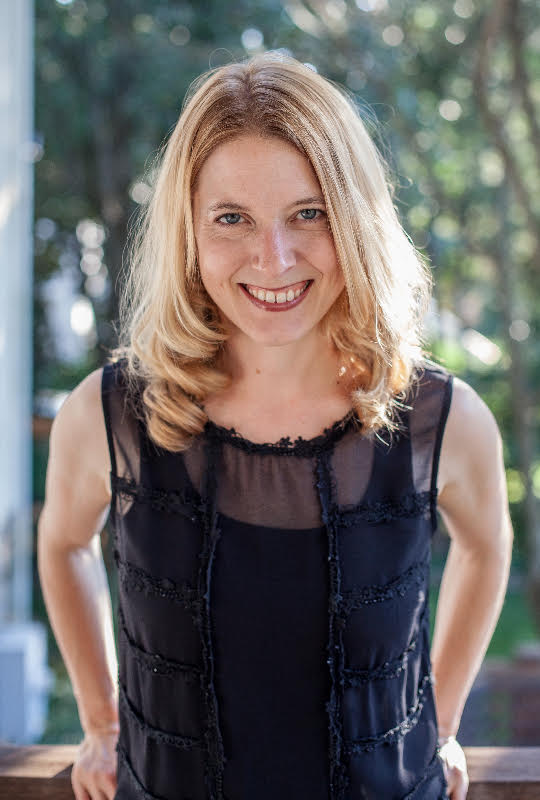
Laura Vanderkam
Author
30
APPEARANCES
28
PODCASTS
Sep 14, 2026


Laura VanderkamGUEST
And you can really think about over the course of the week accomplishing quite a bit.
Laura VanderkamGUEST
You are not fooling yourself that you're gonna have so much more time than you actually do because you can see what, what's on, you know, happening this week.
Laura VanderkamGUEST
Like, you know that there's also the back-to-school night, and there's also, you know, guests coming in over the weekend or whatever it is.
8 MINS LATER
Jessi HempelHOST
What big questions do you have yet to answer? What keeps you motivated in exploring our time?


Whitney BakerHOST
So can you get a little bit more granular there in terms of strategy of how you might approach not only using your time more intentionally, but really enjoying your evenings?
Laura VanderkamGUEST
Yeah, I really think the golden hours, that is the time after work and before bed on weekdays, is kind of the final frontier when it comes to time.
Laura VanderkamGUEST
Like even people who have like great morning routines and are knocking it out of the park at work, like you get to the evening and things just kind of fall apart.
Laura VanderkamGUEST
It's hard to muster the energy to do much if you've been dealing with work and family all day.
13 MINS LATER


Laura VanderkamGUEST
And the morning commute ranks worse, I mean, I guess, because you're on your way to work, whereas the afternoon commute at least ends at home, which is a redeeming point that's absent from the morning run.
Laura VanderkamGUEST
When we have times in life where we are basically just wishing time away, Anything you can do to move those minutes more into the neutral category is going to be a big life happiness boost.
9 MINS LATER


Carolyn CohenHOST
Do you have somebody to share that was able to fit in something big that was a healthy behavior in what seemed to be a very full schedule?
Laura VanderkamGUEST
Well, one of the first people I profile in the book is somebody who does ultra races.
Laura VanderkamGUEST
So this is not the situation where, you know, the guy gets to do everything and she's just cleaning up the pieces afterwards.
7 MINS LATER
Carolyn CohenHOST
Can you talk a little bit about the bedtime recommendation that you have and why you stand behind it? And this isn't something that's new in your work, but I think emphasized here again, and I think it's so great.


Laura VanderkamGUEST
I've studied how people spend their time, and I found a bit of a paradox, which is that people in general seem to be getting enough sleep when you look at longer periods of time.
Laura VanderkamGUEST
That's 7.5 hours a day on average, and that seems pretty good, right? Like they...

Laura VanderkamGUEST
But part of having enough space for the things that matter to us is to be very judicious about devoting time to things that we are less excited about and are less feeling like they are moving us toward the life we want.
10 MINS LATER
Helen TupperHOST
[laughs] Whatever a new commitment is, that actually if you're going to fit a new thing in, it's probably a great time just to, to do the time audit and just kind of say, "Well, how does this thing fit in in the time that I've already got?" So you don't feel overwhelmed by it without looking at the facts of a situation.
Laura VanderkamGUEST
I, I like to test things out, you know, because I can tell you I think it's helpful, but how do we know if that's true or not? Um, and so I recruited about 150 people to sign up for what I called the Tranquility by Tuesday project, and they would learn each of these nine rules over the course of nine weeks.
Laura VanderkamGUEST
And so I would ask people questions, um, on a time satisfaction scale, how they felt about their time, their leisure time, their work time, you know, how much time they had in general, all these questions designed to get a numerical representation of their feelings about time.


Scott DannerHOST
Like I think self-awareness comes into this a little bit and just really understanding what works best for you, I would imagine.
Laura VanderkamGUEST
I mean, there are, again, things that are practical and sometimes we could learn to do things if they are useful for our lives, even if they are not our natural tendencies.
Laura VanderkamGUEST
The reason that early mornings is good for many people is that if you have a full time job.
Laura VanderkamGUEST
and you have a family, the time that is available for you to do anything that requires some sort of energy tends to be early in the morning.
Laura VanderkamGUEST
Because, you know, like, a 5pm workout can easily get derailed by a client who calls you at 445 asking for something, right? Like you're Like, well, I'm not going to hang up precisely at four fifty nine if this is my biggest client just because I have an appointment at the gym.
Laura VanderkamGUEST
So that can get derailed or, you know, you've like your kids have something you need to go deal with.
15 MINS LATER


Amy SchmidtHOST
So walk me through what you mean, because I think a lot of people are going to push back on that.
Laura VanderkamGUEST
So, you know, I can look at how I spent every half hour of the last 11 years.
Amy SchmidtHOST
So when you call it the ringmaster, for someone who hasn't read the book yet, what is this and why does it matter?


Laura VanderkamGUEST
That sounds like something I had to put in my book proposal of like, why another book, Laura? Why should we bring this new book into the world? I would say this is honestly my favorite topics in time management and ways of looking at time that I have not explored at length before.
Laura VanderkamGUEST
And so I wanted to each of the chapters had been in the running for doing a book on it on its own, basically.
Laura VanderkamGUEST
And then I was like, well, actually, I can sort of run them all together with the theme of time abundance.
Laura VanderkamGUEST
And so in general, big time is about what happens when you move beyond a story of time scarcity and truly do believe that you have time for what matters to you.
Laura VanderkamGUEST
And I think it's helpful in trying to get to this mindset to zoom out further.
20 MINS LATER


Bri HearnHOST
What made you realize that the real problem wasn't time scarcity, but our relationship with time?
Laura VanderkamGUEST
Well, I've been tracking my time for a great many years, and I have had thousands of other people track time for me as well.
Laura VanderkamGUEST
And as part of this, you know, many people find that there is just more space within any given week than they had been assuming there was.
Laura VanderkamGUEST
A lot of time passes mindlessly, and so we don't really even notice where it is going, what we are doing with it.
Laura VanderkamGUEST
We don't remember what we do with it, and so it feels almost like it didn't exist.
Laura VanderkamGUEST
But when you can kind of get your head around that time being there, about there being 168 hours in a week and about what you can do with that time, um, it starts to feel more abundant.
Laura VanderkamGUEST
We start to see that even if there are many things we have to do, there is still quite a bit of time that we have say over.
21 MINS LATER


Eric FisherHOST
That, who is it that abundance story is hardest for? Where does that you have more time than you think, where does that stop being true?
Laura VanderkamGUEST
I think all of us have moments in our lives where we feel incredibly busy, where we might feel rushed or frantic or behind or overwhelmed.
Laura VanderkamGUEST
Those are all very common human emotions when it comes to how we feel about our time.
Laura VanderkamGUEST
I've also studied lots of bigger time diary sets, you know, that different organizations have, have done.
Laura VanderkamGUEST
And, you know, the idea that we are not increasingly overworked is just looking at average workweek data.
22 MINS LATER
Eric FisherHOST
So how do you hold those two things together? Where's the line between staying open and just over-committing?

Laura VanderkamGUEST
Yeah, from, oh my gosh, what do I have to do this week to, wow, what do I get to do this week? Well, I mean, partly it's that you are thinking about it because I think if you do put some thought into what is going on your calendar, into what is going into your schedule, you'll probably make better choices than if you just sort of let life happen.
Laura VanderkamGUEST
I mean, maybe some people are incredibly amazingly lucky that wonderful stuff just appears out of the blue and, you know, all your friends are gathered in the same place you are at the same time you're there and, you know, You know, everything at work miraculously happens and the stars align for you to spend time on your favorite projects no matter what you do.
Laura VanderkamGUEST
But I think most of us have to put a little bit of effort into those things to make them happen.
Laura VanderkamGUEST
So, you know, start by doing that, by looking at your upcoming week and saying, well, what is most important to me professionally? Like, what would make this an awesome week for me in terms of my career? You know, what would make an awesome week in terms of my relationships with family and friends? And if I were knocking it out of the park next week, personally, like for my own physical, mental, spiritual, emotional health, what would have happened? And so by asking those questions, then you can start to say, okay, well, what can I do to make those things potentially happen over the course of the next week? And when you start to have this, you know, possibilities that can go into your schedule and then you start to make parts of them happen, like, yeah, like your schedule becomes this source of joy.
Laura VanderkamGUEST
Like, oh, my goodness, I'm... you know, this afternoon I'm going to work with my colleague, Kate, and I love spending time with her and we're going to be coming up with ideas together.
16 MINS LATER


Gary BertwistleHOST
Is there a correlation between I'm not enough and the need to do more and time?
Laura VanderkamGUEST
And I think it is great when people develop the sort of confidence that comes from achieving the things that they set out to do because that then makes you feel like, I'm doing good stuff, right? I'm accomplishing what I intend to.
Laura VanderkamGUEST
So this is one of the reasons I'm always such a big fan of the weekly planning, because then you have sat down and said, well, what would a good week look like? Right.
Gary BertwistleHOST
It sounded like that story was if something you had to look forward to something in your 168 that you really loved enough like a page turner you will make the time you prioritize it just tell me about how important it is to actually have those things that you truly love you look forward to how do you how do you help people get to that point to have them in their 168


David BurkusHOST
You don't have to do things every day, but you also have to do things every week.
Laura VanderkamGUEST
So I'm now singing in two choirs, which seems a little hard to justify sometimes.
Laura VanderkamGUEST
But there's like a three week break in October after the first concert before we start the Christmas repertoire.
9 MINS LATER


Simon SeverinoHOST
What are the minimal elements for listeners to organize like a circus, to be well organized?
Laura VanderkamGUEST
And this is when you sit down look at the upcoming week and ask yourself what is most important in all these three rings, right? And for your professional life, for your relationships, for yourself, what is most important over the next week? Like what steps toward your larger goals would you like to see happen in all three rings? You also look at the obligations that are already on your calendar, the things that you are on the hook for over the next week, even if they're not your top priorities, like, do you have, The logistics figured out, do you have enough time allocated for these things or do you need to move things around or cancel things or ask for help or whatever else you need to do to make the next week work.
Laura VanderkamGUEST
Like, have you figured out a backup plan for anything that's very important to you if things go awry and you know building in some open space is helpful for that.
Laura VanderkamGUEST
Like people don't want to see a circus that looks like drudgery where everyone's just marching through their tricks.
Simon SeverinoHOST
After all this research, what's the one thing where you think, oh my God, if I knew this like five years ago,

Laura VanderkamGUEST
I think some of us are obviously more temperamentally drawn to this than others.
Laura VanderkamGUEST
I mean, there's a reason I chose time management as a career [laughs] versus other things.
Laura VanderkamGUEST
Um, and, and certainly many of the people who I talk to and who are into this are probably more naturally given to thinking of time in discrete units, and like, what can happen in this unit of time? How much time is this gonna take me? Is there space for it? What else can fit? What needs to happen sequentially for this to occur? Some people may be less naturally given to that.
Laura VanderkamGUEST
The problem, though, is if you want to have a sort of full life with many things going on, if you want to build a career, if you wanna raise a family, you wanna have time for your own pursuits, maybe volunteering or, you know, doing some sort of athletic pursuit or having a hobby, it becomes increasingly difficult to do all these things without being more organized about your time.
Laura VanderkamGUEST
And so I find that sometimes when people are saying, "Oh, it's impossible to do X and Y together," what that is really getting at is they don't find it intuitive to manage all the working parts of their time, which may be going on, you know, simultaneously and in sequence and stuff.
Laura VanderkamGUEST
But I think everyone can learn, and I have definitely seen people who are not naturally given to this.

Cal NewportHOST
Maybe you could walk us a little bit, through a little bit more what you mean by that.
Laura VanderkamGUEST
And if your life requires everything to happen perfectly according to plan, um, for it not to be a disaster, then you're gonna have a problem.

Laura VanderkamGUEST
And so we base the stories of our lives more on moments that make an impression, right? We gather points of evidence that point toward a particular narrative.
Laura VanderkamGUEST
And in any modern life, I mean, people can come up with a couple of moments where they feel rushed or harried or behind, but there are also other moments too.
Laura VanderkamGUEST
And I challenge people to look at time more holistically, because I'm sure if you looked at the whole of a week, you could find several moments when you are not rushed and you are not harried and you are not stressed about time.
20 MINS LATER

Karen LipsHOST
How do you think that young moms in particular should be addressing time management?

Pete MockaitisHOST
And with regard to these categories of the experience of work, can you unpack a little bit of the names of the categories, w- how you kind of think about which vibe is appropriate for a, a given activity, the tracking, a little bit of the nuts and bolts for these bits?
Laura VanderkamGUEST
I think one way to think about how you're spending your time at work and how you're feeling about your time at work is to give yourself, honestly, a mood score or an energy score as you go through your day.
Laura VanderkamGUEST
I've found through other research I've done that when people track their time for a week, they tend to feel better about their time overall, because it turns out that many of the catastrophic stories people tell themselves about their time are, are not true, right? You know, life isn't actually all that bad.
18 MINS LATER

Laura VanderkamGUEST
In my book Big Time, I do a whole study where I had, yeah, it was about 280 people more or less track their time for a week.And answer questions at the beginning and the end of the week about how they felt about their time.
Laura VanderkamGUEST
And that sounds like a very subjective thing, so what I did is I created a scale where people answered questions like, "Generally, I have time just for me," or, "Yesterday, I didn't waste time on things that weren't important to me." And then I had them, you know, rate themselves from 1 being strongly disagree to 7 being strongly agree, so I could turn time feelings into a score.
Laura VanderkamGUEST
And so I looked at those 279 people at the beginning of the week, what their scores were, and then tracking time a week later, what were their scores.
Laura VanderkamGUEST
Like, generally I have enough time for the things I wanna do, like agreement with that statement rose about 25% over the course of one week.

Liz MoodyHOST
Talk to us about why having this committed plan is different than being like, "I'm gonna hang out and read," or, "I'm gonna take care of myself during this time."
Laura VanderkamGUEST
Yeah, I think everybody needs something in their life that is not work and is not caring for family members.
Laura VanderkamGUEST
It is something that is intrinsically enjoyable for you and makes you feel like a whole person, right? Like you have a broader identity than just that you are an employee or a mom or a wife or a husband or anything else.
51 MINS LATER

Laura VanderkamGUEST
But what the biggest thing people find is that there are just chunks of time that they cannot account for, right? Time keeps passing no matter what you are doing, and it is the rare person who knows exactly where all 168 hours of the week go.
Laura VanderkamGUEST
I mean, most people do not know there are 168 hours in the week, so that's the first problem right there.
Laura VanderkamGUEST
Like, we live our lives in weeks over and over again, weekly cycles of things, and yet we don't even know that there are 168 hours in this chunk of time that we live repeatedly.
Laura VanderkamGUEST
So where that comes in is somebody's like, "Well, I can't do anything else.


Farnoosh TorabiHOST
And, um, what is your advice or what have you seen work really well for those in that life stage? What things to look ahead to, things to think about ahead of that so that you don't feel like you'reThat time is getting washed up
Laura VanderkamGUEST
Everyone should spend some time thinking about what they would like to spend more time doing in their lives.
Laura VanderkamGUEST
And one of the troubles of walking around with the story that we have no pri- no time whatsoever is we don't ask what we'd like to do with our time, and when we don't think about what we'd like to do with our time, we do whatever is right in front of us, whatever is easiest.
Laura VanderkamGUEST
And again, these days it tends to be our electronic hobbies of headline reading, checking social media comments, things like that.
Laura VanderkamGUEST
Like, it, it's, it's gonna be whatever is easiest and whatever is right in front of you whenever a spot of time appears.
9 MINS LATER

Laura VanderkamGUEST
I think that the true time management masters create a resilient schedule that allows them to keep moving forward toward their goals even when life happens.
Laura VanderkamGUEST
And people often get very discouraged that, you know, I meant to do X, whatever X is.
Laura VanderkamGUEST
I meant to, you know, set up a birthday party for my, you know, extended family.
12 MINS LATER
Rebecca LosavioHOST
It can frequently feel like it's a whole series of little things, and so I'd love for you to talk about that concept a little bit, of batching the little things to be, to use our time in a less scattered way.
Scroll for more appearances