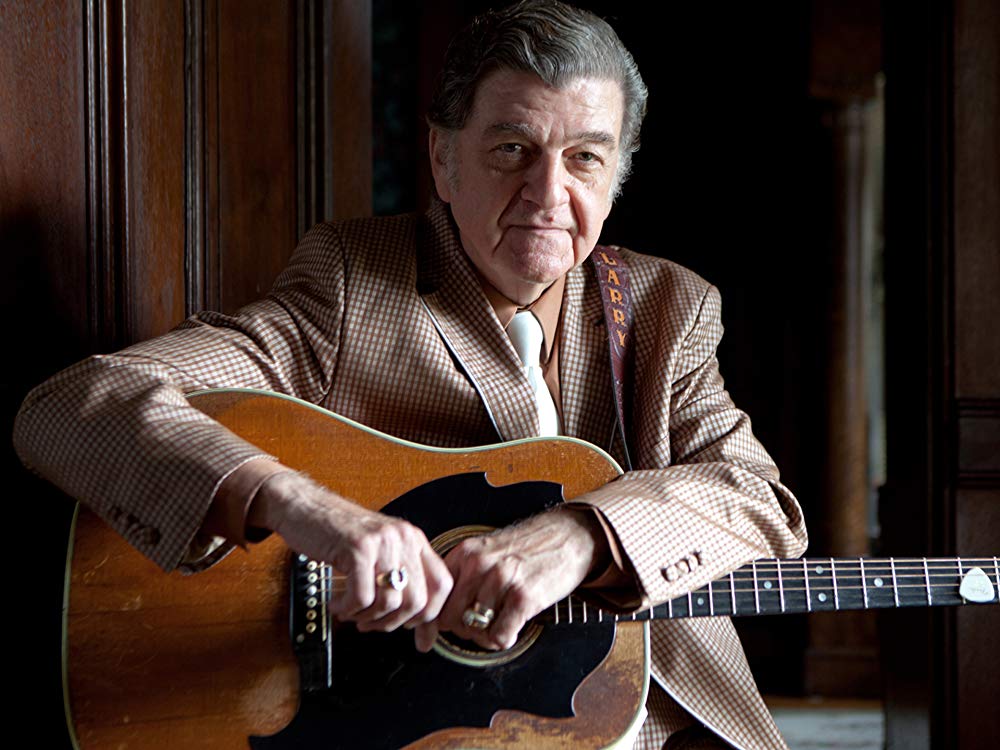
Larry Sparks
American singer and guitaristWikipedia
11
MENTIONS
7
EPISODES
7
PODCASTS
Search complete. 11 mentions across 7 episodes found for "Larry Sparks".
Oct 12, 2026

Billy StringsGUEST
Yeah.
Billy StringsGUEST
And, I mean, that is in bluegrass, you know, Bill Monroe, the Stanley Brothers, Flatt & Scruggs, and, you know, a lot of big ones for me, Jimmy Martin, Mack Wiseman, Larry Sparks, the Osborne Brothers, and then even, like, later on, you know.
Billy StringsGUEST
as the branches of this tree continue to grow and bud and stretch out into the Bluegrass Album Band and Country Gentleman and then on into Newgrass Revival and then up into Yonder Mountain String Band and the String Dusters and Green Sky Bluegrass and then on into us.
Billy StringsGUEST
kids and now there's folks coming up that are new mountain grass unit you know uh shadow grass there's all these kind of younger homies that are now i'm beginning to be like i was the new cat and now i'm like beginning to be like one of the older guys that is even

Ben ParkerGUEST
He moved back up to Dayton, Ohio.
Ben ParkerGUEST
But then we went through several guitar players, Virgil Boland, who played with several groups, Larry Sparks.
Ben ParkerGUEST
He played guitar with us for several years, and He got to where he was too busy because he played with several groups, and then he taught.
Ben ParkerGUEST
And then he started working at the school of bluegrass there in Hyden.

Mo PitneyGUEST
But anyways, we would sit in our kitchen, me, my dad, and my brother.
Mo PitneyGUEST
I started playing guitar, fell in love with Tony Rice, fell in love with Jimmy Martin rhythm, Del McCurry rhythm, Larry Sparks rhythm and playing.
Mo PitneyGUEST
And I just played all of those songs that I loved.
Mo PitneyGUEST
Dad picked up the banjo again, started playing.

Mo PitneyGUEST
But [clears throat] anyways, we would sit in our kitchen, me, my dad, and my brother.
Mo PitneyGUEST
Uh, I started playing guitar, fell in love with Tony Rice, fell in love with Jimmy Martin rhythm, Del McCoury rhythm, Larry Sparks rhythm and playing.
Mo PitneyGUEST
And I just played all of those songs that I loved.
Mo PitneyGUEST
Dad picked up the banjo again, started playing, and then we started traveling to bluegrass festivals.

Billy StringsSOUNDBITE_SPEAKER
It's like I never really took lessons.
Billy StringsSOUNDBITE_SPEAKER
I just learned how to play from hanging out with my dad and listening to the, him play with my old Brad Lasco, my Uncle Brad, and, and I kinda just was steeped in this Monroe, and Stanley Brothers, and Flatt and Scruggs, and Larry Sparks, and Jimmy Martin, and Osborne Brothers and, and, you know, of course mainly Doc Watson.
Billy StringsSOUNDBITE_SPEAKER
And I was kinda just soaked in that and marinated in that since I was a little kid, and that's how I just heard everything.
Billy StringsSOUNDBITE_SPEAKER
It's kinda how I hear music.

Eli GilbertHOST
But to your point, it's interesting that like post-Tony thing really means that there's a generation that like was maybe never expected to just play rhythm and like a certain kind of rhythm.
Eli GilbertHOST
So it doesn't surprise me that, you know, think about Larry Sparks, not just a rhythm player, absolutely a soloist also, and a very unique soloist, like probably the most unique soloist.
Eli GilbertHOST
But when you think about his rhythm playing, you can tell that he was expected to play, for instance, a certain kind of rhythm in Ralph Stanley's band.
Eli GilbertHOST
Yeah.
9 MINS LATER
Hayes GriffinHOST
I think you're right.
Hayes GriffinHOST
And I like this idea of evening out because... we live in, you know, if we're talking about like generational trends, you know, the like millennials and forward, like Gen Z and now Gen Alpha, you know, we're starting to see like Gen Alpha people like performing out live, which is crazy, right? Like there are like five generations of bluegrass actively performing right now, which is nuts.
Hayes GriffinHOST
But in those like kind of generational like one of one of the things too is a technological divide not just a before tony rice and after tony rice but like we had access to literally everything you know um so meaning we could listen to all of that fringy stuff and then i was also listening to stanley brothers and flattened scruggs with my dad in the truck you know what i mean so like Like, I guess what I'm getting at is like when you're talking about this evening out of style or like this balancing of style, like Cody Norris to me is like a huge like talk about someone who's like representing maybe more of that, like Larry Sparks, you know, that like that like trad grass kind of guitar sound.
Hayes GriffinHOST
You know what I mean? Yeah.

Fred BartensteinGUEST
In any case, that's all long past now.
Fred BartensteinGUEST
And Larry Sparks was with the band and Larry Sparks Well, I guess when they played, there was this other place that the bands would play, which was Loy Beaver.
Fred BartensteinGUEST
I guess his name has an S on the end.
Fred BartensteinGUEST
Loy Beavers was a funeral director who lived across the George Washington Bridge from New York City in New Jersey.
Fred BartensteinGUEST
And Loy Beavers had a basement, and he would put on concerts.
Fred BartensteinGUEST
where all the New York Bluegrass fans would come.
Fred BartensteinGUEST
And so I went down there to that concert on a day that Larry Sparks had laryngitis.
Fred BartensteinGUEST
And so I sat in and played Larry Sparks' part in the guitar with Ralph Stanley that day.