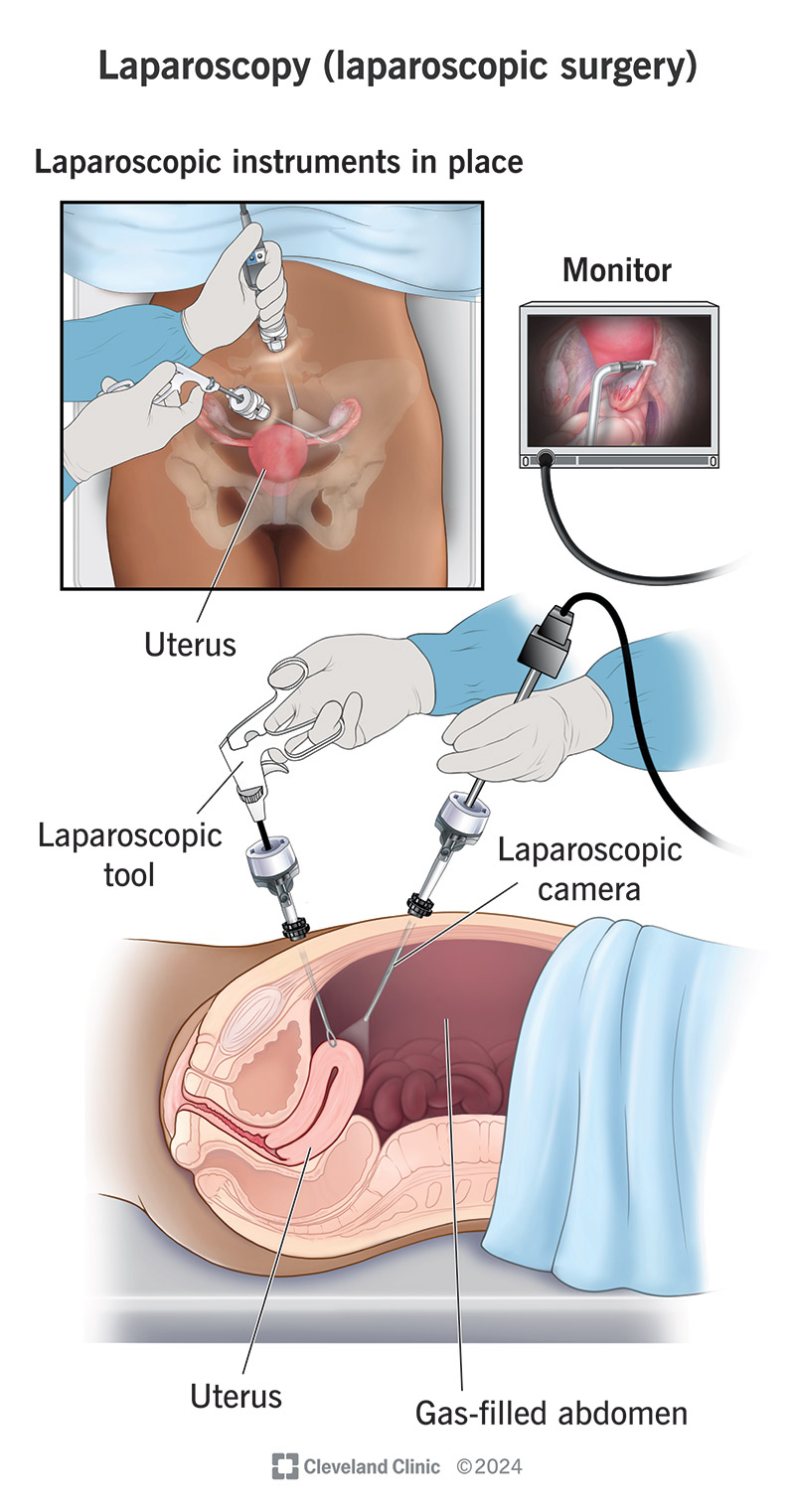
Laparoscopy
Diagnostic procedureWikipedia
10
MENTIONS
6
EPISODES
6
PODCASTS
Search complete. 10 mentions across 6 episodes found for "Laparoscopy".
Oct 26, 2026

Walter SterlingHOST
No, it was microscopic.
Walter SterlingHOST
Laparoscopic, right? Yes, sir.
Walter SterlingHOST
That's correct.
Walter SterlingHOST
Ed, thank you for the call.
Walter SterlingHOST
It'll get infected.
Walter SterlingHOST
Disaster.
Walter SterlingHOST
Laparoscopic has saved most of these problems, but in order to do the laparoscopic properly, there's a new challenge and it's appalling.
Walter SterlingHOST
It is truly appalling.

ChloeHOST
So the LACE trial
MaddieHOST
stands for Laparoscopic Approach to Cancer of the Endometrium.
MaddieHOST
And it is a down-under favourite because it's a trial that was run in Australia, Aotearoa New Zealand and Hong Kong.
MaddieHOST
It randomised 760 women with stage 1 endometrioid adenocarcinoma of the endometrium to either a total laparoscopic hysterectomy or a total abdominal hysterectomy.
ChloeHOST
So this study essentially gives us permission to offer our patients laparoscopy, which we know has better quality of life and perioperative outcomes, at least in the short term.
ChloeHOST
It is important to keep in mind, though, that this study was specific to patients with stage 1 endometrial cancers, and the results therefore don't apply to other stages or other cancer types.
ChloeHOST
And as we will talk about in future, there are some cancers where a laparoscopic approach actually has worse cancer outcomes.
MaddieHOST
This also means that if we were expecting a stage 1 cancer, but on entering the abdomen we realise that there is metastatic disease, we need to reconsider whether cytoreduction is feasible or beneficial to the patient before continuing to operate.

Gil SpitzGUEST
Yeah.
Gil SpitzGUEST
Laparoscopic, we see a lot more shoulder to elbow, a lot and a lot of issues with shoulder to elbow.
Gil SpitzGUEST
Part of it absolutely can be dealt with ergonomically you know where you have your elbows in relation to your your core trying to keep everything a little bit more centered yeah as soon as you come out here you know i don't want to get into a deep discussion of torque and all that but as soon as you move away from your center line your body has to do a lot more corrections so all of a sudden these deep postural muscles are becoming ischemic and the superficial muscles have to take over that's why you have so many surgeons with severe trap pain and all that and then on top of that what you see is that when you have proximal instability the distal muscles start to take over and try to to basically make up for the slack that's in the line so you end up with really really tight arms which leads to all sorts of issues with elbows wrist issues so we definitely see a lot more of that one of my favorite exercises for anybody who's suffering from these issues to actually one is a inverted row hold.
Gil SpitzGUEST
So I don't know if you're familiar with the inverted row, but imagine a push up, but upside down.

Dr. CarltonHOST
Um, so how do you fix this? Basically, two major surgical approaches.
Dr. CarltonHOST
One is open repair and the other is laparoscopic repair.
Dr. CarltonHOST
Laparoscopic is the most common these days.
Dr. CarltonHOST
It's usually a really quick and easy surgery.
Dr. CarltonHOST
Sometimes they put in mesh so that the hernia doesn't bulge back through again.

Kimberly KoGUEST
So it was an attempt to kind of characterize what was happening on a national level and this transformation towards minimally invasive surgery, but to have the ability in a really granular way to look at very patient-specific information that we didn't have access to on these larger nationwide databases.
Natalie CohenGUEST
So Dr. Ko passed this database, um, on to me, and as I looked at it, the first glance was really, you know, showing increase in MIS.
Natalie CohenGUEST
It was showing a decrease in complications, but as Dr. Ko was saying, it's kind of related to what we were already learning about the literature.
Natalie CohenGUEST
Um, but what hadn't really been done is looking at it in the safety net setting, um, and really thinking about what happens to disparities if we start to implement this in the safety net setting, um, and how does that affect health equity.
26 MINS LATER
Natalie CohenGUEST
... and that's what I would've been describing, but I guess it's just a hypothesis for a reason.
Natalie CohenGUEST
[laughs] Right?
Kimberly KoGUEST
What I think I do applaud about this work, and, and Natalie's equity lens on it, is that we improved universal access to MIS, you know? So overall, at a population level, I will call that a win, right? Every underserved population, minority community, their rates of MIH increased.
Kimberly KoGUEST
But the delta between the, the races persisted, right? With our, um, African American patients having the least likelihood of having, of obtaining a hyst, right, even during this evolution, and I think that's really reflected in a lot of nationwide database, even very nationwide data, even, like, coming out in 2026.