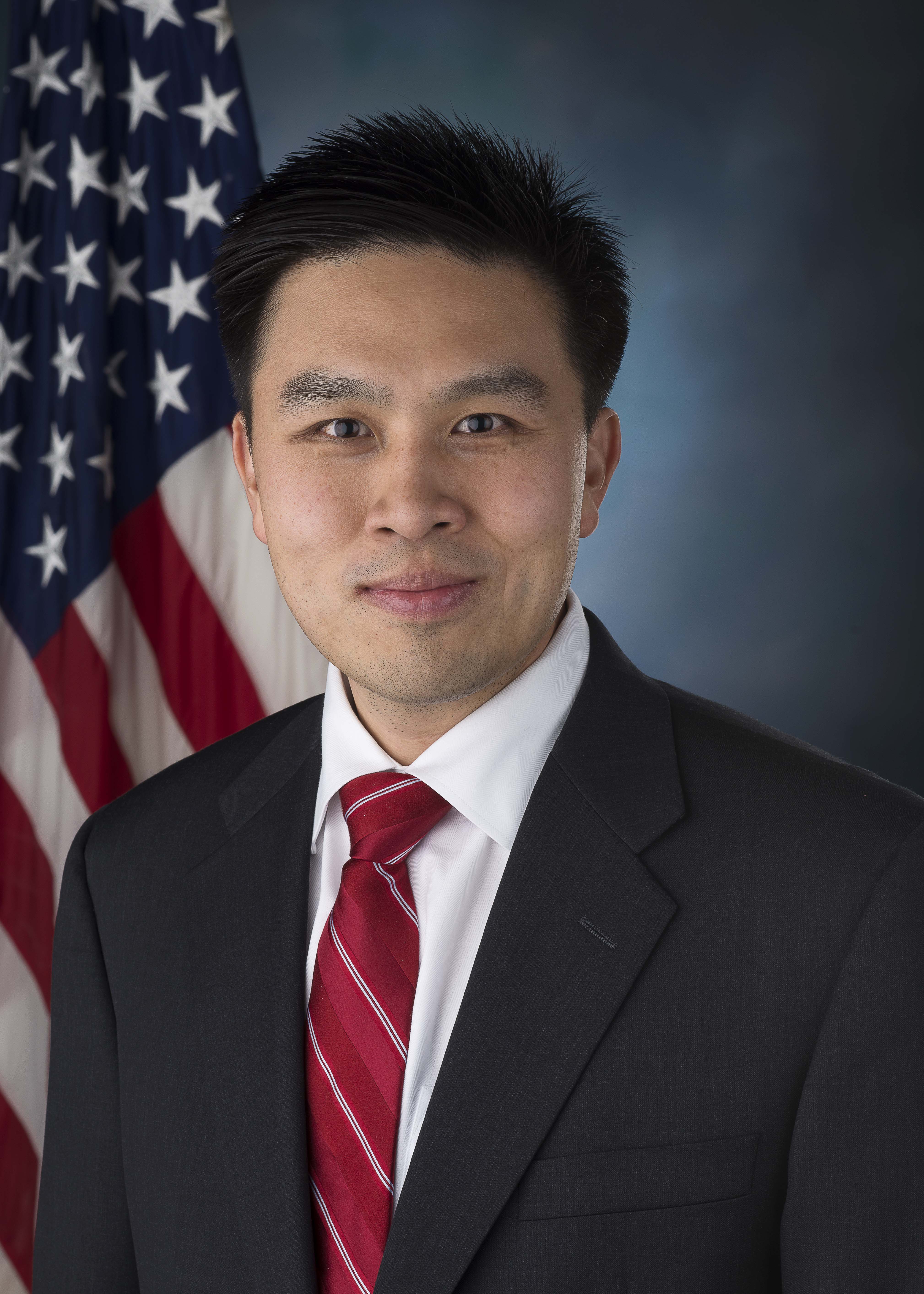
Lanhee Chen
American political scientist and lawyer
18
APPEARANCES
6
PODCASTS
Aug 12, 2026

Lanhee ChenGUEST
And the reason that we care about the Wisconsin governor's race or the Minnesota Senate race or races that otherwise probably wouldn't have a whole lot of impact for people who don't live in those states is because of what it means for our national politics.
Lanhee ChenGUEST
And I think particularly on the left is If you look at the energy behind a lot of the progressive democratic socialist candidates and I get it, not all of them self-identify as democratic socialists.
Lanhee ChenGUEST
But in my book, if you're in favor of the government takeover of health care, you know, you're pretty much a socialist.
Lanhee ChenGUEST
And I think that that's what we've seen from people like Abdullah Saeed in Michigan or Francesca Hong in Wisconsin or others around those various Midwestern states.
Lanhee ChenGUEST
And again, the reason we care is because of what it says about where the energy is in the progressive movement and what these races tell us about national Democratic Party politics.
9 MINS LATER

Lanhee ChenGUEST
And the reason that we care about the Wisconsin governor's race or the Minnesota Senate race or races that otherwise probably wouldn't have a whole lot of impact for people who don't live in those states is because of what it means for our national politics.
Lanhee ChenGUEST
And I think particularly on the left is If you look at the energy behind a lot of the progressive democratic socialist candidates and I get it, not all of them self-identify as democratic socialists.
Lanhee ChenGUEST
But in my book, if you're in favor of the government takeover of health care, you know, you're pretty much a socialist.
Lanhee ChenGUEST
And I think that that's what we've seen from people like Abdullah Saeed in Michigan or Francesca Hong in Wisconsin or others around those various Midwestern states.
Lanhee ChenGUEST
And again, the reason we care is because of what it says about where the energy is in the progressive movement and what these races tell us about national Democratic Party politics.
9 MINS LATER
Lanhee ChenGUEST
And the reason that we care about the Wisconsin governor's race or the Minnesota Senate race, or races that otherwise probably wouldn't have a whole lot of impact for people who don't live in those states, is because of what it means for our national politics.
Lanhee ChenGUEST
And I think particularly on the left, if you look at the energy behind a lot of the progressive Democratic Socialist candidates...
Lanhee ChenGUEST
A- and I, I get it, not all of them self-identify as Democratic Socialists, but in, in my book, if you're in favor of the government takeover of healthcare, you know, you're, you're pretty much a socialist.
Lanhee ChenGUEST
And, and I think that that's what we've seen from people like Abdul El-Sayed in Michigan or Francesca Hong in Wisconsin, or others around those various Midwestern states.
Lanhee ChenGUEST
And a- again, the reason we care is because of what it says about where the energy is in the progressive movement, and what these races tell us about national Democratic Party politics.
Lanhee ChenGUEST
So right now, it does appear to be with the far progressive left, and I think that's the lesson.
10 MINS LATER


Dasha BurnsHOST
What does this all say, though, about the relationship between the president and Republicans in Congress?
Lanhee ChenGUEST
I mean, it's been fairly straightforward, which is that Republicans in Congress have executed on whatever the president wants.
Lanhee ChenGUEST
I think the change dynamic is that you see, indeed, elections have consequences.
Lanhee ChenGUEST
And when you participate in an election to oust a sitting United States senator from your own party, there are implications to that.
Lanhee ChenGUEST
And I think, you know, look, Tom Tillis and, you know, to the degree that John Cornyn and Tom Tillis are making the decisions they're making, I think they have real substantive concerns.
Lanhee ChenGUEST
I don't think this is entirely about politics, but I also think it's the case that what you're seeing is Two senators who are exercising the power that they have to get an outcome they believe is the right outcome, which is a written assurance regarding certain promises that the administration has made relating to this anti-weaponization fund or the lack thereof.
17 MINS LATER
Dasha BurnsHOST
Lonnie, what does Mike Rogers, the Republican candidate in the race, want to see
Lanhee ChenGUEST
This has become the new litmus test in progressive politics, and it has moved from...
Lanhee ChenGUEST
I, I, I mean, we've seen the progression of this, uh, o- o- over the years, right? From issues of, uh, gender identity to race and ethnicity questions.
Lanhee ChenGUEST
And now I do think it's a question that a lot of Democratic progressive activists are asking, which is, has a candidate received money from AIPAC, which is the, uh, the political action committee that supports causes aligned with, uh, w- with, with, uh, you know, Israeli, uh, Jewish issues.
Lanhee ChenGUEST
And I think that has become the, the litmus test now for a lot of, a lot of Democrats out there.
Lanhee ChenGUEST
And the question is, have you taken that money? And the, the funny part of this, Jack, is if you look back in Democratic Party politics, there was a time back in the 1990s and 2000s, not to date myself, but there, there was a time when, uh, that was worn as a badge of honor, that a lot of Democrats wanted to be perceived as being pro-Israel.
Jack ArmstrongHOST
Uh, whether or not you think America is exceptional, and why, pushing back against some of those detractors in the socialist wing of the Democratic Party.
Lanhee ChenGUEST
i do jack this has become the new litmus test in progressive politics and it has moved from i mean we've seen the progression of this uh over the years right from issues of gender identity to race and ethnicity questions and now i do think it's a question that a lot of democratic progressive activists are asking which is has a candidate received money from aipac which is the uh the political action committee that supports causes aligned with uh with uh you know israeli jewish issues and i think that has become the the litmus test now for a lot of a lot of democrats out there and the question is have you taken that money and the funny part of this jack is if you look back in democratic party politics there was a time back in the 1990s and 2000s Not to date myself, but there was a time when that was worn as a badge of honor, that a lot of Democrats wanted to be perceived as being pro-Israel, certainly pro-Jewish issues in the U.S., and that was something that they wore proudly.
Lanhee ChenGUEST
And I think it's a really disgusting part of progressive politics, in my view, the degree to which some of this anti-Semitism has been not just tolerated but encouraged by elements of the progressive left.
Lanhee ChenGUEST
And I think that's going to be a big challenge for them going forward and could signal – the last thing I'll say about this is it could signal a realignment, I think, of a lot of Jewish voters in the U.S. away from the Democratic Party.
Jack ArmstrongHOST
Maybe I'm putting words in your mouth, whether or not you think America is exceptional and why pushing back against some of those detractors in the socialist wing of the Democratic Party.

Lanhee ChenGUEST
This has become the new litmus test in progressive politics, and it has moved from...
Lanhee ChenGUEST
I, I, I mean, we've seen the progression of this, uh, o- o- over the years, right? From issues of, uh, gender identity to race and ethnicity questions.
Lanhee ChenGUEST
And now I do think it's a question that a lot of Democratic progressive activists are asking, which is, has a candidate received money from AIPAC, which is the, uh, the political action committee that supports causes aligned with, uh, w- w- with, uh, y- you know, Israeli, uh, Jewish issues.
Lanhee ChenGUEST
And I think that has become the, the litmus test now for a lot of, a lot of Democrats out there.
Lanhee ChenGUEST
And the question is, have you taken that money? And the, the funny part of this, Jack, is if you look back in Democratic Party politics, there was a time back in the 1990s and 2000s, not to date myself, but there, there was a time when, uh, uh, that was worn as a badge of honor, that a lot of Democrats wanted to be perceived as being pro-Israel.
Jack ArmstrongHOST
I'm, maybe I'm putting words in your mouth, uh, whether or not you think America is exceptional, and why, pushing back against some of those detractors in the socialist wing of the Democratic Party.


Bill WhalenHOST
So Lanhee Chen, California candidate, California policy guru, where do you stand on initiatives? Is it Vox Populi or is it the playground of special interests?
Lanhee ChenGUEST
I think if you look at the initiative process, surely it doesn't look exactly now the way that Hiram Johnson and reformers intended in 1911.
Lanhee ChenGUEST
But I do think that there are strong arguments for a initiative process that allows people members of the public, voters in California to see their will expressed on important public policy matters, particularly where there isn't responsiveness from Sacramento.
Lanhee ChenGUEST
And I think about it in terms of the fact that we have a largely one party establishment in Sacramento.
Lanhee ChenGUEST
They are beholden to certain interests, what the initiative process potentially allows for.
16 MINS LATER
Lanhee ChenGUEST
Well, I think it kind of is a little bit consistent with some of the populist sentiment that we have right now.
Lanhee ChenGUEST
You know, I think that there are these ideas that socialist candidates promote that, you know, the siren song that was Brit Hume, who you had on earlier, that really is the right way to describe it, because you've got all these policies that people just sort of say, well, gosh, that sounds pretty good.
Lanhee ChenGUEST
I mean, why don't we take from one group that has a lot? Why don't we give that to everybody else? Why don't we think about increasing the size of government so that government can do more.
Lanhee ChenGUEST
All of these ideas to those probably who have a slightly more populist streak might at first glance seem attractive.
Lanhee ChenGUEST
And I think there's a consistency to the success of socialist candidates, particularly in urban areas like New York.
Lanhee ChenGUEST
And we didn't even talk about L.A., but in L.A., you're going to have a socialist running against someone who's incompetent.
Jack ArmstrongHOST
This one woman, she demanded the total eradication of Western civilization at one point.

Lanhee ChenGUEST
Well, I think it kind of is a little bit consistent with some of the populist sentiment that we have right now.
Lanhee ChenGUEST
You know, I think that there are these ideas that socialist candidates promote that, you know, the siren song that was Brit Hume, who you had on earlier, that really is the right way to describe it, because you've got all these policies that people just sort of say, well, gosh, that sounds pretty good.
Lanhee ChenGUEST
I mean, why don't we take from one group that has a lot? Why don't we give that to everybody else? Why don't we think about Increasing the size of government so that government can do more.
Lanhee ChenGUEST
All of these ideas to those probably who have a slightly more populist streak might at first glance seem attractive.
Lanhee ChenGUEST
And I think there's a consistency to the success of socialist candidates, particularly in urban areas like New York.
Lanhee ChenGUEST
And we didn't even talk about L.A., but in L.A., you're going to have a socialist running against someone who's incompetent.

Jack ArmstrongHOST
This one woman, she demanded the total eradication of Western civilization at one point.
Jack ArmstrongHOST
This one woman, she demanded the total eradication of Western civilization at one point.
Lanhee ChenGUEST
Yeah, I mean, look, w- the- the more that, um, we dig in to the records of various people who have been successful, who are part of this Democratic Socialist movement, the- the more we're gonna discover things that are not just out of step with where most Americans are, but that are truly odious policy positions.
Lanhee ChenGUEST
Uh, ones that, uh, that people look at and, and, and remind them of why Democratic Socialists are out of step with, frankly, most voters in this country.
Lanhee ChenGUEST
A- a- again, I thought, you know, Brit made the right point there, which is that these people can win elections in the middle of New York City or the middle of LA, but the problem you're gonna have is that the image of these people, what they stand for, who they are, is going to pollute the broader image of the Democratic Party, which, by the way, isn't great right now.
Jack ArmstrongHOST
So if, um, if Pratt and Hilton both make the final two, does that say anything about the progressive movement in the country? Is that, like, a real blow, I'm hoping, to [laughs] the wackadoo fringe of the Democratic Party?
Lanhee ChenGUEST
I mean, I think we have to be careful not to, not to draw conclusions that are too broad.
Lanhee ChenGUEST
I mean, one of the things certainly in the city of LA, uh, there, there is, I think, a backlash to what the progressive politics have done to, uh, to our major cities, and I think we, we saw it in San Francisco, by the way, a couple years ago, guys, when, you know, San Francisco elected a relatively more moderate mayor, uh, going against several very progressive candidates.
Lanhee ChenGUEST
And that more moderate mayor, by a lot of accounts, has produced positive change in San Francisco.


Major GarrettHOST
How do you diagram the Jensen Huang, NVIDIA, AI part of this summit and conversations either cooperatively, maybe, or far more likely, in a hostile context with China and the future of artificial intelligence?
Lanhee ChenGUEST
Well, there's just no question that a lot of the innovation in this area is still happening right here in America.
Lanhee ChenGUEST
And for China to do what it needs to do, I mean, they talk a lot about the native technology available there, and there's no question that they have managed to grow that sector tremendously.
Lanhee ChenGUEST
But the reality is that to, for China to get to where it wants to go, it still needs access to American technology.
Lanhee ChenGUEST
It needs access to the kinds of things that NVIDIA and other American companies are producing.
Lanhee ChenGUEST
The big question on our part is, how much of that infrastructure is gonna be built on the backbone of American in, i- innovation and American technology versus technology from somewhere else? So I think that there are mutual benefits to be had.
Lanhee ChenGUEST
One of, one of the most controversial, um, uh, uh, things is whether the government can compel, uh, tech providers, US tech providers, to basically turn over communications data of foreigners, that's at least what the law provides for, uh, who they believe have information related to terrorism or other national security threats.
Lanhee ChenGUEST
So this was actually a post-9/11, uh, kind of creation along with, with a few other things, and the concept was, look, we need to figure out a way to beef up our surveillance and our intelligence of, uh, uh, of particularly of foreign nationals in the US.
Lanhee ChenGUEST
And so there, there's been some debate, for example, about, you guys have, have alluded to it, has the law been abused to actually spy or surveil US c-Persons, and that could be US citizens, it could be people with a permanent residency status, it could be other US persons under the law, or, uh, you know, have tech companies, for example, been forced to turn over information, uh, on citizens or on others who technically don't fall under the ambit of the law.
Lanhee ChenGUEST
So there is a lot of controversy over whether the law should be extended or whether it should be reformed.
Lanhee ChenGUEST
I tend to think broadly speaking, there are a couple of areas, particularly around what tech providers need to turn over.
Lanhee ChenGUEST
Do they need a warrant? This is one example, for example, of, of a question of a reform that we might look at for the law is, do we need to have stricter requirements around when warrants are required in order to, to get access to, uh, to this kind of information? So I personally think that FISA is an important law.
5 MINS LATER
Lanhee ChenGUEST
And, and, you know, people shouldn't have to feel and think that way i- in, in a place like America where I think we've always valued our, our ability to disagree civilly, but, but vociferously, right? And, um, I don't know.
Lanhee ChenGUEST
And, and, you know, people shouldn't have to feel and think that way, in, in a place like America where w- I think we've always valued our, our ability to disagree civilly but, but vociferously, right? And, um, I don't know.
Lanhee ChenGUEST
Jack, I'm a little, uh, concerned about where we are, but obviously, you know, there are a lot of bright spots.
Lanhee ChenGUEST
I mean if, if, if you look at just, um, uh, I think a lot of people have been truly compassionate in the wake of what happened.
Lanhee ChenGUEST
I think you've seen a lot of people who have decided that they want to be more involved in our political system and not less, and I think that's all good.
5 MINS LATER
Lanhee ChenGUEST
in a state like Texas or a state like California where it's- it's very different concepts.
Lanhee ChenGUEST
And I think the challenge is that the party in charge never really gets, uh, asked to justify what they're doing.
Lanhee ChenGUEST
And so what you end up with is a lot of things like fiscal mismanagement, which is what we see in, uh, California in- in- in droves.
Lanhee ChenGUEST
Uh, you see policies that go unquestioned, and so there's just no question that we gotta keep lurching left, we gotta keep financing high-speed rail, we've gotta keep, uh, on the books all of these laws that make it difficult for us to grow and invest businesses in California.
Joe GettyHOST
We want something different," is there anything that can be done about all of this, including the, uh, alleged, uh, gerrymandering?
Lanhee ChenGUEST
I think some of it's gonna depend on, on how, uh, the midterms go in '26 and the degree to which there continues to be this overarching...