Lamashtu
22
MENTIONS
15
EPISODES
13
PODCASTS
Search complete. 22 mentions across 15 episodes found for "Lamashtu".
Sep 12, 2026

Evan O'CuanaHOST
Stolas is a person.
Evan O'CuanaHOST
Lamashtu, for all her faults, was a person.
Evan O'CuanaHOST
You know, she was a prisoner.
Evan O'CuanaHOST
The monster in episodes four and five isn't Marcosius or the Hellhound.

Andrew M. HenryHOST
it means my transgressions and curses are manifold, all-encompassing.
Andrew M. HenryHOST
Demons also come in packs of seven in Babylonian demonology, like what we see on this Neo-Assyrian amulet against the demon Lamashtu, with seven animal-headed demons on the upper register.
Andrew M. HenryHOST
The Babylonian text called the Era Epic mentions the Seven, a group of disaster-causing demonic gods.
Andrew M. HenryHOST
According to the scholar Eckart Otto, the number seven in these examples underscores the comprehensive evil nature of demons, the totality of dangers they could present to humans.

Chris WinterbauerHOST
Yeah.
Chris WinterbauerHOST
Pazuzu, Lamashtu also, I think-
Lizzie BassettHOST
Yes.
Lizzie BassettHOST
Oh, yeah
CodyHOST
zozo is often described as an ancient mesopotamian demon or as another name for pazuzu the wind demon made infamous in modern culture by the exorcist that connection has been repeated so often that it now appears in countless videos articles and social media posts as if it were established history again i'm just as guilty of making that connection but it's not pazuzu was a genuine figure in ancient mesopotamian religion Surviving amulets and inscriptions identify him as a powerful demon connected with destructive winds and illness, yet his role was more complicated than a purely evil creature seen in modern horror.
CodyHOST
Images of Pazuzu were also worn or displayed as protection, particularly against Lamashtu, a demon feared for attacking pregnant women and infants.
CodyHOST
No surviving ancient source currently establishes Zozo as another name for Pazuzu.
CodyHOST
The resemblance between the two names may feel suggestive, especially after decades of horror films and occult speculation, but resemblance is not evidence.

ChrisHOST
And now come with me even further back in time to the rivers of Mesopotamia, older than Greece.
ChrisHOST
Long before the Greek told of the Lamia, the people of the land between the rivers feared a figure who resembles her uncannily, Lamashtu.
ChrisHOST
The Assyriologist Walter Faber worked through her exhaustively in his Standard 2014 edition.
ChrisHOST
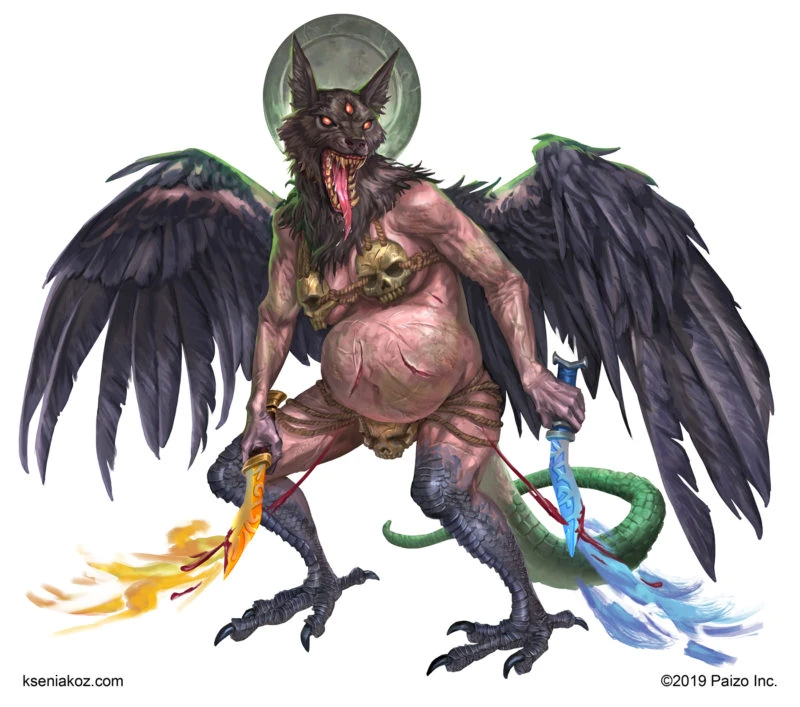
It's a demoness with a lion's head and the feet of a bird of prey, and she does exactly what the Lamia does.
ChrisHOST
And how did he translate it? As Lamia.
ChrisHOST
He simply equated the Hebrew night demon with the Greek child eater because at bottom they were the same thing.
ChrisHOST
Lamia, Lilith, Lamashtu.
ChrisHOST
These are three names for a fear that keeps taking the same face across the millennia and across cultures.

CodyHOST
Yet his role was more complicated than a purely evil creature seen in modern horror.
CodyHOST
Images of Pazuzu were also worn or displayed as protection, particularly against Lamashtu, a demon feared for attacking pregnant women and infants.
CodyHOST
No surviving ancient source currently establishes Zozo as another name for Pazuzu.
CodyHOST
The resemblance between the two names may feel suggestive, especially after decades of horror films and occult speculation, but resemblance is not evidence.

speaker_0HOST
Where the star of Ishtar was to cloak oneself in her celestial authority, invoking a goddess who had literally descended into the underworld and successfully waged war against death itself.
speaker_0HOST
Yet the most intimate protective practices in Mesopotamia evolved to fight a very specific terrifying entity, the demoness Lamashtu.
speaker_0HOST
Lamashtu was a corrupted divine being who slipped into households at night to steal newborn infants from their cribs and even to strike down mothers with childbed fever.
speaker_0HOST
To combat her, Mesopotamians engaged in the fascinating form of spiritual warfare that scholars call... apotropaic magic, which involves using a terrifying image to repel an equally terrifying threat.
speaker_0HOST
To drive Lamashtu away, families would hang bronze pendants or clay plaques of her sworn nemesis, the demon king Pazuzu.
speaker_0HOST
With his canine face and bulging eyes and feathered wings, Pazuzu was a nightmare incarnate.
speaker_0HOST
But because he hated Lamashtu, he functioned as humanity's fierce, albeit terrifying, bodyguard.
speaker_0HOST
Furthermore, patients suffering from mysterious illnesses could invoke Gola, the Mesopotamian goddess of healing and medicine.

Addison AndersonNARRATOR
[laughs] Far from it.
Addison AndersonNARRATOR
For example, the Mesopotamian Lamashtu was a creature with the head of a lion and the body of a donkey.
Addison AndersonNARRATOR
And the ancient Greek striges were simply described as bloodthirsty birds.
Addison AndersonNARRATOR
Others were even stranger.
Evan O'CuanaHOST
And then Marchosias also comes from that.
Evan O'CuanaHOST
Lamashtu was an addition because I was looking for specifically a female demon, and the Ars Goetia, I believe, are all males.
Evan O'CuanaHOST
Any of you TikTok witches out there that are champing at the bit saying I'm wrong, fine.
Evan O'CuanaHOST
Like, absolutely.

speaker_0HOST
Yeah.
speaker_1HOST
In ancient Mesopotamia, you find the Lamashtu, described as this horrifying entity with the head of a lion and the body of a donkey.
speaker_0HOST
That is terrifying.
speaker_0HOST
Ancient Greece had the striges, which were bloodthirsty birds-
5 more episodes mention Lamashtu.
Create an account to see the whole feed, search across every transcript, and follow the entities you care about.