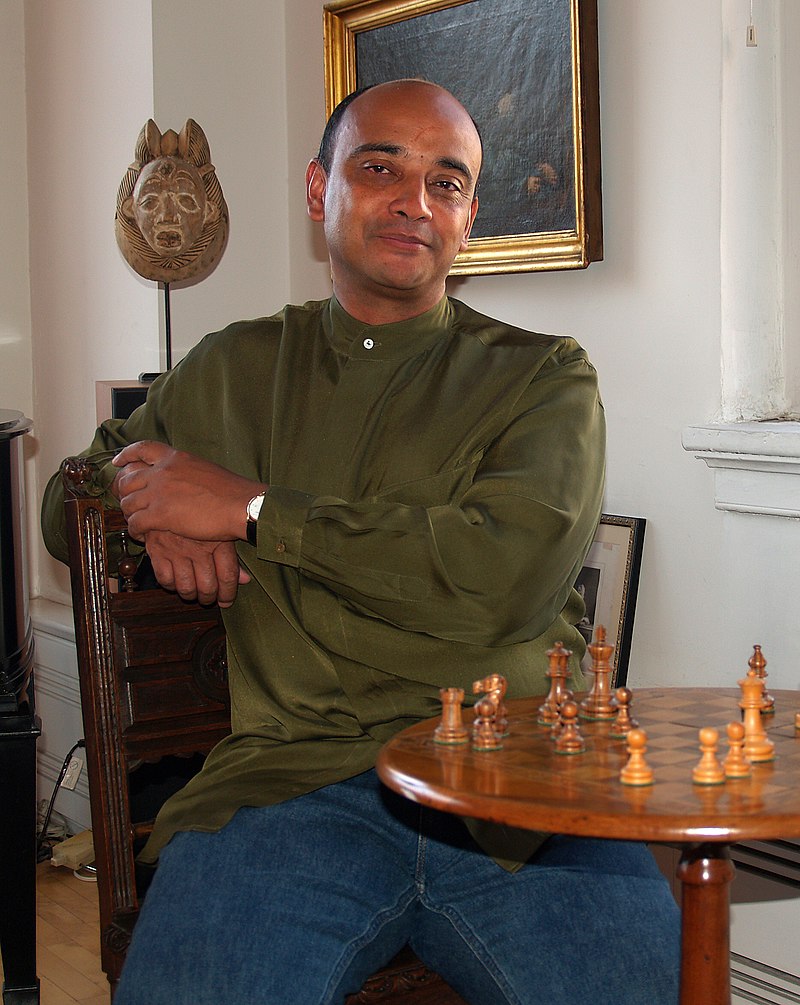
Kwame Anthony Appiah
Ghanaian-American philosopher and writerWikipedia
8
MENTIONS
7
EPISODES
6
PODCASTS
Search complete. 8 mentions across 7 episodes found for "Kwame Anthony Appiah".
Sep 16, 2026

Ellie AndersonHOST
But in a diverse society with legacies of inequality, that's easier said than done.
Ellie AndersonHOST
To maintain equality, should a society ignore the differences among people, or should it emphasize difference? Some philosophers, like Chandran Kukathas and Kwame Anthony Appiah, say that liberalism already protects people of all cultures.
Ellie AndersonHOST
If everyone has individual liberties, we don't need to do anything special for particular groups.
Ellie AndersonHOST
Thinkers in this tradition advocate for less intervention from the state, which is why some argue against measures like affirmative action, saying that it's an overcorrection that could create unfair advantages.
Ellie AndersonHOST
To keep peace and defend human rights everywhere, but still respect a culture's freedom to do things their own way.
Ellie AndersonHOST
To philosopher Kwame Anthony Appiah, cosmopolitanism really means universality plus difference.
Ellie AndersonHOST
He thinks being a citizen of the world means viewing cultural differences as a source of value, not conflict.
Ellie AndersonHOST
But it also means accepting the moral obligation to help people everywhere simply because they're people.

Tommy J. CurryGUEST
And in the UK, I'm the only black professor in philosophy right now.
Tommy J. CurryGUEST
Before me, there was Anthony Appiah.
Tommy J. CurryGUEST
So there's a good chance I was only the second.
Tommy J. CurryGUEST
I don't know if Appiah was the first, but I can't.

Michael DiNisciaGUEST
So as the editor of this, I, um, reading everyone's pieces, um, so many folks, as Hussein did, um, went to etymology and definition of the word.
Michael DiNisciaGUEST
So like, um, starts with Anthony Appiah going back to the Latin and Greek roots of civis and, uh, polis.
Michael DiNisciaGUEST
Polis mean, uh, for a city in Greek, but also then becoming the base of the word for polite, which is als- often confused with civility.
Michael DiNisciaGUEST
Um, but so many folks did that.
20 MINS LATER
Michael DiNisciaGUEST
[laughs] Um, get to, get to the meaning.
Michael DiNisciaGUEST
[laughs] Um, but, uh, and I think the benefit of that, uh, with this particular book was that it laid bare that we come into this with a lot of assumptions, and it laid out those assumptions, and sometimes it would, uh, back up those assumptions.
Michael DiNisciaGUEST
So A- Anthony Appiah, um, who's just brilliant, is, is always looking for ways that we can sort of keep moving along, that, um, nothing will ever be perfect.
Michael DiNisciaGUEST
But, uh, pr- you know, one of the, um, uh, examples he used, um, from a British TV show was just, you know, a dad and, uh, his, his, uh, son's friend just like, "Okay, you know, we're not gonna agree, but it's okay.

Michael DiNisciaGUEST
So many folks, as Hussein did, went to etymology and definition.
Michael DiNisciaGUEST
So it starts with Anthony Appiah going back to the Latin and Greek roots of civis and polis.
Michael DiNisciaGUEST
Polis means for a city in Greek, but also then becoming the base of the word for polite, which is often confused with civis.
Michael DiNisciaGUEST
civility, but so many folks did it.

Michael DiNisciaGUEST
So many folks, as Hussein did, went to etymology and definition.
Michael DiNisciaGUEST
So it starts with Anthony Appiah going back to the Latin and Greek roots of civis and polis.
Michael DiNisciaGUEST
Polis means for a city in Greek, but also then becoming the base of the word for polite, which is often confused with civis.
Michael DiNisciaGUEST
civility.

Michael DiNisciaGUEST
So many folks, as Hussein did, went to etymology and definition.
Michael DiNisciaGUEST
So it starts with Anthony Appiah going back to the Latin and Greek roots of civis and polis.
Michael DiNisciaGUEST
Polis means for a city in Greek, but also then becoming the base of the word for polite, which is often confused with civis.
Michael DiNisciaGUEST
civility.