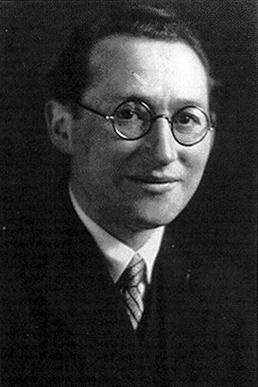
Kurt Lewin
German-American psychologistWikipedia
41
MENTIONS
23
EPISODES
19
PODCASTS
Search complete. 41 mentions across 23 episodes found for "Kurt Lewin".
Nov 2, 2026

Steven Lee ThomasHOST
Wow.
Francine JulienGUEST
Kurt Lewin is a social scientist, and he said it takes a major upheaval to create change.
Francine JulienGUEST
So when I say, I can't live like this anymore, most of the people that come to me are at that point.
Francine JulienGUEST
They're some major upheaval, like, oh, my God, I've got to get out of this job situation.

Ian MathewsHOST
Yeah, it certainly made an impact on me of how much feedback I was going to give.
Ian MathewsHOST
And really what you're talking about there is, what is safe to push back on? And what is just too much of a risk? Kurt Lewin is another psychologist, and he has this concept of an unfreeze shock.
Ian MathewsHOST
Sometimes an organization gets frozen into its current equilibrium, its current culture, and polite one-on-one coaching sort of doesn't do it when the culture is too entrenched when it's too like harbaugh wasn't going to get there by being like hey listen guys let's try to he needed to make a point and sometimes that axe blow can kind of be the unfreeze when you have a frozen culture that's stuck doing things the way they were doing it a few years ago and not understanding the new reality it's that little jolt to the room that kind of wakes everyone up it's a little like electricity shock through the system that recalibrates what safe behavior really looks like.
Frank CavaHOST
You're on a roll, keep going.

Matt FinchGUEST
It is more about getting stuck in, but in an open-minded way.
Matt FinchGUEST
And even if you go back to the Kurt Lewin line about, you know, to understand a system, you should try to change it.
Matt FinchGUEST
recognizing your agency, taking responsibility for it, and then using that agency judiciously, inclusively, and respectfully.
Matt FinchGUEST
The way you learn how to shape the clay is by having the bravery to touch that clay spinning on the wheel for the first time.

Sandra DjordjelovicGUEST
It was important for her to get out of the lab, to understand the importance of the lab, but not to stay in the lab, to pay attention to what people have to say, to listen to the languages that report how people see the world, experience the world, feel the world, and use that as data to make psychology more connected to that world, not having, not being afraid of listening.
Sandra DjordjelovicGUEST
I think that's something very important that comes out of, of, of Hilda's, uh, legacy, and not too far away, not too far away from Kurt Lewin's original program, say, uh- There is nothing more practical of a good theory, and we need a gestalt, uh, to understand the complexity of human, uh, behavior.
Sandra DjordjelovicGUEST
Um, I think for all of these reasons, her program for psychology, uh, continues to be inspirational.
Sandra DjordjelovicGUEST
Psychology, of course, uh, is a, a, a contested field.

Mary V. GelinasGUEST
It had a significance that for me just felt like a lightning bolt going on inside me, going through me.
Mary V. GelinasGUEST
The territory Alan was describing, the forces and mostly invisible fields, which I know we're going to get into, But I hadn't connected the whole notion of context and fields with my understanding of the early work of Kurt Lewin and Mary Parker Follett, who are also pointing to fields.
Mary V. GelinasGUEST
In the case of Mary Follett, it wasn't so much, she didn't use that language, but she would talk about dealing with whole situations.
Mary V. GelinasGUEST
And circular responses, which to me were absolutely pointing at fields.

Kristian LuomaHOST
What's the uncomfortable truth? Are these theories or framers just the same idea wearing a different hat? Or has it been in progress in the past, give or take a few 70 years?
Richard H. CarsonGUEST
Well, the field of organizational change management was created in 1947 by Kurt Lewin.
Richard H. CarsonGUEST
And he basically had three... which was basically you did your introduction, you did a diagnosis and you maintained the recommendation.
Richard H. CarsonGUEST
So almost every model since then follows that same pattern, which is fine because it's a really good idea.

Robert SkvarlaGUEST
I could be wrong about the specific date.
Robert SkvarlaGUEST
But the idea behind the article was he was going to look into the Human Ecology Fund, which is where he received his funding, because that was the CIA's conduit for dispersing this money to researchers who were working under contract for them.
Robert SkvarlaGUEST
And when he looked into it, the argument that he came up with was it was just a recruitment program, because he found a memo from the CIA through FOIA or some other means that stated there were some interesting individuals associated with his projects in the country that he was in, somewhere, I believe, in Africa.
Robert SkvarlaGUEST
So that's what he took it to mean.
9 MINS LATER
IsaacHOST
I, I mean, it, it, it is very hard to parse, and I imagine for you that's, like, kind of the biggest challenge, right? Is trying to figure out what is disinformation because how can you kn- how, what do...
IsaacHOST
how can you tell the difference?
Robert SkvarlaGUEST
And, I mean, part of it is that even good researchers, I think, can end up chasing leads because it's what's attractive.
Robert SkvarlaGUEST
So the reason we have documents regarding MKUltra is in '75, I believe, John Marks, who had wrote "The CIA and the Cult of Intelligence" with a former CIA analyst, Victor Marchetti, um, had heard rumblings of these CIA documents of behavioral programs.
13 more episodes mention Kurt Lewin.
Create an account to see the whole feed, search across every transcript, and follow the entities you care about.