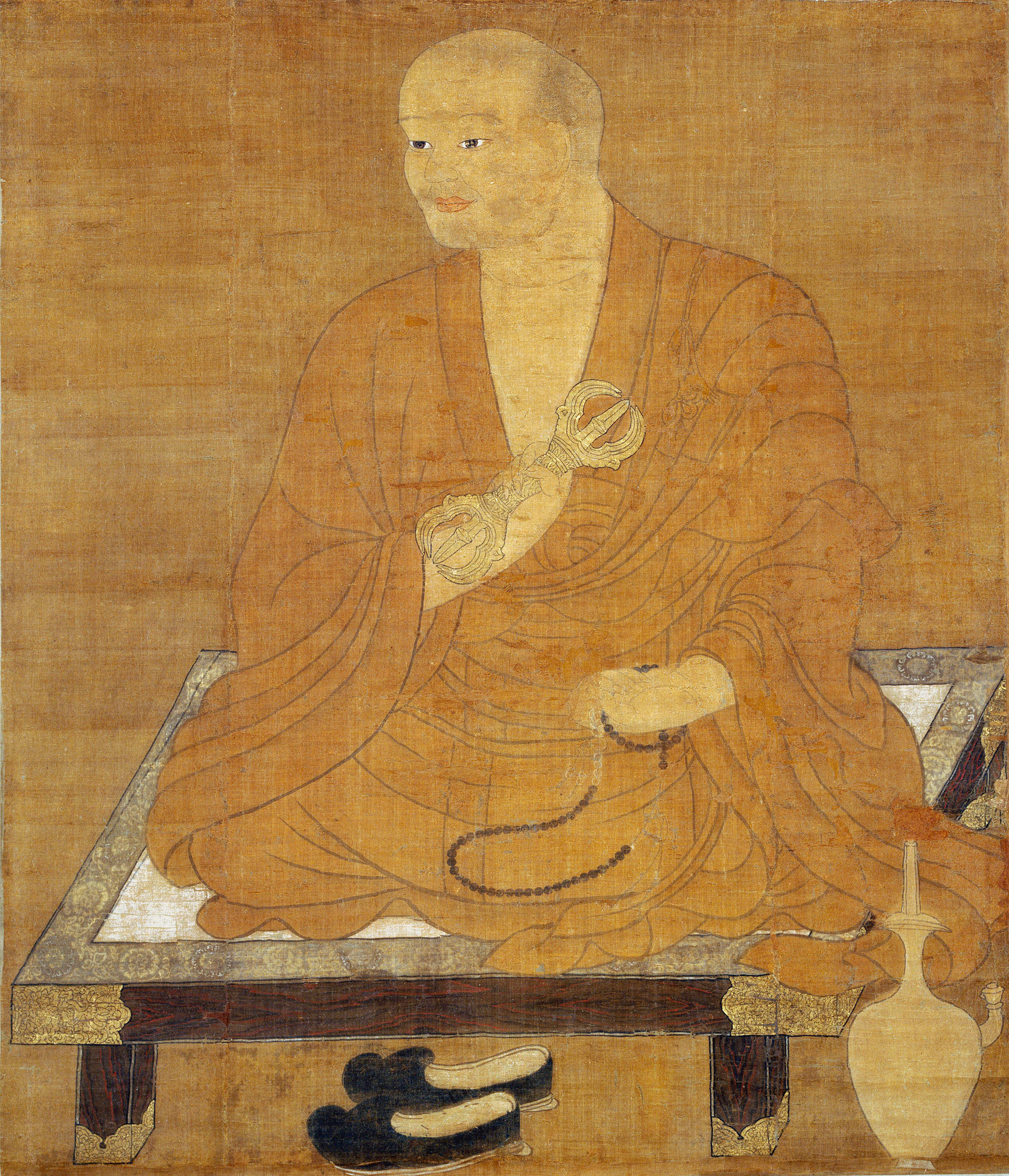
Kūkai
Japanese monkWikipedia
10
MENTIONS
7
EPISODES
7
PODCASTS
Search complete. 10 mentions across 7 episodes found for "Kūkai".
Nov 1, 2026

Maci NelsonHOST
There are lanterns that glow softly at night that are celebrating or bring honor and awareness.
Maci NelsonHOST
And it is surrounding a mausoleum to Kobo Daishi, who was a founder of the Shingon Buddhism practice.
Maci NelsonHOST
Municipal cemeteries, those ones are probably the ones in the U.S. you will see a lot of.
Maci NelsonHOST
They are owned by a local city or county.

PadmavajraHOST
Mm.
AlokaGUEST
I mean, Kukai said, "Well, you know, you can have a, a practice based on anything."
PadmavajraHOST
Mm.
AlokaGUEST
You know, you can just stick a matchbox in front of you.
PadmavajraHOST
Mm.
AlokaGUEST
Don't know if they had matchboxes in Kukai's time.
speaker_3UNKNOWN
[laughs]
PadmavajraHOST
So-

John GreenmanNARRATOR
It is very popular amongst ardent Buddhists in China, and excepting the Lotus of the Good Law and the Leng Yen Ching, perhaps no other sutra ascribed to Buddha is regarded by the Chinese with so great esteem.
John GreenmanNARRATOR
In Japan, the Diamond Sutra appears to be perused extensively by what Max Müller termed the Shingon sect, founded by Kobo, a disciple of the renowned pilgrim Huin Tsang about the year 816 AD.
John GreenmanNARRATOR
The Diamond Sutra was written originally in Sanskrit, and in process of time translated into the Tibetan, Chinese, Mongol, and Manchu languages.
John GreenmanNARRATOR
It represents the Mahayana school of Buddhist thought, a school founded by Nagarjuna, which flourished primarily at Chakuka, and thereafter influenced appreciably a considerable part of the Buddhist church.

John GreenmanNARRATOR
It is very popular amongst ardent Buddhists in China, and excepting the Lotus of the Good Law and the Leng Yen Ching, perhaps no other sutra ascribed to Buddha is regarded by the Chinese with so great esteem.
John GreenmanNARRATOR
In Japan, the Diamond Sutra appears to be perused extensively by what Max Müller termed the Shin Gon sect, founded by Kobo, a disciple of the renowned pilgrim Huin Tsang, about the year eight sixteen AD.
John GreenmanNARRATOR
The Diamond Sutra was written originally in Sanskrit, and in process of time translated into the Tibetan, Chinese, Mongol, and Manchu languages.
John GreenmanNARRATOR
It represents the Mahayana school of Buddhist thought, a school founded by Nagarjuna, which flourished primarily at Chakuka.

Rob GossHOST
And is it 88 or is there another one? Does that include Koyasan? Isn't that like Koyasan is connected to it somehow? I don't know.
Rob GossHOST
Isn't it all like a Kobo Daishi related? Well, it
Tom FayHOST
is.
Tom FayHOST
But that's

Eshin WoodwardHOST
That's pretty good.
Eshin WoodwardHOST
When you read Kukai, I feel the same.
Eshin WoodwardHOST
Just like, man,
Koei ErvinHOST
gosh.
Koei ErvinHOST
Well, one of the things that I like about Shingon is that it's very consciously...
Koei ErvinHOST
Diverse, I guess you could say.
Koei ErvinHOST
So Kukai had this big way of synthesizing all the different schools of Buddhism that had come to Japan in his time, and he had studied all of them.
Koei ErvinHOST
And so he saw Shingon as kind of permeating and kind of synthesizing all these different traditions, which means that he was very open.

John GreenmanNARRATOR
It is very popular amongst ardent Buddhists in China, and excepting the Lotus of the Good Law and the Lan Yen Ching, perhaps no other Sutra ascribed to Buddha is regarded by the Chinese with so great esteem.
John GreenmanNARRATOR
In Japan, The Diamond Sutra appears to be perused extensively by what Max Müller termed the Shingon sect, founded by Kobo, a disciple of the renowned pilgrim Hiuen Tsang, about the year eight sixteen AD.
John GreenmanNARRATOR
The Diamond Sutra was written originally in Sanskrit and in process of time translated into the Tibetan, Chinese, Mongol, and Manchu languages.
John GreenmanNARRATOR
It represents the Mahayana school of Buddhist thought, a school founded by Nagarjuna, which flourished primarily at Chakuka and thereafter influenced appreciably a considerable part of the Buddhist Church.