KRAS
501
MENTIONS
79
EPISODES
59
PODCASTS
Search complete. 501 mentions across 79 episodes found for "KRAS".
Sep 13, 2026

Allison OceanGUEST
I had tears too because I was unfortunately thinking of all the people.
Allison OceanGUEST
that I wondered could have benefited from it, from the new drug that they were presenting, the Teroxanracib KRAS inhibitor.
Allison OceanGUEST
But I said that to a few family members and to a few people on our board about that it was a bittersweet moment to be in the room.
Allison OceanGUEST
And what was interesting is that the people that I knew who had lost people were more hopeful than they were sad about this announcement because all they wanted was future people not to have what happened to their loved one happen.
Allison OceanGUEST
Sure.
Allison OceanGUEST
So the new drug is called Deroxanracib, and it is a pan-RAS inhibitor.
Allison OceanGUEST
And what does that mean? RAS, or specifically KRAS, is a protein that is present in all pancreatic cancer, almost all pancreatic cancers.
Allison OceanGUEST
And it's a gene that causes the cancer to grow.

Narjust FlorezGUEST
These patients are four times more likely to have a target mutation.
Narjust FlorezGUEST
So the most common mutations are ALK fusions, EGFRs, and KRAS G12D, as in David.
Narjust FlorezGUEST
So they're genomically different.
Narjust FlorezGUEST
It's estimated that around 66% of young patients have a target mutation.
6 MINS LATER
Narjust FlorezGUEST
So I think the numbers are going to keep going up.
Narjust FlorezGUEST
I have a 19-year-old with ROS1 disease.
Narjust FlorezGUEST
I have a 23-year-old with KRAS G12D.
Narjust FlorezGUEST
And they're just getting younger.

Dan PatersonGUEST
Yeah, and it may be that combining with other agents as opposed to agents that hit other forms of RAS might be the more fruitful path because, as John mentioned, some of these other forms of RAS are in normal cells, and that's where the side effects come from.
Jonathan PachterGUEST
And I think the mechanisms of resistance is a really important thing to discuss as well, because originally it was thought, and I think Revolution Medicines had said that a pan-RAS should give you longer efficacy, more durable, because with the early KRAS inhibitors, the G12C inhibitors, Other acquired resistance mechanisms tended to be other RAS mutations, and the idea was if you hit RAS broadly, you won't have those resistance mechanisms.
Jonathan PachterGUEST
What we've seen preclinically is that the tricomplex or on-only inhibitors bring a whole other host of resistance mechanisms that don't apply to our drug, and really... we know that cancer is not going to take any drug lying down.
Jonathan PachterGUEST
It's just going to find other ways around it.
11 MINS LATER
Darren IncorvaiaCORRESPONDENT
But there's many other opportunities for RAS inhibition or targeting the RAS pathway.
Darren IncorvaiaCORRESPONDENT
Kind of what's like the broad potential you see for RAS inhibition in these other types of cancers?
Jonathan PachterGUEST
It's been estimated that there are more than 60,000 new patients a year in the U.S. alone that have a cancer that's driven by the KRAS G12D mutation.
Jonathan PachterGUEST
Again, it's the most common KRAS mutation in human cancer, about 40% of pancreatic, but about 15% of colorectal, about 5% of lung cancer.

speaker_0HOST
mentioned.
speaker_0HOST
Right, the KRAS gene.
speaker_1HOST
Exactly.
speaker_1HOST
More than 90% of these pancreatic ductal adenocarcinomas are driven by mutations in the KRAS gene.
speaker_1HOST
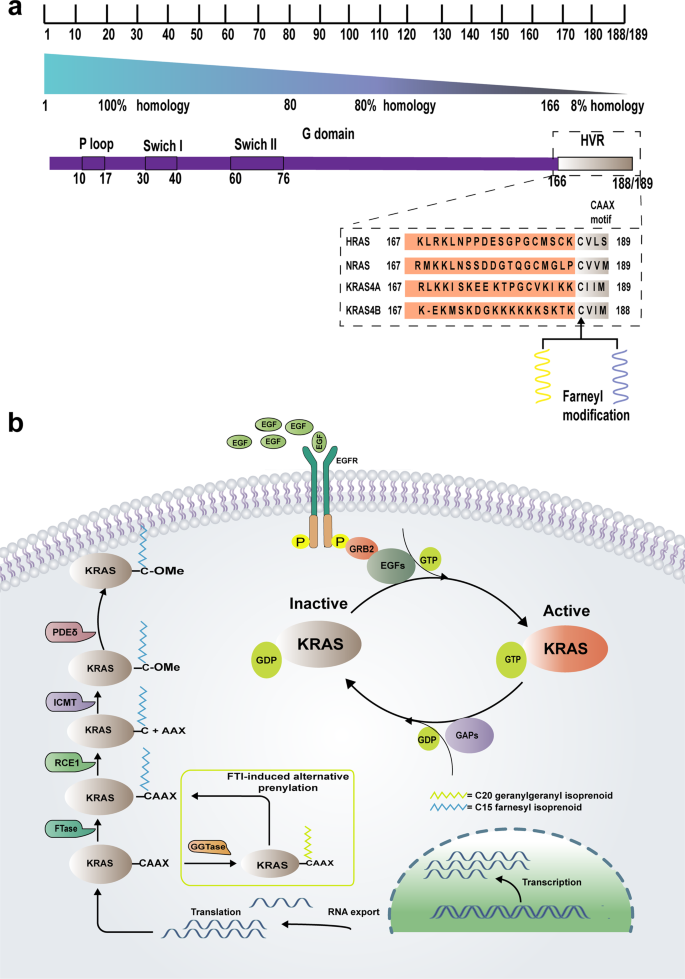
The KRAS protein normally acts as a molecular switch for cellular growth.
speaker_1HOST
So it turns on, the cell divides, it turns off, The cell stops.
speaker_0HOST
But in these cancer cells, that switch is jammed in the on position.
speaker_0HOST
You're harming healthy dividing cells right alongside the cancerous ones.

Martin HojgaardSOUNDBITE_SPEAKER
But then we also looked into the co-mutational landscape of these tumors, because some of these tumors actually harbor some other actionable alterations.
Martin HojgaardSOUNDBITE_SPEAKER
And we did find KRAS mutations, quite a few IDH1 mutations in diastrocytomas, the N-TRAC or PIKT3CA mutations.
Martin HojgaardSOUNDBITE_SPEAKER
So this could hopefully inspire others to go down to look into combination therapies to combine a PRM25 inhibitors with like a PIK3CA inhibitor or a RAS inhibitor in this population of CNS tumors with a highly unmet need for
speaker_0HOST
treatment.

Neil LoveHOST
Good afternoon, everyone.
Neil LoveHOST
I'm Neil Love from Research to Practice, and welcome to Where We Are and Where We're Heading, Targeting KRAS G12C and Non-Small Cell Lung Cancer.
Neil LoveHOST
We have a great faculty tonight, Professor Solange Peters from the Lausanne University Hospital in Lausanne, Switzerland, and Dr. Josh Sabari from the Perlmutter Cancer Center and the NYU Grossman School of Medicine in New York City.
Neil LoveHOST
Tonight, we're going to talk about KRAS G12C inhibitors, and as I started to explore this, I got very, very excited, and I'm super excited to talk about this tonight.
Neil LoveHOST
We will be discussing the use of non-approved agents and regimens, so check out the package inserts for more.
Neil LoveHOST
Here's where we're heading.
Neil LoveHOST
I'm going to start out and provide a little bit of a background to what we're going to talk about tonight.
Neil LoveHOST
Then we'll get into the biology of KRAS-G12C and the inhibitors there, the available and approved agents, and particularly use in the second line.

Neil LoveHOST
Good afternoon, everyone.
Neil LoveHOST
I'm Neil Love from Research to Practice, and welcome to Where We Are and Where We're Heading, Targeting KRAS G12C and Non-Small Cell Lung Cancer.
Neil LoveHOST
We have a great faculty tonight, Professor Solange Peters from the Lausanne University Hospital in Lausanne, Switzerland, and Dr. Josh Sabari from the Perlmutter Cancer Center and the NYU Grossman School of Medicine in New York City.
Neil LoveHOST
Tonight, we're going to talk about KRAS G12C inhibitors, and as I started to explore this, I got very, very excited, and I'm super excited to talk about this tonight.
Neil LoveHOST
We will be discussing the use of non-approved agents and regimens, so check out the package inserts for more.
Neil LoveHOST
Here's where we're heading.
Neil LoveHOST
I'm going to start out and provide a little bit of a background to what we're going to talk about tonight.
Neil LoveHOST
Then we'll get into the biology of this KRESG12C and the inhibitors there, the available and approved agents, and particularly use in the second line.

Oncology Today with Dr Neil Love
Non-Small Cell Lung Cancer — Targeting KRAS G12C
Sep 10 · 62 Mentions
Neil LoveHOST
Good afternoon, everyone.
Neil LoveHOST
I'm Neil Love from Research to Practice, and welcome to Where We Are and Where We're Heading, Targeting KRAS G12C and Non-Small Cell Lung Cancer.
Neil LoveHOST
We have a great faculty tonight, Professor Solange Peters from the Lausanne University Hospital in Lausanne, Switzerland, and Dr. Josh Sabari from the Perlmutter Cancer Center and the NYU Grossman School of Medicine in New York City.
Neil LoveHOST
Tonight, we're going to talk about KRAS G12C inhibitors, and as I started to explore this, I got very, very excited, and I'm super excited to talk about this tonight.
Neil LoveHOST
We will be discussing the use of non-approved agents and regimens, so check out the package inserts for more.
Neil LoveHOST
Here's where we're heading.
Neil LoveHOST
I'm going to start out and provide a little bit of a background to what we're going to talk about tonight.
Neil LoveHOST
Then we'll get into the biology of this KRESG12C and the inhibitors there, the available and approved agents, and particularly use in the second line.

Anne LynchGUEST
And also, we have shown in collaboration with Dr. Humam Kedara at MD Anderson, who also collaborated on this paper with us and actually became one of my co-mentors.
Anne LynchGUEST
In our work with him, we showed that in a KRAS-driven lung adenocarcinoma model, when we lineage trace keratin-8 cells, we show that they can be even precursors to lesions in lung adenocarcinoma.
Anne LynchGUEST
So the state is kind of highly prone to becoming misregulated and cause, you know, multiple types of disease.
Anne LynchGUEST
And there's not really a lot of trans, I mean, there is a lot of transitional characterization of this state, but we're lacking a lot of knowledge on the specific regulators that drive AT2 cells into transition and whether they fully differentiate into AT1 cells or misregulate, kind of become stuck in this state and then lead to disease progression.
69 more episodes mention KRAS.
Create an account to see the whole feed, search across every transcript, and follow the entities you care about.