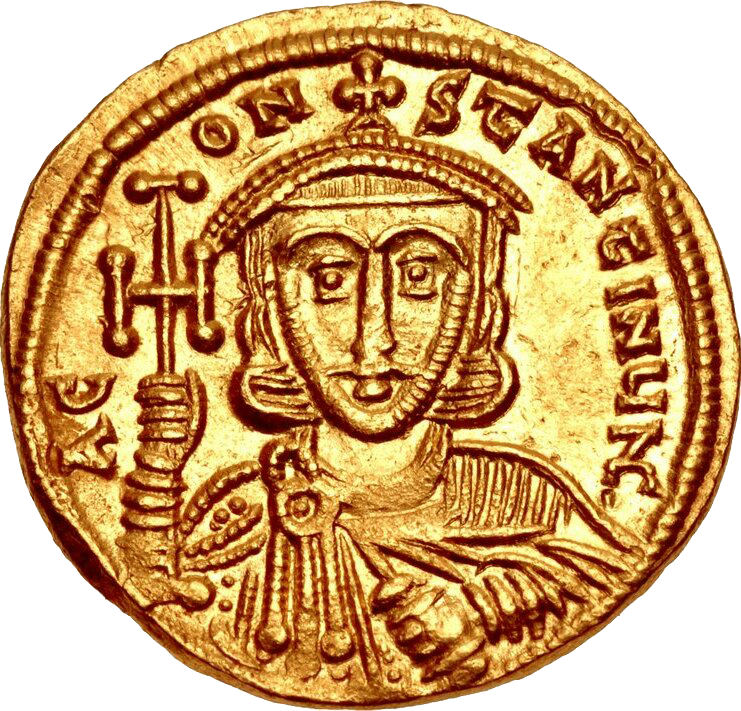
Konstantinos V
Former Emperor of Byzantine EmpireWikipedia
4
MENTIONS
2
EPISODES
2
PODCASTS
Search complete. 4 mentions across 2 episodes found for "Konstantinos V".
Sep 17, 2026

Pamela NagamiNARRATOR
The only important exception was Martin I, 649-653, whose opposition to the efforts of Constantinus to induce monotheletes and defenders of orthodoxy to live together in peace brought him into collision with the emperor, who lured him to Constantinople and there arraigned him on a charge of political intrigue and had him deposed and imprisoned till his death a few months later.
Pamela NagamiNARRATOR
The anarchy that followed the death of Constantine V once more threw on the popes the work of providing for their own defense and so helped to inaugurate a new period of advance in the powers of the papacy.
Pamela NagamiNARRATOR
This new chapter in the history of Rome opens with the election of Gregory II to the papal chair in 715.
Pamela NagamiNARRATOR
The latter half of the 7th century is also a period of comparative unimportance in the history of the Lombards.
1 HR 15 MINS LATER
Pamela NagamiNARRATOR
For the same reason image worshippers claimed to be defenders of the doctrine of the true humanity of Christ.
Pamela NagamiNARRATOR
But as the controversy proceeded it broadened out into a general attack by the rationalistic spirit on the ecclesiastical tendencies of the time, a kind of 8th century Lutheranism.
Pamela NagamiNARRATOR
Mariolatry, the worship of saints, and the adoration of relics were included in the imperial condemnation under Constantine V, and monasticism itself was attacked by his reforming zeal.
Pamela NagamiNARRATOR
The chief support of the imperial policy came from the army, which was recruited to a considerable extent from the same district in the highlands of Asia from which the Isaurian emperors derived their name.

Irenaeus DunlevyGUEST
This idea, however, was greatly challenged by the iconoclast controversy in the Byzantine Empire, which commenced in 726 AD when Emperor Leo III removed the icon of Christ from the Colche Palace gate in Constantinople.
Irenaeus DunlevyGUEST
So we have Leo III on the left, graven image, and we have his son, Constantine V.
Irenaeus DunlevyGUEST
Sorry, Leo III on the left and Constantine V on the right.
Irenaeus DunlevyGUEST
The battle between the iconoclasts and iconophiles would rage on until about the quarter mark of the 9th century when Empress Theodora, it's sort of the triumph of orthodoxy, I think it's called, returned the use of icons to the entire empire.
Irenaeus DunlevyGUEST
Though this controversy maps upon the reigns of, you know, who's in charge, sort of waffling a little bit back and forth, there's a lot of theological substance to what's going on.