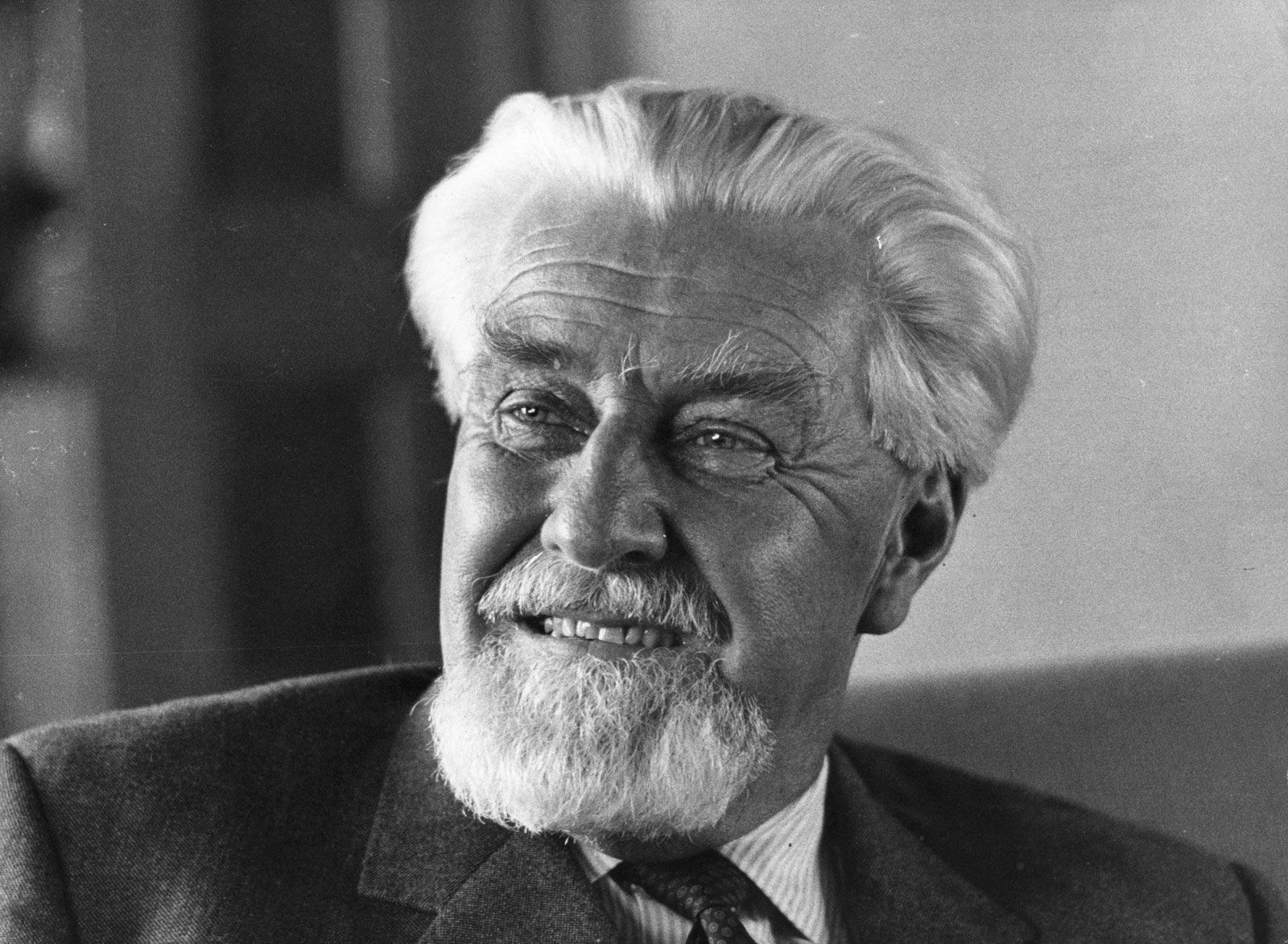
Konrad Lorenz
Austrian zoologist and ethologistWikipedia
11
MENTIONS
6
EPISODES
6
PODCASTS
Search complete. 11 mentions across 6 episodes found for "Konrad Lorenz".
Nov 12, 2026

PierceHOST
Open your mouth so I can pump you full of secret food.
Leo Darth ErogenousGUEST
My field of study, animal cognition, was kind of founded by an Austrian guy called Konrad Lorenz, who was all about geese.
Leo Darth ErogenousGUEST
He liked them a lot.
Leo Darth ErogenousGUEST
He lived with them.

Ruth Schmidt NevenHOST
Just looking at the context of the time when you trained, that it was in the 1960s that John Bowlby was in the process of writing his great trio of works on attachment, separation and loss.
Ruth Schmidt NevenHOST
You met John Bowlby in the course of your training and you were also introduced via John Bowlby to the work of Conrad Lorenz and Nico Tinbergen.
Ruth Schmidt NevenHOST
the animal ethologists whose work had such an influence on Bowlby.
Ruth Schmidt NevenHOST
Can you tell us how this came about and what you learned from Bowlby and the ethologists?
25 MINS LATER
Eve SteelGUEST
And there's also that lecture to all disciplines that was done for the first year as well, which you probably had on basic Freud and things like that.
Eve SteelGUEST
So it was very much a feeling of being part of a team.
Eve SteelGUEST
But I missed out the thing about Lorenz and Tidberg and because Bowlby had even written about ethology and development long before, I think in the 50s, and inviting Conrad Lorenz and Tinbergen for a week was an utter delight.
Eve SteelGUEST
And Lorenz showing his films of imprinting, which again were very significant to attachment theory of the little goslings following Lorenz around.

Anthony LittleGUEST
I think people use the word cute in various ways.
Anthony LittleGUEST
In the scientific community, a lot of cuteness started with Conrad Lorenz.
Anthony LittleGUEST
And he came up with this idea of baby schema.
Anthony LittleGUEST
These are kind of traits in infants that we might associate with cuteness.
Anthony LittleGUEST
And then actually that need to be taken care of is disappearing.
Hannah FryHOST
I do also want to hear about us finding other animals cute, because that bit kind of stops making sense, doesn't it?
Anthony LittleGUEST
Again, so I keep talking about Conrad Lorenz, but he's the kind of father of this discipline.
Anthony LittleGUEST
But he made the case that it's actually very particular traits.

Timothy ParkerGUEST
And what's crucial, I guess, to understand is that an AI-generated image can be perfect or way more perfect than you would ever see.
Timothy ParkerGUEST
And this takes me back to... learning about animal behavior in second or third year university, where we learned about Conrad Lorenz and research that had been done on, get this, egg retrieval in the gray lag goose.
Timothy ParkerGUEST
And what they discovered when they did this work was sometimes the eggs would roll out of the nest, which is just sitting on the ground and has the nest edge of it.
Timothy ParkerGUEST
And the goose would then go out and retrieve the egg by pulling it in with its beak.

Gül DölenGUEST
And I just want to back up to you to explain what a critical period is and why this is such a big deal for neuroscience.
Gül DölenGUEST
So critical periods were first discovered or first described in 1935 by Conrad Lorenz.
Gül DölenGUEST
He used that term to describe imprinting behavior in geese.
Gül DölenGUEST
And what he noticed is that those baby goslings sort of within 48 hours after hatching will form a lasting, really robust, learned attachment to whatever is moving around in their environment.
Gül DölenGUEST
So normally that would be their mom.
Gül DölenGUEST
But if mom isn't available, it can be any other caregiver in the immediate environment.
Gül DölenGUEST
But it can also be a kooky scientist like Conrad Lorenz.
Gül DölenGUEST
But after that first 48 hours is over, then they no longer are sensitive to what's moving around in their environment and they don't learn those attachments.

Isabella RosselliniGUEST
was always interested in animal behavior.
Isabella RosselliniGUEST
My father gave me a book by Conrad Lorenz, and I'm sure Conrad has read it.
Isabella RosselliniGUEST
I'm sure I have.
Isabella RosselliniGUEST
King Solomon's Ring.