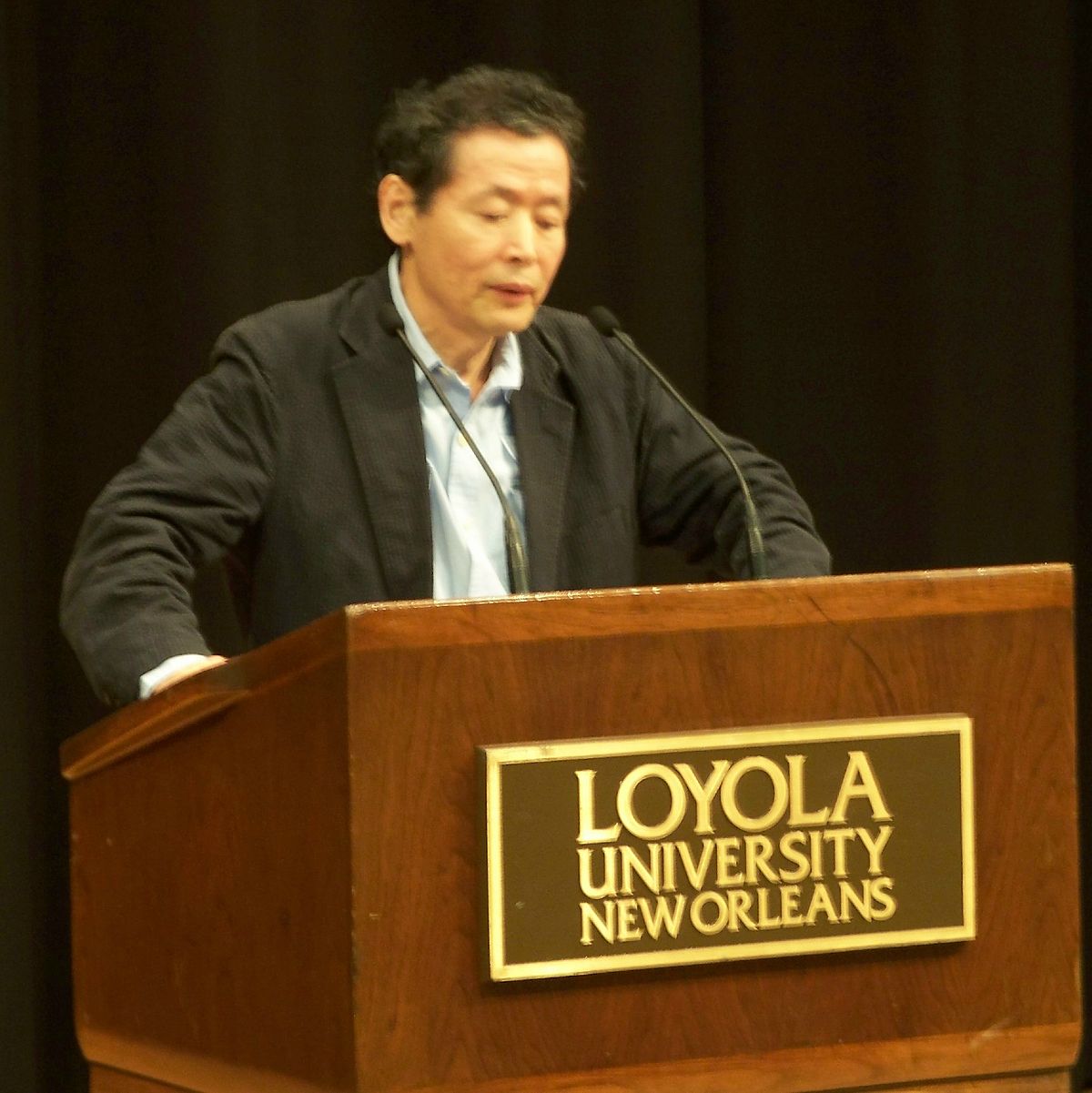
Kojin Karatani
Japanese philosopher and literary criticWikipedia
2
MENTIONS
2
EPISODES
1
PODCASTS
Search complete. 2 mentions across 2 episodes found for "Kojin Karatani".
Sep 23, 2026
Daniel TuttHOST
But there's also a kind of capitulation to the status quo and so on in Hegel.
Daniel TuttHOST
And I think that a lot of Marxist Hegelians would put forward some argument close to maybe like what Karatani says apropos Kant, is that Kant is a sort of philosopher of socialism, but he wasn't dealing with a mature form of capitalism.
Daniel TuttHOST
He was dealing with a kind of rudimentary mercantile form of capitalism.
Daniel TuttHOST
So his conception therefore of unfreedom simply needed Marx.

Daniel TuttHOST
No, that's really good.
Daniel TuttHOST
In other words, Longa has no historical materialist perspective at all, and But we could, I mean, you know, for the sake of a little exercise, we could, I don't know, we could introduce Karatani's book on Socrates, which does give that precise missing element where he says in Sun Raitel, the German Marxist said this as well in a different work, that really speculative thought, Socrates and Plato emerges from, um at the at a very particular moment of the unification of currency right and commerce that's the central element that makes well for for sun right so that's the central element that eventually makes a priori knowledge um uh knowledge that is beyond experience possible or speculative thought possible or or what he will call abstraction real abstraction but for karatani in his wonderful book on socrates called isonomia he makes a nice point that uh Socrates was actually a materialist because he hails from Ionia, and they were a group of philosophers known for being materialists.
Daniel TuttHOST
And isonomia is the sort of, I guess, the central concept that Socrates introduces that's somehow novel or somehow... makes a scission within Greek thought.
Daniel TuttHOST
And I found that interesting because the concept of isonomia refers to a form of equality that's non-representational.