Hwasong-11A
13
MENTIONS
10
EPISODES
7
PODCASTS
Search complete. 13 mentions across 10 episodes found for "Hwasong-11A".
Oct 15, 2026

Jerome StarkeyHOST
It's been using Iranian-made Shahed drones since almost since day one of the war.
Jerome StarkeyHOST
It has fired North Korean KN-23 missiles in the past, but there's been a break.
Jerome StarkeyHOST
So that could mean two things.
Jerome StarkeyHOST
Either that North Korea has ramped up production and has a surplus it's willing to sell, or perhaps also that Russia is exhausting its own stockpiles and needs to lean more heavily on Pyongyang.
Jerome StarkeyHOST
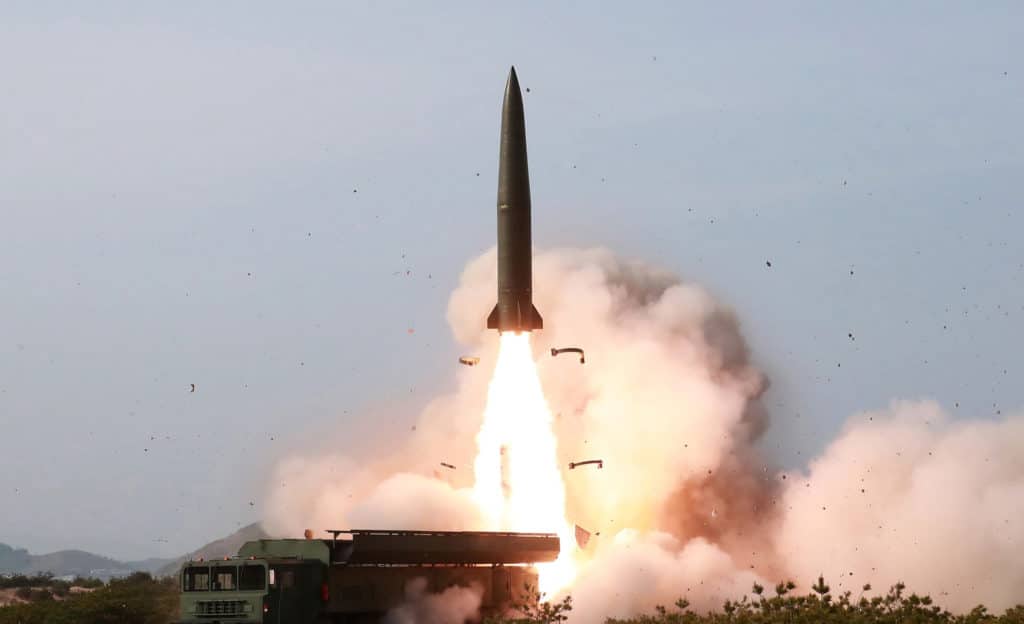
Now, these missiles, the KN-23, they're very, very similar to the Iskander ground launch ballistic missiles.
Jerome StarkeyHOST
These are big weapons, 7 and a half meters long.
Jerome StarkeyHOST
They weigh about 3 and a half tons.
Jerome StarkeyHOST
Uh, they have a range of some 500 kilometers.
Jerome StarkeyHOST
Ukraine also receives military support.
Jerome StarkeyHOST
It receives materiel weapons from its allies, just as Russia receives materiel weapons like KN-23 ground-to-ground ballistic missile from, uh, North Korea and indeed artillery shells.
Jerome StarkeyHOST
It also receives support, uh, from China.
Jerome StarkeyHOST
That doesn't explicitly make those countries party to the war.
Jerome StarkeyHOST
They've sent, uh, thousands of troops who are fighting in Kursk.
Jerome StarkeyHOST
We also reported last week they've sent thousands of laborers to work in Russia's ammunition factories, and they have also supplied, uh, ground-launch ballistic missiles, such as the KN-23, which is effectively a North Korean version of the Iskander-M that I talked about earlier in this episode.
Jerome StarkeyHOST
Why doesn't Ukraine hit those factories? I think a number of reasons.
Jerome StarkeyHOST
The first, because Ukraine has limited resources, uh, it targets what it can reach that it thinks is going to have the greatest impact.

Lami KimGUEST
North Korea has transferred tactical nuclear missiles, tactical ballistic missiles, and short-range missiles, of course, because of the geographic distance, the short distance between Russia and Ukraine.
Lami KimGUEST
And so the KN-23 and other short-range missiles, North Korea is testing those missiles on the battlefield.
Lami KimGUEST
That gives North Korea an opportunity to improve their missile capabilities.
Lami KimGUEST
And those are exactly the type of missile that North Korea will use to attack South Korea.

Jonathan FinkHOST
It said battlefield data and Russian technical help may have sharpened those missiles, the accuracy and so on, and that some of the systems built for a war against the South are nearing completion with massive Russian assistance in improving those munitions and the scale of production.
Jonathan FinkHOST
The KN-23 helps to tell that story.
Jonathan FinkHOST
Early in the war, a Ukrainian military source told Reuters that it landed, one of these examples landed one to three kilometers off target.
Jonathan FinkHOST
The latest batches hit within fifty to a hundred meters.

Ben MeiselasHOST
The flashes that you're seeing are the flashes of repeated ballistic missile strikes.
Ben MeiselasHOST
By some counts, six Iskander-M ballistic missiles, four RM-forty-eight-U modified S-400 ballistic missiles, four KN-23 ballistic missiles, four Onyx-M Supersonics were in the Kirsk region, two Tsiklon hypersonic cruise missiles were launched near Millerova.
Ben MeiselasHOST
And also you had over 100 of those Geran-2 drones and a few of the Geran-5 jet drones at western Ukraine.
Ben MeiselasHOST
Russia has been able to advance the technology of those drones with the Shaheds going even much faster, and these Geran drones are going much faster, and, uh, hard for Ukraine's anti, uh, drone interceptors to stop the new speed with which these Russian drones are moving in.
Ben MeiselasHOST
The flashes that you're seeing are the flashes of repeated ballistic missile strikes.
Ben MeiselasHOST
By some counts, six Iskander-M ballistic missiles, four RM-48U modified S-400 ballistic missiles, four KN-23 ballistic missiles, four Onyx-M supersonics were in the Kursk region, two Zycron hypersonic cruise missiles were launched near Millerova, and also you had over 100 of those Garand II drones and a few of the garen 5 jet drones at western ukraine russia has been able to advance the technology of those drones with the shahids going even much faster and these garren drones are going much faster And hard for Ukraine's anti-drone interceptors to stop the new speed with which these Russian drones are moving in.
Ben MeiselasHOST
So let me just share with you what was going down again past 12, 24 hours.
Ben MeiselasHOST
Pure chaos.

Sanghun SeokGUEST
And it is also getting a lot of data to improve the accuracy of its ballistic missiles.
Sanghun SeokGUEST
There are some evidences suggested by the Ukrainian intelligence service that short-range ballistic missiles like KN-23 has been used in the battlefield, so it is really helping the North Korean military.
Sanghun SeokGUEST
And when it comes to the inter-Korean relations, North Korea has been redefining the relationship as two hostile states.
Sanghun SeokGUEST
For South Korea, this is not simply a security policy issue because it also touches on, um, national identity and constitutional vision.

Ryan BrobstGUEST
But Russia is also providing a lot of technology in addition to the money.
Ryan BrobstGUEST
So they've improved, for example, they've improved the accuracy of North Korea's KN-23 ballistic missile.
Ryan BrobstGUEST
And accuracy on ballistic missiles is extremely important.
Ryan BrobstGUEST
If it lands several hundred feet away from its target, minimal damage.

AdamCORRESPONDENT
Right, so South Korea's Joint Chiefs of Staff said one short-range ballistic missile was launched from the Wonsan area toward the East Sea at around 3 p.m. and flew about 450 kilometers.
AdamCORRESPONDENT
A second missile was launched at around 5.50 p.m., traveled more than 600 kilometers, Both are believed to be or have been Hwasong-11 series missiles, including variants known as the KN-23 and KN-24.
AdamCORRESPONDENT
Officials believe North Korea may have launched the same type of missile at different ranges.
AdamCORRESPONDENT
While Korea and the U.S. are conducting further analysis, the launches are seen as part of Pyongyang's efforts to strengthen conventional forces under its new five-year defense development plan.