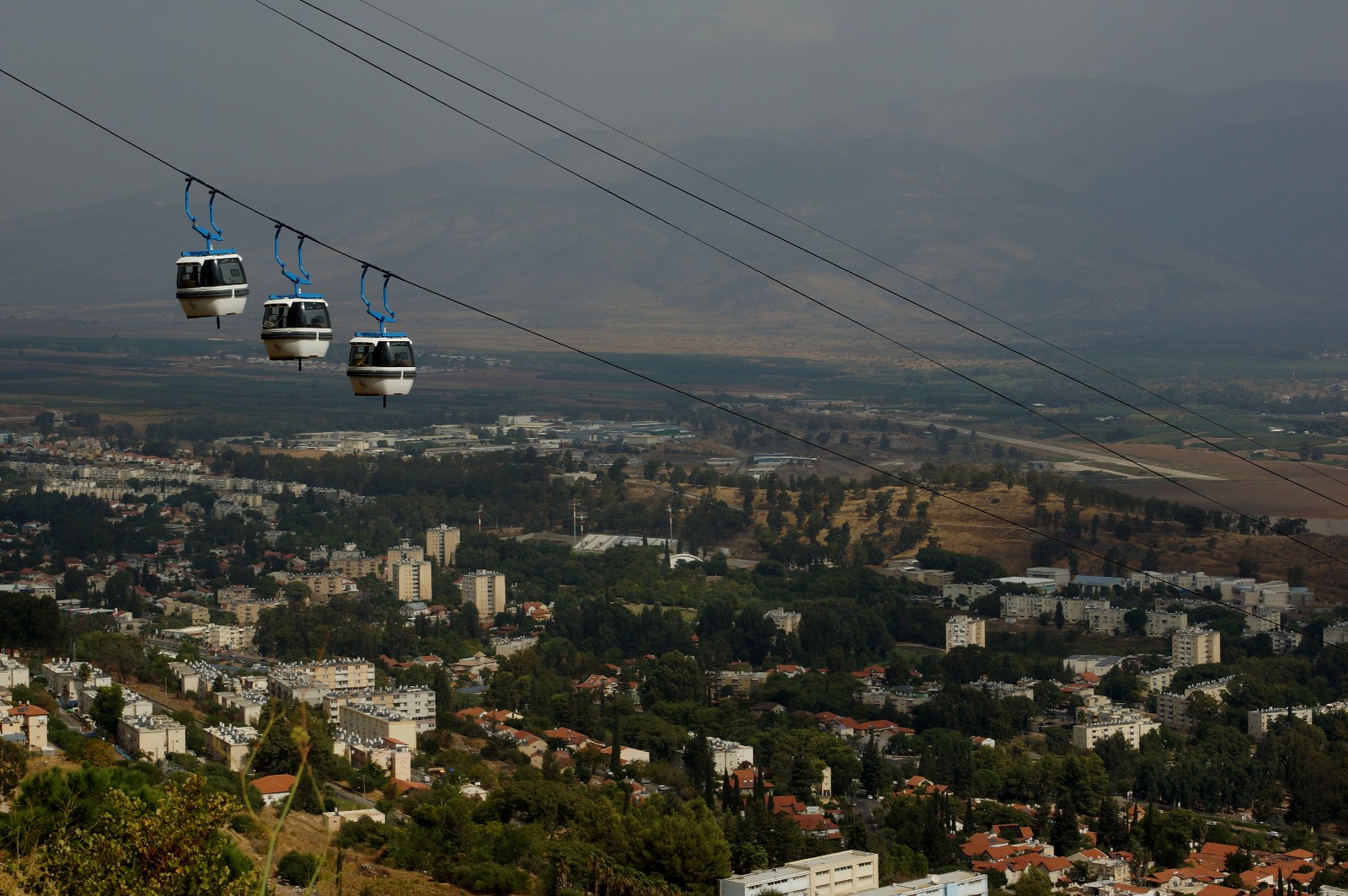
Kiryat Shmona
City in IsraelWikipedia
19
MENTIONS
15
EPISODES
15
PODCASTS
Search complete. 19 mentions across 15 episodes found for "Kiryat Shmona".
Oct 9, 2026

Bret StephensGUEST
If you as an American remember being shocked to your core by the attacks of 9-11, imagine how it must feel for Israelis, where it's not just an abstraction, something you're watching on television in a city you might or might not have ever visited.
Bret StephensGUEST
but it's a cousin who's living right on the Gaza envelope, or it's another cousin who's been forced out of their home in Kiryat Shmona or somewhere in the north.
Bret StephensGUEST
I think there's such a complete failure of empathetic imagination on the part of so much of the Western intellectual or media establishment to understand the trauma of of October 7th, and it's a real failing in the West.
Bret StephensGUEST
It's a particular failing, I might add, because we are now sliding, slouching, if you will, to use Yates's term, to a world in which something very similar could happen in Estonia or in Taiwan, other countries threatened by the axis of authoritarians comprising Tehran, Moscow, Beijing, and Pyongyang.

Yael EcksteinGUEST
And something that's incredible is that during the war, we had our soup kitchens operating not just open throughout the war, but we added meals that they were producing because so many more people were in need during the war.
Yael EcksteinGUEST
And we had two soup kitchens in Israel that were hit by rockets, one in Kiryat Shmona, which is in the north from Hezbollah, and one in Dimona that was hit by a ballistic missile by Iran.
Yael EcksteinGUEST
And within 24 hours, We found a different location and made even more meals than before to send a message and distribute them to the people in need in those cities.
Yael EcksteinGUEST
And so the fact that we can be feeding the hungry together, Christians and Jews, Americans and Israelis, is something that is bringing so much hope to the people of Israel.

Yael EcksteinGUEST
lot of them.
Yael EcksteinGUEST
I've met a lot of them from Kiryat Shmona to the Galilee.
Yael EcksteinGUEST
And I guess when Israel has that day of reckoning, the fellowship will be able to say, we've been doing this, not just saying it, but doing it for decades.
Yael EcksteinGUEST
And that's always what we try to do in the fellowship.

Bret StephensGUEST
If you as an American remember being shocked to your core by the attacks of 9-11, imagine how it must feel for Israelis, where it's not just an abstraction, something you're watching on television in a city you might or might not have ever visited.
Bret StephensGUEST
but it's a cousin who's living right on the Gaza envelope, or it's another cousin who's been forced out of their home in Kiryat Shmona or somewhere in the north.
Bret StephensGUEST
I think there's such a complete failure of empathetic imagination on the part of so much of the Western intellectual or media establishment to understand the trauma of of October 7th, and it's a real failing in the West.
Bret StephensGUEST
It's a particular failing, I might add, because we are now sliding, slouching, if you will, to use Yates's term, to a world in which something very similar could happen in Estonia or in Taiwan, other countries threatened by the axis of authoritarians comprising Tehran, Moscow, Beijing, and Pyongyang.

Noa LeviHOST
You're listening to Israel Today Ongoing War Report, I'm Noah Levi.
Noa LeviHOST
In southern Lebanon, the IDF is conducting strikes, with residents in Kiryat Shmona advised of potential sonic booms in the coming hours, according to local authorities.
Noa LeviHOST
The military stated that regular life continues, with no special public directives at this time.
Noa LeviHOST
Separately, two IDF soldiers were injured in an operational accident in southern Lebanon due to a grenade explosion.

Caroline GlickSOUNDBITE_SPEAKER
But the opposite, that they can't get near us, that we're not going to render our people vulnerable to invasion the way that they were on October 7th.
Caroline GlickSOUNDBITE_SPEAKER
My husband's family lives in Kiryat Shmona.
Caroline GlickSOUNDBITE_SPEAKER
We were there on October 6th on the last day of our vacation before the end of the holiday that fell on October 7th.
Caroline GlickSOUNDBITE_SPEAKER
You know, they were all dispatched summarily, you know, leave right now, told to vacate Kiryat Shmona beginning, it's a border community with Lebanon right on the border.
Caroline GlickSOUNDBITE_SPEAKER
on October 7th.
Caroline GlickSOUNDBITE_SPEAKER
And they were internally displaced people, internal refugees for, I think, a year and a half before it was safe enough for them to move back home.

speaker_1NARRATOR
It represented the determination of Jewish pioneers to defend their communities even under overwhelming odds.
speaker_1NARRATOR
In later years, the nearby town of Kiryat Shmona, literally Town of the Eight, was named in memory of the eight defenders who died there.
speaker_1NARRATOR
A massive stone lion monument was erected overlooking Tel Hai, becoming one of Israel's best-known memorials.
speaker_1NARRATOR
Visitors still climb the hill to reflect upon the events of 1920.

Caroline GlickGUEST
And that's why we don't see ourselves having a zone that's demilitarized inside of Israel facing a militarized Gaza, which is basically what we had on October 7th, but the opposite, that they can't get near us, you know, that we're not going to render our people vulnerable to invasion the way that they were on October 7th.
Caroline GlickGUEST
You know, my husband's family lives in Kiryat Shmona.
Caroline GlickGUEST
We were there on October 6th.
Caroline GlickGUEST
on the last day of our vacation before the end of the holiday that fell on October 7th.
Caroline GlickGUEST
And, you know, they were all dispatched summarily, you know, leave right now, told to vacate Kiryat Shmona beginning, it's a border community with Lebanon right on the border.
Caroline GlickGUEST
on October 7th.
Caroline GlickGUEST
And they were internally displaced people, internal refugees for, I think, a year and a half before it was safe enough for them to move back home.

Manya MarcusHOST
What kind of population is that?
Joseph GitlerGUEST
In the beginning of the war, it was people from Sderot, right, from the cities in the south primarily, and then Kiryat Shmona.
Joseph GitlerGUEST
It's a mix of people, a lot of elderly.
Manya MarcusHOST
These are people who were evacuated even prior to October 7th, or you mean at the very beginning?

Herman PoppleberryHOST
And the Galilee.
Herman PoppleberryHOST
Kiryat Shmona as the gateway to the Upper Galilee and Mount Moran.
Herman PoppleberryHOST
Safed, Tizfat, the mystical city with the artist colony and the narrow stone streets.
Herman PoppleberryHOST
Beit She'an with the Roman city ruins, which are some of the best in the region.
5 more episodes mention Kiryat Shmona.
Create an account to see the whole feed, search across every transcript, and follow the entities you care about.