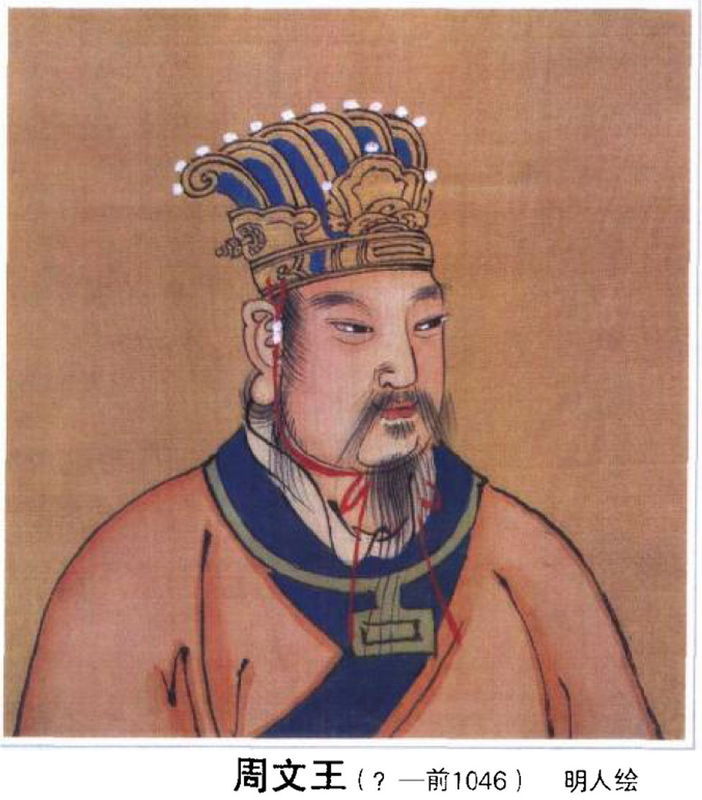
King Wen of Zhou
Member of the Zhou dynastyWikipedia
6
MENTIONS
5
EPISODES
5
PODCASTS
Search complete. 6 mentions across 5 episodes found for "King Wen of Zhou".
Oct 18, 2026

Chris StewartHOST
What these rebels have not understood is the fact that Manchuria is, for the Manchus, the same as the birthplace is for the people of the central plain.
Chris StewartHOST
Xun belonged to the eastern Yi, and King Wen of Zhou to the western Yi.
Chris StewartHOST
Does this fact diminish their virtues? The Yongzheng reign, lasting from 1723 to 1735, nevertheless marked a critical juncture in Qing dynasty statecraft.
Chris StewartHOST
Under this emperor, whose temple name was known as Shizong, although we will continue to call him Yongzheng for his era name, The Qing state implemented extensive bureaucratic and fiscal reforms to address structural barriers to the problems of what was then modern governance.

Elliott BernsteinHOST
The earliest layer of the text, the one that assigns those properties, is called the Zhou Yi, the Changes of Zhou.
Elliott BernsteinHOST
Tradition credits it to King Wen, revered as the founding father of the Zhou dynasty, and to his son, Zhou Gong, the Duke of Zhou.
Elliott BernsteinHOST
Commentaries kept being added for centuries, and the latest of them most likely date to the Han dynasty, a few hundred years after Confucius's death.
Elliott BernsteinHOST
Now as I mentioned earlier, tradition held that one set of those commentaries, called the Ten Wings, was written by Confucius himself.

speaker_4NARRATOR
chapter seventeen the master said how greatly filial was his virtue was that of a sage his dignity was the imperial throne his riches were all within the four seas he offered his sacrifices in his ancestral temple and his descendants preserved the sacrifices to himself Therefore, having such great virtue, it could not but be that he should obtain the throne, that he should obtain those riches, that he should obtain his fame, that he should attain to his long life.
speaker_4NARRATOR
thus it is that heaven in the production of things is surely bountiful to them according to their qualities hence the tree that is flourishing it nourishes while that which is ready to fall it overthrows in the book of poetry it is said the admirable amiable prince displayed conspicuously his excelling virtue adjusting his people and adjusting his officers therefore he received from heaven the emoluments of dignity it protected him assisted him decreed him the throne sending from heaven these favours as it were repeatedly we may say therefore that he who is greatly virtuous will be sure to receive the appointment of heaven chapter The master said, It is only King Wen of whom it can be said that he had no cause for grief.
speaker_4NARRATOR
His father was King Ji, and his son was King Wu.
speaker_4NARRATOR
His father laid the foundations of his dignity, and his son transmitted it.

Joseph K. KimGUEST
We know that.
Joseph K. KimGUEST
And then, uh, they say King Wen, second author, uh, created the hexagrams.
Joseph K. KimGUEST
But King Wen is, uh, known for he came up with his interpretation of the symbols of the I Ching because originally when Fu Hsi discovered it, there were no words, written words.
Joseph K. KimGUEST
So he added what's known as decision or judgment to the hexagram.
Joseph K. KimGUEST
And his son, Duke of Zu or Zhou, uh, added the line judgment, each line of the hexagrams.

speaker_1NARRATOR
CHAPTER XVIII.
speaker_1NARRATOR
The master said, It is only King Wen, of whom it can be said that he had no cause for grief.
speaker_1NARRATOR
His father was King Ji, and his son was King Wu.
speaker_1NARRATOR
His father laid the foundations of his dignity, and his son transmitted it.