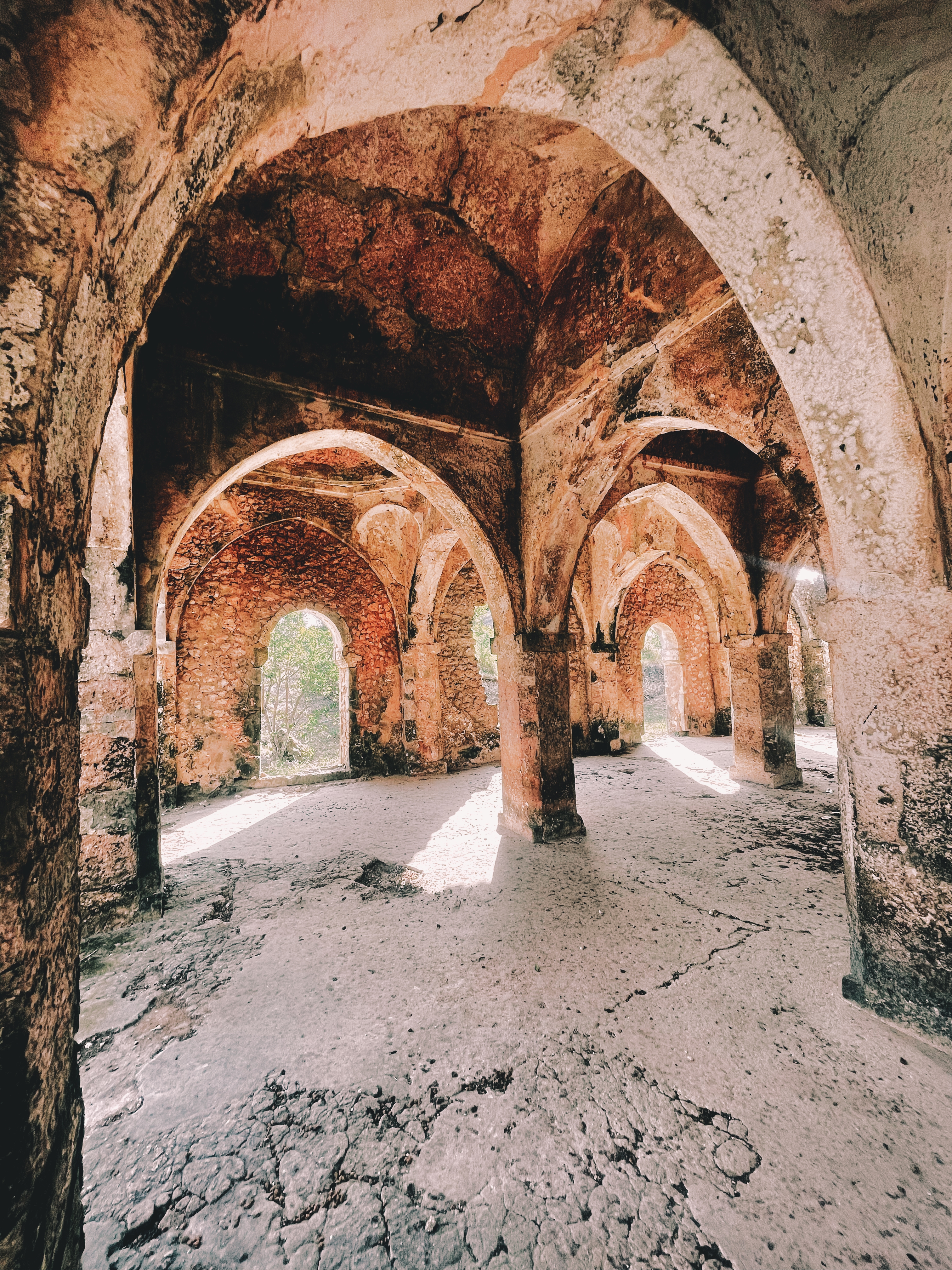
Kilwa Kisiwani
Hamlet in TanzaniaWikipedia
42
MENTIONS
11
EPISODES
7
PODCASTS
Search complete. 42 mentions across 11 episodes found for "Kilwa Kisiwani".
Oct 10, 2026

speaker_0NARRATOR
It is in Taiz that Ibn Battuta first hears, in any detail, of the lands that lie farther south along the coast and farther still across the water, the Swahili towns of East Africa, whose wealth in gold and ivory has become the stuff of merchant legend throughout the Indian Ocean world.
speaker_0NARRATOR
A trader in the market, his beard hennaed red in the local fashion, speaks of Kilwa with something bordering on reverence, describing a city built almost entirely of coral stone, its mosque roofed with domes unlike any he has described elsewhere, its sultan so wealthy that gold changes hands there as casually as copper does in Cairo.
speaker_0NARRATOR
Ibn Battuta listens, and something in him, the same restlessness that carried him past the boundaries of the Hajj itself, begins to turn southward.
speaker_0NARRATOR
He does not go immediately.
13 MINS LATER
speaker_0NARRATOR
Smaller, Ibn Battuta notes, and situated upon an island whose approach through mangrove-lined channels requires a pilot's careful knowledge, for the passage is not one a stranger's ship could safely navigate alone.
speaker_0NARRATOR
The town itself rises from coral rock, its buildings constructed in the same techniques he observed in Mogadishu, though on a more modest scale, reflecting a city whose prosperity, while real, does not match the grandeur of its northern neighbor.
speaker_0NARRATOR
He is received here, as in Mogadishu, with the hospitality due a traveling scholar, though his stay proves brief, a matter of days rather than weeks, for the momentum of his journey and the pull of Kilwa's reputation growing stronger with every mile of coastline behind him leave him disinclined to linger.
speaker_0NARRATOR
He records what he observes with characteristic attention nonetheless.

speaker_1HOST
This is Kilwa's moment.
speaker_1HOST
Kilwa Kisawani rose to dominance around the mid-12th century, and this transition aligns perfectly with a shift in the primary export.
speaker_0HOST
From ivory to?
speaker_1HOST
Gold.

speaker_4NARRATOR
In so that losel Moor-man had design As the confiding Christian begged and bade, Knowing his islet was of old assigned To the malignant sons of Mohammed.
speaker_4NARRATOR
Here he foresees deceit with death combined, For that in power and force the place outweighed Weaker Mozambique, and that islet's name Is Kilwa, bruited by the blast of fame.
speaker_4NARRATOR
Thither th' exulting squadron lief would steer; But the fair god Cytherea loves to greet, Seeing its certain courses changed to nearer coasts Where doom of death awaits the feet, Nills that the people, loved with love so dear, Such dreadful fates on shore so distant meet; And raising adverse gales she drives them wide From the foul goal where guides that felon guide.
speaker_4NARRATOR
Now when the caitiff Moor could nought but know That in this matter useless was his guile, Seeking to deal another devilish blow, And still persistent in his purpose vile, He urgeth, since the winds and current's flow Had borne them on parforce full many a mile, They near another island, and its race, Christian and Moor hold common dwelling-place.

Drowsy HistorianHOST
The settlements here are connected to a maritime culture that has developed over many centuries along the shores and islands of East Africa.
Drowsy HistorianHOST
Towns such as Kilwa, Mombasa, Malindi, and others have grown through their positions within the wider Indian Ocean network.
Drowsy HistorianHOST
Ships arrive carrying goods from Arabia, India, and other regions, while commodities from the African interior make their way toward the coast.
Drowsy HistorianHOST
The sea is again doing what it has done for generations, bringing distant communities into contact without requiring them to become anything like one another.
Drowsy HistorianHOST
You begin by checking what local traders are offering.
Drowsy HistorianHOST
Ivory, timber, animal products, grains, textiles, and other goods move through the coastal trade, with some commodities arriving from the interior and others coming by sea.
Drowsy HistorianHOST
Gold from regions farther south and inland can also enter these networks, particularly through important trading centers such as Kilwa.
Drowsy HistorianHOST
The movement of such goods connects coastal towns with communities far beyond the reach of the harbor itself.

JessicaHOST
It contains seven UNESCO World Heritage properties, including the Serengeti National Park, How do you say that? Ngorongoro.
JessicaHOST
Ngorongoro Conservation Area, Kilimanjaro National Park, Salus Game Reserve, Stonetown of Zanzibar, Kilwa, Kiswani, and the Kondoa Rock Art Sites.
JessicaHOST
The Serengeti is famous for the Great Migration, which enormous herds of wildebeests, zebras, and other grazing animals move through the Serengeti ecosystem.
JessicaHOST
And Kilimanjaro is extraordinary because it's part of a huge mountain chain.
1 more episode mentions Kilwa Kisiwani.
Create an account to see the whole feed, search across every transcript, and follow the entities you care about.