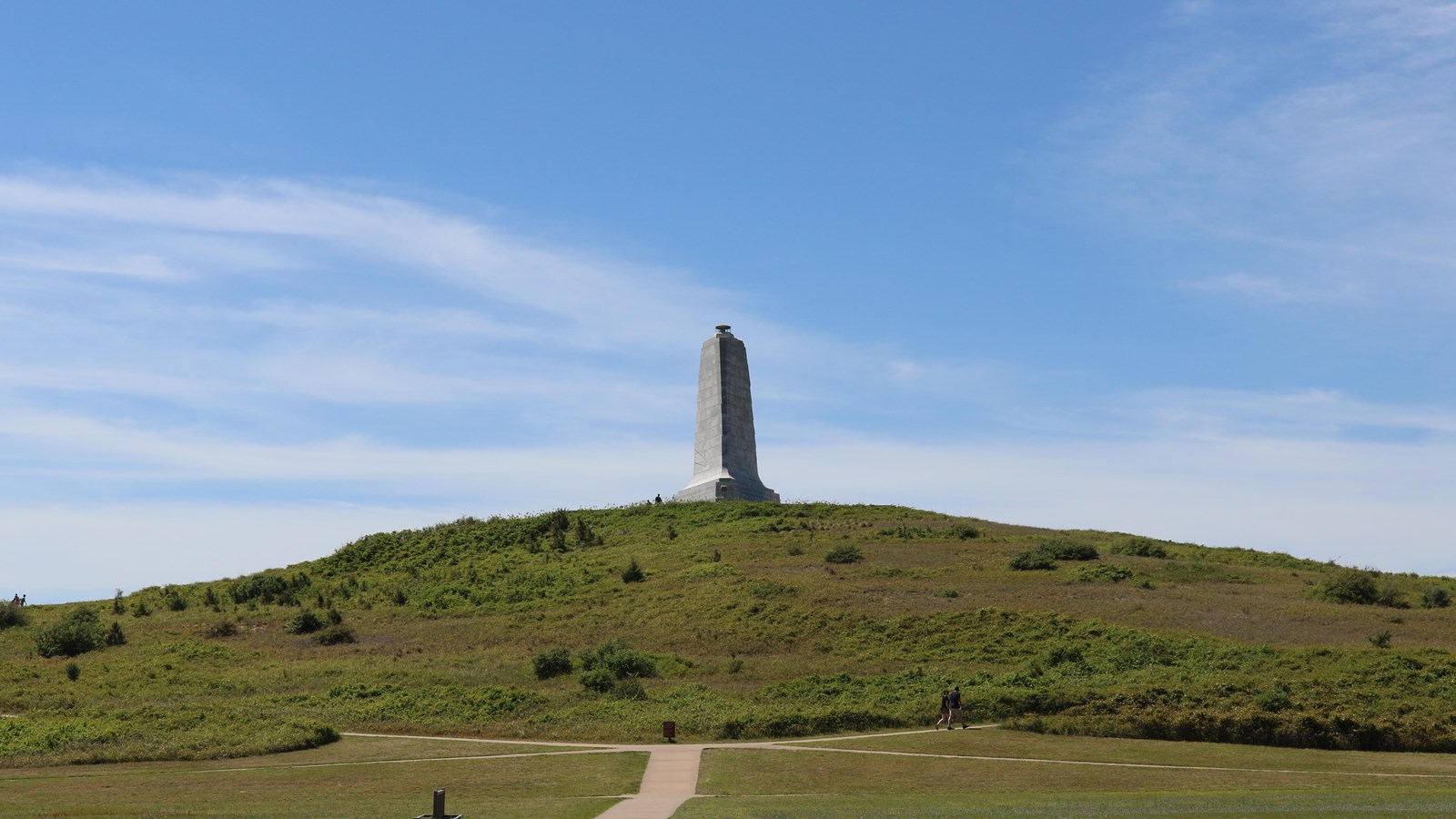
Kill Devil Hill
6
MENTIONS
2
EPISODES
2
PODCASTS
Search complete. 6 mentions across 2 episodes found for "Kill Devil Hill".
Sep 18, 2026

Gary KentHOST
Now they were ready to fly.
Gary KentHOST
Their machine, aptly named the Flyer, lifted from level ground to the north of Big Kill Devil Hill, North Carolina, at 10.35 a.m. on the 17th of December, 1903.
Gary KentHOST
Orville piloted the plane, which weighed about 272 kilos or 600 pounds.
Gary KentHOST
The first true manned flight travelled about 40 metres or 120 feet in 12 seconds.

speaker_3NARRATOR
This, with an adjustable horizontal front rudder, formed the main feature of our first glider.
speaker_3NARRATOR
the period from eighteen eighty five to nineteen hundred was one of unexampled activity in aeronautics and for a time there was high hope that the age of flying was at hand but maxim after spending one hundred thousand dollars abandoned the work the ader machine built at the expense of the french government was a failure lilienthal and pilcher were killed in experiments and chanute and many others from one cause or another had relaxed their efforts though it subsequently became known that professor langley was still secretly at work on a machine for the united states government the public discouraged by the failures and tragedies just witnessed considered flight beyond the reach of man and classed its adherents with the inventors of perpetual motion we began our active experiments at the close of this period in october nineteen hundred at kitty hawk north carolina our machine was designed to be flown as a kite with a man on board in winds from fifteen to twenty miles an hour but upon trial it was found that much stronger winds were required to lift it suitable winds not being plentiful we found it necessary in order to test the new balancing system to fly the machine as a kite without a man on board operating the levers through cords from the ground this did not give the practice anticipated but it inspired confidence in the new system of balance in the summer of nineteen o one we became personally acquainted with mr when he learned that we were interested in flying as a sport and not with any expectation of recovering the money we were expending on it he gave us much encouragement at our invitation he spent several weeks with us at our camp at kill devil hill four miles south of kitty hawk during our experiments of that and the two succeeding years he also witnessed one flight of the power machine near dayton ohio in october the machine of nineteen o one was built with the shape of surface used by lilienthal curved from front to rear like the segment of a parabola with a curvature one twelfth the depth of its chord but to make doubly sure that it would have sufficient lifting capacity when flown as a kite in fifteen or twenty mile winds we increased the area from hundred sixty five square feet used in nineteen hundred to three hundred and eight square feet a size much larger than lilienthal pilcher or janoot had deemed safe Upon trial, however, the lifting capacity again fell very far short of calculation, so that the idea of securing practice while flying as a kite had to be abandoned.
speaker_3NARRATOR
Mr. Chanute, who witnessed the experiments, told us that the trouble was not due to poor construction of the machine.
speaker_3NARRATOR
We saw only one other explanation, that the tables of air pressures in general use were incorrect.
speaker_3NARRATOR
thick surfaces differ from thin and surfaces thicker in one place than another vary in pressure when the positions of maximum thickness are different some surfaces are most efficient at one angle others at other angles the shape of the edge also makes a difference so that thousands of combinations are possible in so simple a thing as a wing We had taken up aeronautics merely as a sport.
speaker_3NARRATOR
We reluctantly entered upon the scientific side of it.
speaker_3NARRATOR
but we soon found the work so fascinating that we were drawn into it deeper and deeper two testing machines were built which we believed would avoid the errors to which the measurements of others had been subject after making preliminary measurements on a great number of different shaped surfaces to secure a general understanding of the subject we began systematic measurements of standard surfaces so varied in design as to bring out the underlying causes of differences noted in their pressures measurements were tabulated on nearly fifty of these at all angles from zero to forty five degrees at intervals of two and a half degrees measurements were also secured showing the effects on each other when surfaces are superposed or when they follow one another some strange results were obtained one surface with a heavy roll at the front edge showed the same lift for all angles from seven and a half to forty five degrees a square plane contrary to the measurements of all our predecessors gave a greater pressure at thirty degrees than at forty five degrees this seemed so anomalous that we were almost ready to doubt our own measurements when a simple test was suggested a weather vane with two planes attached to the pointer at an angle of eighty degrees with each other was made according to our tables such a vane would be in unstable equilibrium when pointing directly into the wind for if by chance the wind should happen to strike one plane at thirty nine degrees and the other at forty one degrees the plane with the smaller angle would have the greater pressure and the pointer would be turned still farther out of the course of the wind until the two vanes again secured equal pressures which would be at approximately thirty and fifty degrees but the vane performed in this very manner Further corroboration of the tables was obtained in experiments with the new glider at Kill Devil Hill the next season.
speaker_3NARRATOR
In September and October 1902, nearly 1,000 gliding flights were made, several of which covered distances of over 600 feet.