Kievan Rus'
StateWikipedia
108
MENTIONS
33
EPISODES
27
PODCASTS
Search complete. 108 mentions across 33 episodes found for "Kievan Rus'".
Sep 14, 2026

SamHOST
I'm Sam, and today we're talking about The Gates of Europe by Serhii Plokhy, a history of Ukraine that starts with the Scythians and ends with the war we're watching right now.
SamHOST
Sophie, I'll be honest, before this book, I couldn't have told you the first thing about Kyivan Rus'.
SamHOST
What is this book actually doing?
SophieHOST
Hey there, Sam.
SophieHOST
Scythians, Sarmatians, Goths, and Huns, they all come through and leave something behind.
SophieHOST
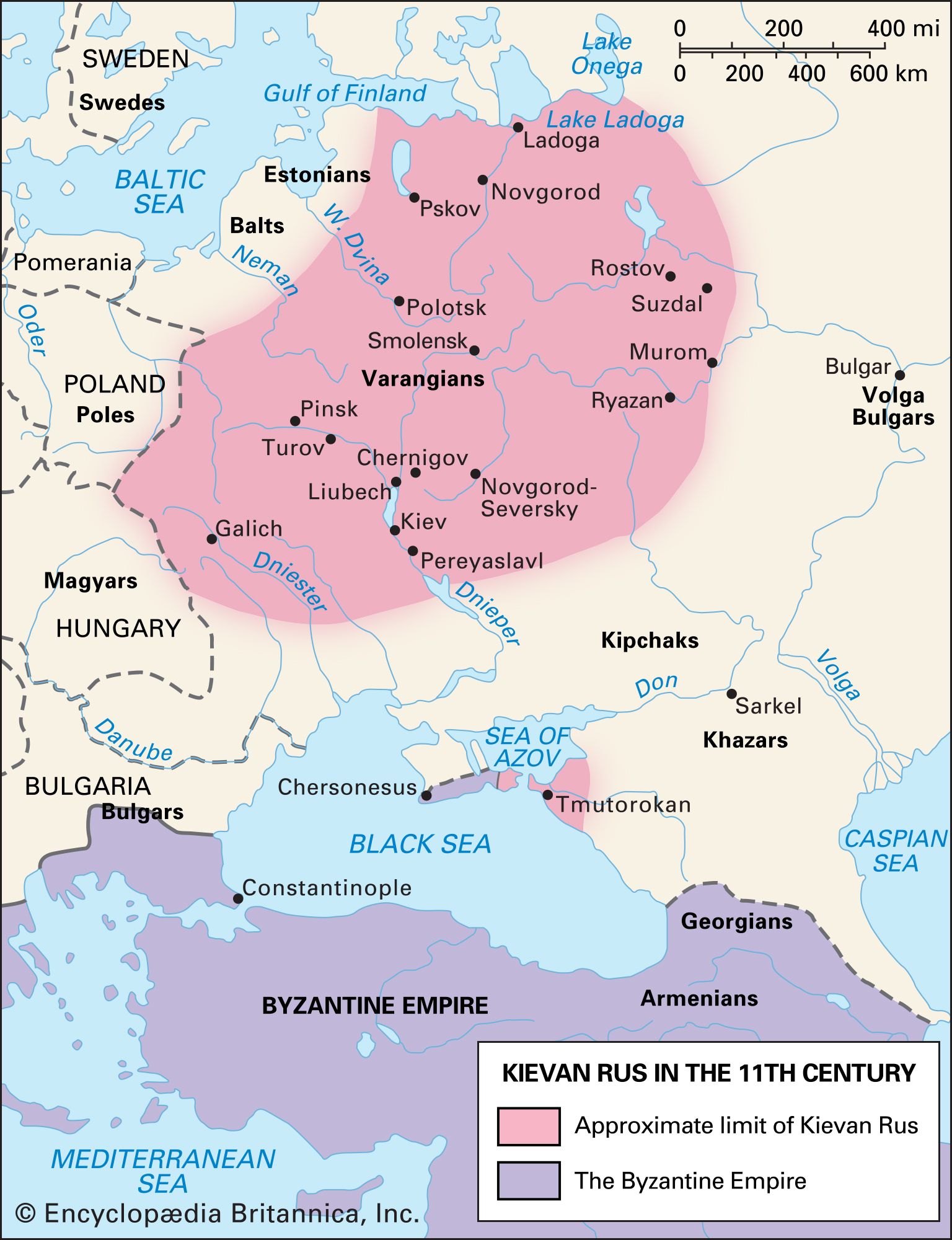
But the real founding moment comes in the 9th century when Viking traders set up a trade route from Scandinavia down to the Byzantine Empire, and the hub of that route is Kyiv.
SamHOST
Which becomes Kyivan Rus'.
SamHOST
And then in 988, Prince Volodymyr decides to adopt Christianity from Byzantium instead of from Rome.

John GreenHOST
But before we talk about the Mongol conquest of Russia, let's discuss exactly what got conquered.
John GreenHOST
So before there was a Russian Empire or even a Russian Kingdom, there was the Kievan Rus'.
John GreenHOST
We know Kiev was a powerful city-state, but who exactly founded it is a subject of debate.
John GreenHOST
Most historians now believe that the settlers of Kiev were Slavic people who migrated from around the Black Sea, but there's an older theory that the settlers of Kiev were actually like Vikings.

Phil LabonteHOST
You're talking about the Rus? I watched them too.
Phil LabonteHOST
The Kievan Rus are from Ukraine.
Phil LabonteHOST
Yeah, yeah.
Phil LabonteHOST
And the majority of Russians are not descended from Vikings.
Phil LabonteHOST
Russians came from Kiev.
Phil LabonteHOST
This is what Vladimir Putin was talking about when he sat down with Tucker Carlson.
Phil LabonteHOST
The Kievan Rus were the actual first Russians in Ukraine.
Phil LabonteHOST
That's part of why Russia looks at Ukraine as actual

Juan NaulaNARRATOR
They traveled as far apart as the Mediterranean, the Black Sea, the Middle East, North Africa, and North America.
Juan NaulaNARRATOR
The Vikings had a profound impact on the early medieval history of many of the places they went, including Scandinavia, the British Isles, France, and Kievan Rus, a state which encompassed East Slavic, Norse, and Finnic peoples, and covered parts of modern Ukraine, Belarus, and Russia.
Juan NaulaNARRATOR
This was the Viking Age.
Juan NaulaNARRATOR
The Vikings were expert sailors and navigators and dominated the waterways of Europe.
Juan NaulaNARRATOR
Birka was abandoned around 975 when Sigtuna, a Christian town, was founded just 35 kilometers to the northeast of the island city.
Juan NaulaNARRATOR
Other important Viking trading ports included Hedeby, a village in modern-day Denmark on the Jutland Peninsula, and Kaupang, meaning marketplace, which was the first market town in Norway near modern Oslo.
Juan NaulaNARRATOR
There were also thriving Viking trading bases outside of Scandinavia, such as Jorvik, modern-day York in England, Staraya Ladoga on the Volkhov River around 100 miles from modern St. Petersburg, and Novgorod, the old capital of Kievan Rus.
Juan NaulaNARRATOR
The Viking trading network, which spread across the waterways of Europe and beyond, was even vaster than the raiding one for which the Vikings were to be better known.

John BatchelorHOST
And they move all the way down to Kiev.
John BatchelorHOST
And so what we have in Russia right now is a contest between men and women who are descended from the same people that England is descended from, all mixed up with other parts of Eurasia.
John BatchelorHOST
Yes, admittedly, it's been several thousand years.
John BatchelorHOST
Is that correct? The Vikings went in two directions.
John BatchelorHOST
I'm John Batchelor with Eleanor Barraclough, the professor, who is also the author of Embers of the Hand, Hidden Histories of the Viking Age.
John BatchelorHOST
Eleanor is helping us understand that the Vikings, who have this very large reputation in America because they got to North America, they got to Greenland in the news, they got to Iceland, always in the news.
John BatchelorHOST
They got to England, yes, of course, but they also reached all the way into what is now Russia and Eastern Europe.
John BatchelorHOST
Eleanor, please continue.
Gregory CopleyGUEST
On the other hand, we see that Russia itself has its heartland in Ukraine.
Gregory CopleyGUEST
In fact, it was the Kievan Rus who basically formed the core of Russian Orthodox religion and the Russian identity.
Gregory CopleyGUEST
over the centuries.
Gregory CopleyGUEST
So it's like saying, well, we're going to create a new multiple countries in the United States, and we're going to carve out, for example, Virginia and Washington and say that that's not part of the United States, when if you look at it historically, those are areas which are culturally and psychologically the core of the United States.
23 more episodes mention Kievan Rus'.
Create an account to see the whole feed, search across every transcript, and follow the entities you care about.