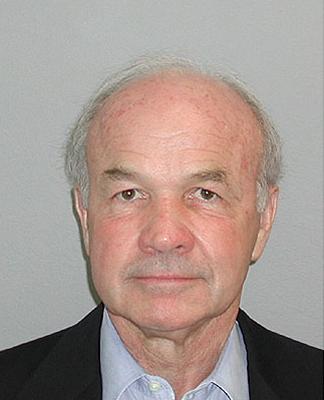
Kenneth Lay
American businessman and former CEO of EnronWikipedia
19
MENTIONS
12
EPISODES
11
PODCASTS
Search complete. 19 mentions across 12 episodes found for "Kenneth Lay".
Sep 8, 2026

Andy SeniorGUEST
No.
Herb SmithGUEST
I think it's the Kenneth Lay thing.
Andy SeniorGUEST
I think they should just coop him up in a cell with Rumsfeld, and they have to live together.
Herb SmithGUEST
I mean, he's done a lot for them.

Dan BartlettGUEST
Remember that with Gray Davis and the blackout, rolling blackouts in California and those things.
Dan BartlettGUEST
And we let the press get preoccupied with secret meetings and these things with, by the way, Ken Lay, if that, and Ron.
Dan BartlettGUEST
I remember the whole deal.
Dan BartlettGUEST
And so...

DwyerHOST
I'll agree with the concept.
DwyerHOST
that if you are a Ken Lay character and you don't ask questions and you understand that your financiers are being aggressive in their bookkeeping, then ultimately if the ship sinks and you're the captain, you're responsible for it.
DwyerHOST
Okay, I'll buy that.
DwyerHOST
But Steve Ballmer wants to improve his team.

speaker_0HOST
His supreme confidence in his own invincibility is what led to his downfall, the beginning of his empire's collapse.
speaker_0HOST
Enron executives Kenneth Lay and Jeffrey Skilling built their Corporate culture on the conviction that they were smarter than the market.
speaker_0HOST
They had everything figured out.
speaker_0HOST
They hid losses, refused to admit to failure.

speaker_0HOST
Humility and low public profile are easy to fake for a few years and almost impossible to verify from the outside.
speaker_0HOST
Ken Lay and Jeff Skilling wrote calm, measured, reassuring shareholder letters right up until Enron's accounting completely collapsed.
speaker_0HOST
A quiet CEO who says all the right things in a letter isn't automatically a great capital allocator.
speaker_0HOST
Sometimes they're just quiet.

Daniel CarterHOST
The combined company became Enron.
Daniel CarterHOST
Kenneth Lay became the company's chairman and chief executive.
Daniel CarterHOST
At first, Enron was fundamentally a pipeline business.
Daniel CarterHOST
But the company was about to change dramatically.
15 MINS LATER
Daniel CarterHOST
Inside the company, however, some employees were already deeply concerned.
Daniel CarterHOST
One of them was Sherron Watkins, a vice president at Enron.
Daniel CarterHOST
Watkins became concerned about the accounting treatment of certain transactions and wrote a memo to Kenneth Lay.
Daniel CarterHOST
She warned that the company could potentially implode under the weight of the accounting problems.

Jonathan R. MaceyGUEST
So it's, you know, it's just a humbling experience because, you know, you point out the book, the smartest guys in the room and it's right.
Jonathan R. MaceyGUEST
They were the smartest guys in the room and not just the, not just Jeff Skilling and Andy Fastow and Ken Lay, but all of their advisors and directors and, and whatnot.
Jonathan R. MaceyGUEST
And, you know, they still managed to, you know, sink this company completely.
Jonathan R. MaceyGUEST
So, you know, that was, and the other enduring lesson, which is even a greater problem there then, I'm sorry, a greater problem now than it was then, is a lot of these vaunted corporate governance institutions, whether it's rating agencies or accounting firms or investment banks are a major problem that we have in my view from Enron that exists to this day, Will, is these are very oligopolistic industries, highly non-competitive, extreme barriers to entry, which created a significant part of this problem.

Michael BerryHOST
I heard a guy give a speech at the Chamber of Commerce, and he said, "Most people have a can-do attitude.
Michael BerryHOST
We have a Ken-do," K-E-N, because Ken Lay was a god man here.
Michael BerryHOST
He was being talked about for Secretary of Commerce, but he didn't accept it because he knew deep down that Enron's financia- finances were, were in trouble.
Michael BerryHOST
It is typically the case that there is, there is, after a crumbling, everybody says, "I saw it coming." Stanford Financial, which we lived through here, another Ponzi scheme.

Dani MercyHOST
So many people actually believe that as fucked up as things are right now And as they have been for the last twenty years, that they aren't needed.
Dani MercyHOST
What do you want to bet that Bernie Madoff follows Ken Lay's path? I can think of any number of criminal organizations that would benefit from a dose of Lake City quiet pills, end quote.
Dani MercyHOST
For context, Ken Lay was the CEO of Enron, an energy company at the center of one of history's largest corporate scandals.
Dani MercyHOST
He was convicted on ten counts of securities and wire fraud, but died before sentencing.
Dani MercyHOST
Bernie Madoff orchestrated the largest Ponzi scheme in history.
Dani MercyHOST
He was convicted of eleven federal felonies and was sentenced to a hundred and fifty years in prison on June 29th, 2009.
Dani MercyHOST
Here's where his post doesn't make sense.
Dani MercyHOST
If Bernie Madoff was going to follow in Ken Lay's path, wouldn't he have died prior to sentencing, which happened prior to this comment? So I'm not quite sure why he added that part.

Brendan GlavinGUEST
If people remember Enron, a large energy company, that ended up going bankrupt, all employees losing all their retirement, and it went very badly.
Brendan GlavinGUEST
The people running Enron, Ken Lay, the CEO, was very good friends with George Bush.
Brendan GlavinGUEST
And people at Enron were giving hundreds of thousands of dollars to Bush.
Brendan GlavinGUEST
And then Enron was getting very favorable government policy out of it in regards to the energy markets and deregulation and this sort of thing.
2 more episodes mention Kenneth Lay.
Create an account to see the whole feed, search across every transcript, and follow the entities you care about.