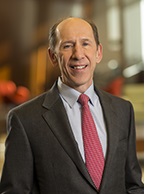
Kenneth French
ProfessorWikipedia
16
MENTIONS
12
EPISODES
10
PODCASTS
Search complete. 16 mentions across 12 episodes found for "Kenneth French".
Oct 30, 2026

Sam LichtmanHOST
In this case, Canada makes sense from a tax perspective.
Sam LichtmanHOST
This is backed, of course, by the research of Eugene Falma and Kenneth French and their seminal research on factor investing.
Sam LichtmanHOST
The portfolio that Joe invested in was a mix of 30% Canadian stocks, 50% US stocks, and 20% international and emerging market stocks.
Sam LichtmanHOST
He reduced his risk and sold that crappy bond fund while maintaining exposure to 100% stocks and increased his likelihood of higher long-term returns.

Matt HeltonHOST
Maybe share how does the world use it and then how does it apply to your scenario?
Theodore Hicks IIGUEST
A lot of the people that use that term are pointing to Harry Markowitz and Eugene Fama and Ken French.
Theodore Hicks IIGUEST
These are arguably leading figures in the financial industry.
Theodore Hicks IIGUEST
Harry Markowitz is arguably the godfather of what has become known as modern portfolio theory.

Brady FineskeHOST
Absolutely.
Brady FineskeHOST
Well, and doing the best you can, I think, led you to the University of Chicago and surrounded yourself with some great people like Gene Fama and Ken French.
Brady FineskeHOST
And, you know, what are some of the things that, you know, as you launched your career, I know there was a part in the book where maybe AT&T asked you to start working on the first S&P 500 fund.
Brady FineskeHOST
You surround yourself with these great people.

Abhishek GadreHOST
And Dimensional actually started in the back office of Vanguard in 1981.
Abhishek GadreHOST
And they were based out of factory research done by French and Pharma, which actually later on went on to receive a Nobel Prize in 2013.
Abhishek GadreHOST
And Dimensional was only providing mutual funds, which you could buy through investment advisors.
Abhishek GadreHOST
So essentially, you'll be paying an AUM fee.
Abhishek GadreHOST
They didn't want the funds to be limited to be behind a investment advisor.
Abhishek GadreHOST
The goal of Avantis was to create a fund which is available to the open market as an ETF so you and I can buy them directly.
Abhishek GadreHOST
That's exactly why I love Avantis and they follow the French Infama investment methodology.
Abhishek GadreHOST
Now the difference between the VTV Vanguard ETF versus the Avantis ETF is Avantis not just focuses on value, it actually puts a profitability filter on it.

Aswath DamodaranHOST
But this critique came from within finance.
Aswath DamodaranHOST
About 30 years ago, two professors at the University of Chicago, Gene Farmer and Ken French, decided to ask the question, does the CAPM work? Let's step back.
Aswath DamodaranHOST
In the CAPM world, the only measure of risk that matters is the beta, right? Everything else shouldn't matter.
Aswath DamodaranHOST
So if I take really long time periods and look at the correlation between returns you earn over long periods and the betas of companies, what should I see as a correlation? First, should it be positive or negative? beta stock should have high expect and it should in fact be close to a hundred percent right if the cap m is right over very long periods a hundred percent of the variation in differences in return should come from differences in betas you know what farmer in french found as a percentage explained by betas about nine percent which is a kind way of saying that we seem to be using a model that doesn't explain 91 percent of what's going on Now, I think part of the reason for that is the way in which people estimate beta.

Rick FerriHOST
I guess you could put it that way.
Rick FerriHOST
Gene Fahm and Ken French came out with their paper on three-factor model, which put you in a whole other – Dimension.
Rick FerriHOST
Oh, by the way, I have to say, whoever decided on the term dimensional, I love that name.
Rick FerriHOST
I mean, it's a great name.
8 MINS LATER
Rick FerriHOST
That was the name of the article.
David BoothGUEST
Yeah, okay.
Rick FerriHOST
And you remember Gene Fama and Ken French published an op-ed in the Wall Street Journal, it was like 2006, talking about the tax advantages of ETFs.
Rick FerriHOST
So I said, okay, here it comes, it's coming now.

Joe DeLisiHOST
So I want to start with, we've spoken about this many times.
Joe DeLisiHOST
If you're a client of mine, you've heard me mention these gentlemen, Eugene Fama and Ken French.
Joe DeLisiHOST
The Nobel laureates who I've really based my investment philosophy on, right? It's not my philosophy.
Joe DeLisiHOST
It's one I've adopted from people much smarter than me with a lot more wisdom and time.
Joe DeLisiHOST
But I want you to know that there is a very specific way we approach the construction of a portfolio and how we utilize different fund managers inside of that.
Joe DeLisiHOST
OK, so let's just start with something called factor based investing.
Joe DeLisiHOST
And this is Eugene Fama, Ken French.
Joe DeLisiHOST
This is really their work.
Aswath DamodaranHOST
The final leg in this discussion happened in the early 90s.
Aswath DamodaranHOST
Two professors at the University of Chicago, Ken French and Gene Farmer, said, you know, why are we even trying to come up with a risk and return model? Why don't we let the market tell us what's risky and what's safe? They said, how will the market tell you? They said, let's look to see what kinds of companies have earned high returns in the past and what kinds of companies have earned low returns in the past.
Aswath DamodaranHOST
So they looked at 1962 through 1990 data, and they found that over that period, small market cap companies earned much higher returns in the marketplace than large market cap companies.
Aswath DamodaranHOST
They made a leap of faith.
Aswath DamodaranHOST
Here's a second choice, and this is a choice that essentially got into being in the 80s when we had more access to data.
Aswath DamodaranHOST
And the drivers of this particular school of thought were Gene Farmer and Ken French, two professors at the University of Chicago.
Aswath DamodaranHOST
They said, it's true, CAPM binds you with all these assumptions.
Aswath DamodaranHOST
Why do we want to build up these risk and return models based on elaborate assumptions Let's just look at the pricing and see what investors seem to be pricing in.

Joe DeLisiHOST
So I wanna start with, uh, we've spoken about this many times.
Joe DeLisiHOST
If you're a client of mine, you've heard me mention these gentlemen, uh, Eugene Fama and Ken French.
Joe DeLisiHOST
Uh, the Nobel laureates who I've really based my investment philosophy on, right? It's not my philosophy.
Joe DeLisiHOST
It's one I've adopted from people much smarter than me with a lot more wisdom and time.
Joe DeLisiHOST
That's what I see when I train other advisors.
Joe DeLisiHOST
But that's not what we're doing for you, and that's not really how you should look at it, okay? I don't need you going to bed at night memorizing all this stuff, but I want you to know that there is a very specific way we approach the construction of a portfolio and how we utilize different fund managers inside of that, okay? So let's just start with something called factor-based investing.
Joe DeLisiHOST
And this is Eugene Fama, Ken French.
Joe DeLisiHOST
This is really their work.
2 more episodes mention Kenneth French.
Create an account to see the whole feed, search across every transcript, and follow the entities you care about.