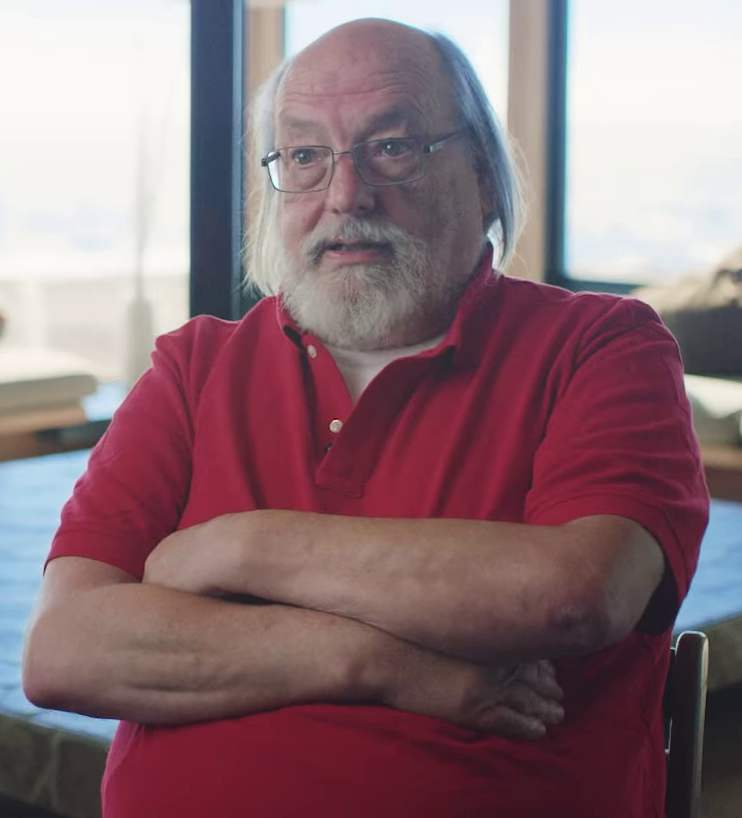
Ken Thompson
American computer designerWikipedia
8
MENTIONS
8
EPISODES
8
PODCASTS
Search complete. 8 mentions across 8 episodes found for "Ken Thompson".
Oct 23, 2026

speaker_1HOST
So no, unfortunately, we did not simply stop at hashes.
speaker_1HOST
And in 1979, five years after we started baking our password in a one-way function, Ken Thompson and once again Robert Morris came up with the idea of the password salt, which is a name that is 100% approved by this podcast.
speaker_1HOST
When you are salting your password, you are adding a little extra flavor to it, a little something to make it more than just a bland password.
speaker_1HOST
A secret ingredient, you might call it, that makes it a bit hard to determine what were the original ingredients that led to the final dish.

Tom DietterichGUEST
And there was one guy named Ross Quinlan who had been looking at compressing chess end games using decision trees.
Tom DietterichGUEST
And so the idea there was that Ken Thompson, who was one of the inventors of Unix, he was still at Bell Labs and he had been reverse enumerating chess end games.
Tom DietterichGUEST
So start from a lost position and play the game backwards and try to build giant lookup tables that say if you're in this board state, and there would be relatively few pieces on the table, say a king and a rook versus a king and a knight.
Tom DietterichGUEST
And so he would develop a complete look at all possible board configurations of king and rook, king and knight, and figure out which ones were winning for each side or draws.

Dave PlummerHOST
So it's the BSD Unix from Berkeley University.
Dave PlummerHOST
Berkeley had its own DEC and developed Unix with Ken Thompson and Brian and so on.
Dave PlummerHOST
Um, Kernighan.
Dave PlummerHOST
No, Dennis Ritchie, I'm sorry.

Laurie SpiegelGUEST
And so I mean, any...
Laurie SpiegelGUEST
And I mean, Ken Thompson had the room next to the coffee machine, you know?
Stewart LermanHOST
Yeah.
Laurie SpiegelGUEST
And they all loved music.

Laurie SpiegelGUEST
These are the people who created Unix and the C language and stuff.
Laurie SpiegelGUEST
And so, I mean, Ken Thompson had the room next to the coffee machine, you know.
Laurie SpiegelGUEST
And they all loved music.
James FrazeeHOST
You're at Bell Labs.

George MichaelsonGUEST
So now here's a narrow background.
George MichaelsonGUEST
Ken Thompson, Dennis Ritchie, and a bunch of other guys sitting in AT&T Bell Labs research have come out of this environment where there was an attempt to do a similar thing for the operating system, Multics, which was this sprawling project to let's build the best interactive operating system we can.
George MichaelsonGUEST
And they brought every vendor in the planet into the room.
George MichaelsonGUEST
And the whole thing exploded into a specification mess of 123 different options.