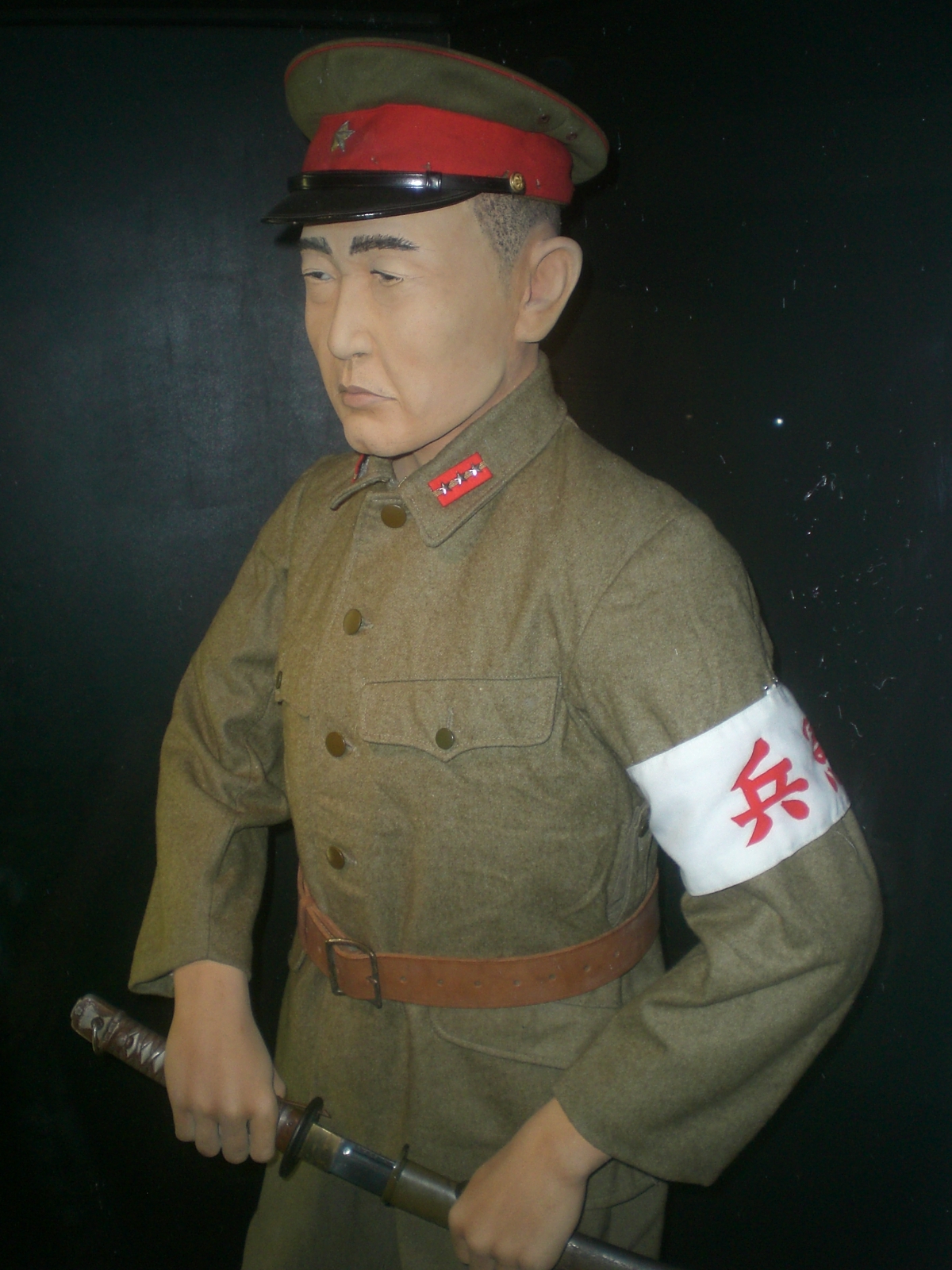
Kenpeitai
MilitaryWikipedia
25
MENTIONS
11
EPISODES
9
PODCASTS
Search complete. 25 mentions across 11 episodes found for "Kenpeitai".
Sep 28, 2026

JonnyHOST
Let's move forward to the FAQ.
JonnyHOST
So in the FAQs, can the Kempeitai officer issue the Banzai charge order? Yes, they can.
JonnyHOST
And including to other officers.
JonnyHOST
The next question is, can the Banzai charge order to other platoon commanders and company commanders? Yes.

Brian SimcoeGUEST
Yep.
Brian SimcoeGUEST
Yeah, these guys were affiliated with, they were the Kempeitai, they were the secret police and whatnot that were affiliated with 731.
Brian SimcoeGUEST
And yep, it's all the same group.
Brian SimcoeGUEST
They were responsible for most of that kind of thing.

Desiree BenipayoGUEST
Everyone caught with the Philippine money and the U.S. dollar will be brought to Fort Santiago soon.
Desiree BenipayoGUEST
and tortured by the Kempeitai.
Desiree BenipayoGUEST
So we had to start using Japanese money.
Desiree BenipayoGUEST
But the people said, people in the market said, how come if this is real money, how come they have to point a gun at us for us to accept their money, right? And so these are the ordinary folks thinking this.

Tom TrumbullHOST
This is Sumida pictured towards the end of the war at an undisclosed location.
Tom TrumbullHOST
He was, and can I have a show of hands again, who's heard of the Kempeitai? Yes, so the Kempai Tai, for those of you who don't know, was a military police unit.
Tom TrumbullHOST
It's no coincidence, their responsibilities were essentially to police all of the occupied territories of Southeast Asia and Asia, all of the occupied territories.
Tom TrumbullHOST
And it's no coincidence that so many of the atrocities The word Kempeitai keeps on coming up because they ruled those areas, or they controlled those areas, I should say, through a policy and a campaign of terror and fear, through illegal incarceration, torture, execution, and these sorts of methods.
Tom TrumbullHOST
And this man was a very senior officer in the Kempeitai, and he was a man that had a reputation for getting results.
Tom TrumbullHOST
Don't let this smile fool you.
Tom TrumbullHOST
He always had a smile.
Tom TrumbullHOST
And in their desperation to survive, they had to steal and resort to these tactics to be able to put food on the table for their families.

Juan NaulaNARRATOR
This hostility against immigrants was in large part due to Korean dissidents, who had been undertaking terrorist attacks across the country.
Juan NaulaNARRATOR
In response, the Japanese government enacted security measures, including an increase in the country's internal security forces, the most notable and infamous of which was the Kenpei Tai.
Juan NaulaNARRATOR
who were the military police arm of the army, but who also acted as the secret police within Japan itself, as well as its occupied territories.
Juan NaulaNARRATOR
In 1926, the Japanese Emperor Yoshihito, the son of Emperor Meiji, died and was replaced by his young and timid son, the 124th Emperor Hirohito, who would largely, due to his inexperience, come increasingly under the influence of the now powerful militarists within the Japanese government, particularly factions within the army and navy, through the country's minister of war, who was only accountable to the emperor himself and had held a veto over all policy decisions within Japan since the turn of the century.
7 MINS LATER
Juan NaulaNARRATOR
Imperial delegates stormed out of the League of Nations, effectively meaning that any prospect of peace between Japan and China had now been lost and, as a consequence, the Land of the Rising Sun was now more isolated and aggrieved than ever.
Juan NaulaNARRATOR
In 1935, Tojo was posted to Manchuria as the commander of the now Japanese province's Kenpei-Tai secret police force, during which time he earned the nickname the Razor because of his proactive, decisive and fastidious manner of command, and it was perhaps due to him being appointed to this post that Tojo would later expand the remit of the military police after his ascension to power, resulting in the organization becoming one of the most hated and feared instruments of state repression throughout Japan and its overseas colonies.
Juan NaulaNARRATOR
As well as this, it is likely that Tojo's insistence in commanding the Kenpei Tai in Manchuria in a by-the-book fashion, in which he always adhered to the orders of those above him, that earned Tojo the admiration and praise of his superiors in Tokyo, that would over the coming years ensure he was given a steady stream of promotions, as the power and influence of the Japanese military increased yet further and the country plunged deeper and deeper towards war across Asia.
Juan NaulaNARRATOR
Since the country's annexation of Manchuria, after which a puppet state had been set up, named Manchukuo, under the rule of the deposed last emperor of China, Pu Yi, the Japanese army extended its control over an ever-increasing expanse of northern China.
Brian SimcoeGUEST
Yep.
Brian SimcoeGUEST
Yeah, these guys were affiliated with, they were the Kempeitai, they were the secret police and whatnot that were affiliated with 731.
Brian SimcoeGUEST
And yep, it's all the same group.
Brian SimcoeGUEST
They were responsible for most of that kind of thing.

Bill BupertHOST
We're going to isolate ourselves to World War II.
Bill BupertHOST
Everybody has heard of the Kempeitai.
Bill BupertHOST
The Kempeitai were the Japanese secret police, but the Japanese secret police also had a special duties section, Tokumu Han, while the Kempeitai were the ruthless military police arm.
Bill BupertHOST
responsible for public order and political enforcement.
Bill BupertHOST
Each main Kempeitai detachment, what was called a Bukentai, featured a dedicated special duty section.
Bill BupertHOST
These units...
Bill BupertHOST
They worked hand-in-hand with General Masao Baba's Counterintelligence Command in Manila.
Bill BupertHOST
And I think that there was an over 25% death rate in the death camp that they placed them in for the remainder of the war.

Bill BupertHOST
We're going to isolate ourselves to World War II.
Bill BupertHOST
Everybody has heard of the Kempeitai.
Bill BupertHOST
The Kempeitai were the Japanese secret police, but the Japanese secret police also had a special duties section, Tokumu Han, while the Kempeitai were the ruthless military police arm.
Bill BupertHOST
responsible for public order and political enforcement.
Bill BupertHOST
Each main Kempeitai detachment, what was called a Bukentai, featured a dedicated special duty section.
Bill BupertHOST
These units...
Bill BupertHOST
They worked hand-in-hand with General Masao Baba's Counterintelligence Command in Manila.
Bill BupertHOST
And I think that there was an over 25% death rate in the death camp that they placed them in for the remainder of the war.

Patty McAllisterGUEST
Those supplies included a few thousand FP-45 Liberator pistols, which kept the Japanese and their collaborators living in constant fear of the seemingly harmless civilians.
Patty McAllisterGUEST
The Kempeitai never knew when their next arrest would end with a .45 slug and nice letter to their families.
Patty McAllisterGUEST
There were possibly up to 250,000 or more USAFFE-affiliated guerrilla fighters, not counting the actively helpful sympathizers.
Patty McAllisterGUEST
Another significant resistance force was the hook Bala hop, or the hook, which they started forming even as the American and Filipino service members for fighting the Battle of Bataan.
John BruningGUEST
There was a whole trove of documents captured on Leyde in early 45, I believe.
John BruningGUEST
It was all Kempeitai records that showed evidence.
John BruningGUEST
the Japanese had a firm grasp, in Cebu particularly, of who the battalion commanders were.
John BruningGUEST
In some cases, down on the company level, they knew every leader in the movement.
1 more episode mentions Kenpeitai.
Create an account to see the whole feed, search across every transcript, and follow the entities you care about.