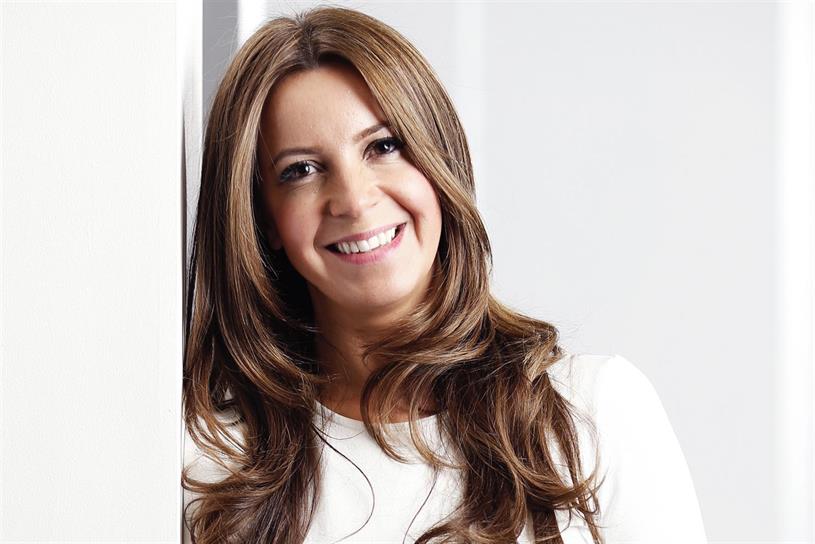
Kathleen Saxton
Former chief marketing officer of Omnicom Group
5
APPEARANCES
4
PODCASTS
Sep 20, 2026


Kathleen SaxtonGUEST
So we talk about, it's Donald Winnicott's theory, who's the most amazing, you know, he was the most amazing, uh, psychiatrist and psychotherapist.
Kathleen SaxtonGUEST
If we're born a true self, so we come into the world as a tiny baby, and nothing's happened to us, and whatever spirit pilot light we have is our, ours to own.
Kathleen SaxtonGUEST
But very quickly, we realize that we need to, you know, we're keeping the peace with mom, we're worrying about what's gonna kick off, et cetera.
Kathleen SaxtonGUEST
We start adapting, so we have an adapted self that we, we know we're in it a lot of the time if we've got difficult parents.


Kathleen SaxtonGUEST
... that we can do, and really getting back in touch with what might that be, because that's so important.
Kathleen SaxtonGUEST
When no one else is talking about it, you know, we're led to believe that maybe there is something wrong with me.
Kathleen SaxtonGUEST
But so often many people are thinking the same thing, and we talk about it, if you think about standard bystander effect, which is let's say there's been an accident, I don't know, at a train station, and you're the only other person and someone's fallen onto the track.
Kathleen SaxtonGUEST
Because it's just you, you know that I have to call the ambulance, the police, and try and help them.
6 MINS LATER


Dipti SolankiHOST
So for anyone who is watching and may recognise parts of themselves, um i don't know what would be most useful to share so from from you what would you like to share for those people what can they do with these this curiosity that may be coming up parts of themselves that are recognizing elements of this conversation
Kathleen SaxtonGUEST
so the first thing i'd say is i think there are lots of unqualified helpful people out there please be careful i'm a big advocate of ukcp bacp someone that is actually qualified But when I wrote the book, I discovered that when you can search for a therapist, you can obviously search for all sorts of specialisms.
Kathleen SaxtonGUEST
So I wrote to both of the bodies and I asked them to include it as a specialism for therapists that had a qualification or training in it.
8 MINS LATER
Kathleen SaxtonGUEST
Narcissists will want to feel good in whatever form that matters to them, and you are an object to them.
Kathleen SaxtonGUEST
They might performatively act as though you're in a relationship or a friendship or a-- But actually, you're just an object for them to get what they need, and what they need is narcissistic supply, which is either adoration or sympathy or something where you're gonna be drawn towards them.So we've got the narcissistic criteria, but lots of narcissists will never go anywhere near a psychiatrist, so we'll never really know, which can be difficult when you haven't got someone that's been diagnosed.
Kathleen SaxtonGUEST
But for me, it's about how do you start to feel when you are in their company?
54 MINS LATER

speaker_3ADVERTISER
So another technique that we would use once we've
Kathleen SaxtonGUEST
looked at this inner child part is how do we help this part begin to start to tell their truth? So we talked about adapted self, false self.
Kathleen SaxtonGUEST
So often when people come and they're beginning to come to terms with what's happened about a narcissistic parent.
Kathleen SaxtonGUEST
They're beginning to touch in on what really happened to them and what it was really like for them and how they might really feel about this parent.
Kathleen SaxtonGUEST
But they find it very difficult to even imagine that they would ever tell that parent how they really felt.
Kathleen SaxtonGUEST
And sometimes in our healing, part of the journey is to begin to find the words to express what we really felt, even if we don't think an apology would ever come, which it's unlikely it ever would.
