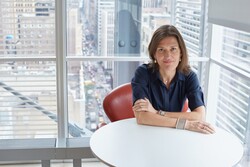
Kate Zernike
American journalistWikipedia
4
MENTIONS
2
EPISODES
2
PODCASTS
Search complete. 4 mentions across 2 episodes found for "Kate Zernike".
Oct 6, 2026

Jackie TantilloHOST
People say times change, but in this particular conversation, it's hard to believe that after decades of women making major strides in the workforce, suddenly you take a look and realize maybe we're not as progressive as one would have hoped.
Jackie TantilloHOST
Kate Zernike is a 2002 Pulitzer Prize-winning national correspondent for The New York Times.
Jackie TantilloHOST
She's the author of Boiling Mad, Inside Tea Party America from 2010.
Jackie TantilloHOST
Her most recent book, The Exceptions, Nancy Hopkins, MIT and the Fight for Women in Science.
Jackie TantilloHOST
Kate recalls at a young age when her mother was interested in applying to law school.
Jackie TantilloHOST
Advice her mom received was less than encouraging, and yet today it's been suggested that perhaps Kate is finishing up what her mother started.
Jackie TantilloHOST
But I'd like Kate Zernike to fill in those details.
Jackie TantilloHOST
Welcome to Should Have Listened to My Mother.

Lisa MuellerHOST
Absolutely.
Lisa MuellerHOST
Y- Last year, I had Kate Zernike on the podcast.
Lisa MuellerHOST
It was her second time on the podcast, and the first time she was on, she discussed the book she had written called The Exceptions, which had to do with female scientists at MIT, um, going through, uh, a period of discrimination there, which MIT later admitted to.
Lisa MuellerHOST
But the second time, we were actually talking about this issue, uh, ve- in a very similar way, and her view was that researchers and people in universities need to tell the public that when they're asked what they do, because to your point about the public not understanding what, uh, impact is coming out of research, should say, "I work for you," and explain it in that way.