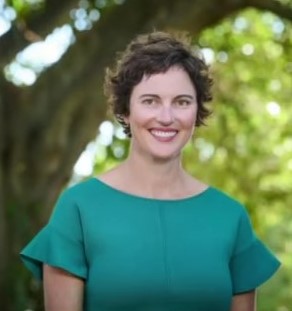
Kate Chaney
Member of the Australian House of Representatives
10
APPEARANCES
6
PODCASTS
Sep 9, 2026

Peter LewisHOST
What's your first take on how this has landed both within the house because it's been the big launch today but also from what you've seen of what's been put forward?

Kate ChaneyGUEST
Well I think it's early days and this is an exposure draft which means the government is open to improving it.
Kate ChaneyGUEST
And it's good to see that process happening because with the under-16s ban, it was ran through in a week and there wasn't an equivalent process.
Kate ChaneyGUEST
So I'm taking that in good faith and will engage on good faith and hope that there is some openness to improvements.
Kate ChaneyGUEST
Yes, one of the dangers with listing harms is then it just ends up being about that type of content.
Kate ChaneyGUEST
Most people that I speak to, their concern is about the features and functions more than specific pieces of content.
12 MINS LATER

Kate ChaneyGUEST
There's pretty broad agreement about the harm that social media does, whether it's violence, misogyny, scams, screen addiction, grooming, deep fakes, polarisation, all these different types of harm are now part of our world.
Kate ChaneyGUEST
And I got 1,200 respondents from my community and asked them their views on social media.

Mark KennyHOST
I'm not saying it's all down to social media, but it's definitely an accelerant in a range of these things.


Sally SaraHOST
How widely is automated decision-making and these tools used in government right now? Well,
Kate ChaneyGUEST
it's a very good question, and we don't actually have any transparency about that, so we don't know.
Kate ChaneyGUEST
But certainly in the disability space and in the aged care space, there's increasing concern about its use.
Kate ChaneyGUEST
And this goes back to the Robodebt scandal and the Robodebt Royal Commission, which recommended that there be a mandatory set of rules that apply whenever government is using an automated system to make decisions.
Kate ChaneyGUEST
What do we know about the scale of problems? Well, the scale is huge, but also the impact on individuals is huge.
6 MINS LATER


Jamie BurnettHOST
Now, I know this has been really at the, the forefront for, for you, Kate, but, I mean, do you take any comfort out of the fact that there is some change and that there is, you know, a review three years into the future?
Kate ChaneyGUEST
Yeah, look, I think there would've been no action on this if we hadn't been, been, you know, hadn't been pushing on it, and I've, I've mentioned this two hundred and fifty times in Parliament now.
Kate ChaneyGUEST
Uh, there are some good things in there with jerseys and, you know, th-there are some restrictions, but it's just like a big bit of Swiss cheese.
Kate ChaneyGUEST
So probably the best amendment that came out of today was that there'll be a review in three years' time, and the government will actually have to face up to whether these, these things are working, uh, to reduce the normalization of y-- of gambling as part of sport.
Kate ChaneyGUEST
Um, I meet so many kids who can sing the jingles and name all the, the gambling companies.
Kate ChaneyGUEST
Um, and so in three years, m-maybe a braver government will then take that opportunity to actually deal with this problem.
Jamie BurnettHOST
Is that the, is that the part that hits you the, the hardest when you can see, uh, how this, how this gets embedded, I suppose, into, into the minds of, of young people and what that might mean kind of years down the track?
Kate ChaneyGUEST
Um, but I think we have to be realistic about whether it's gonna be effective or not and- and look at the evidence.
Kate ChaneyGUEST
So when I see what's being proposed o- on inducements, I- I'll have a good look at it.
Kate ChaneyGUEST
Uh, inducements are a horrendous practice that the industry chillingly calls generosities, but the evidence shows, uh, these free bets or offers of free money increase the frequency and the size of bets that are made.
Kate ChaneyGUEST
So they are really important to the industry because they make a lot of money o- out- out of this particular mechanism.
Sally SaraHOST
Have you received any indication from the government about whether they will allow this to be debated in Parliament or whether they'll shut it down?
MelHOST
Now, can you give us an explanation of what you would like to see from an overarching duty of care?
Kate ChaneyGUEST
Yeah, I mean, when you walk into a shop, you know that if something falls on you or you slip on a, in a puddle on the floor, someone is responsible for that.
Kate ChaneyGUEST
But in our online spaces, we don't have that same expectation that, uh, the people producing those spaces are actually going to be held responsible for th- their safety.
Kate ChaneyGUEST
It's really taking a concept that we have in other areas and applying it to this new online a- area.
Kate ChaneyGUEST
Um, so an overarching duty of care would mean that platforms are responsible for taking reasonable steps to prevent harm, uh, on their platforms.
MelHOST
Is the eSafety Commissioner the right body to do that, in your view?
Sally SaraHOST
Do you have any concerns about the government's approach to the international interest in building AI infrastructure here in Australia, which is already booming?
Kate ChaneyGUEST
And at the moment, we've got a statement of expectations that they're not legislated and that should address the energy issues, also water, also jobs and impact on local communities.
Kate ChaneyGUEST
We've got hundreds of them already and we need to set these expectations so we're not relying on local councils or state government to address these issues.
Kate ChaneyGUEST
So I think this is one of... 18 different issues that the government needs to really get onto when it comes to AI regulation to make sure that we're making it safe so we can make the most of the opportunities.

15:50
Among other reforms, what else did we see come through in the government's response?
Kate ChaneyGUEST
in, if I can just h- talk about some of those, the clampdown, you know, was the word you used, online, they're calling it a, a triple lock.
18:54
Are we letting perfection become the enemy of the good in this space, playing devil's advocate, where, you know, we need to see reform in this space, but also we can't completely axe what this revenue brings?


Dave MarcheseHOST
Uh, h-how are they feeling? Like, have you, have you been in touch with any of these people?
Kate ChaneyGUEST
I sat on the committee that did this inquiry, and we heard forty-five hours of evidence, um, about the impact of gambling.
Kate ChaneyGUEST
Some of it was really harrowing, and people were really brave and, you know, fronted up and presented and talked, you know, told their stories to, to the committee.
Kate ChaneyGUEST
Um, and really, the response that we've got from the government, I think, does not respect the evidence that those people provided.
Kate ChaneyGUEST
Um, o-often in a, in a response to a committee inquiry, it'll go through recommendation by recommendation and say whether the government accepts it in full or in principle, or notes it.
Kate ChaneyGUEST
This one, it just says, um, the government notes all the, all the recommendations.
Dave MarcheseHOST
And just finally, Kate Chaney, do you think this is it now for this government in terms of reforms to gambling, that that's the last we'll hear of it?
Sasha BarbagalloHOST
I'm curious to hear what were some of the things that shocked and concerned you the most?
Kate ChaneyGUEST
It was really quite heart-rending hearing 45 hours of evidence, including from people whose lives had really been destroyed by gambling.
Kate ChaneyGUEST
Firstly was just that there is no escape, and if you're experiencing problems with gambling, everywhere you look, uh, there are gambling ads.
Kate ChaneyGUEST
And, and people talked about how hard it was to escape from the predatory industry.
Kate ChaneyGUEST
The second thing, uh, was, was how predatory the industry is and just how many ways they can get at people and get them e- to maximize their losses.
7 MINS LATER
Sasha BarbagalloHOST
Why are we seeing this happen? Is it just a way to kick the can down the road on issues so that action doesn't have to happen?