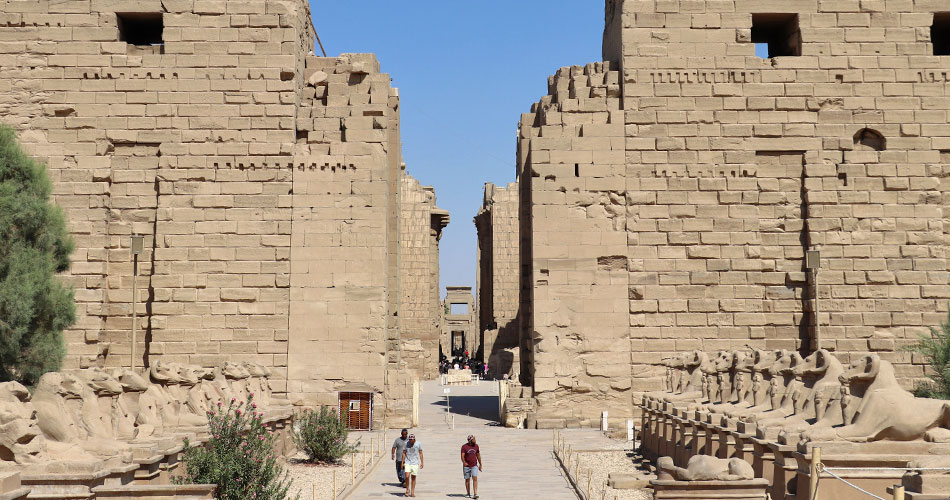
Karnak
Temple in Luxor, EgyptWikipedia
159
MENTIONS
48
EPISODES
45
PODCASTS
Search complete. 159 mentions across 48 episodes found for "Karnak".
Sep 13, 2026

Bryn RobertsNARRATOR
In the great museum at Cairo, there are today many samples of furniture glued together with Egyptian glue, which are still in excellent condition.
Bryn RobertsNARRATOR
It is, however, more than likely that little or no binder was used when the pigments were applied on the various tombs or temples, even to those built about 1,500 years later, like the Temple of Karnak.
Bryn RobertsNARRATOR
We all know that the climate of Egypt is exceedingly dry and therefore no rain can wash off or disintegrate a cold water paint made by means of pigment and glue.
Bryn RobertsNARRATOR
The Nile clay and Nile mud largely used in building are slightly alkaline and in many respects similar to the adobe mud in New Mexico and Arizona.

Bryn RobertsNARRATOR
In the great museum at Cairo, there are today many samples of furniture glued together with Egyptian glue, which are still in excellent condition.
Bryn RobertsNARRATOR
It is, however, more than likely that little or no binder was used when the pigments were applied on the various tombs or temples, even to those built about 1,500 years later, like the Temple of Karnak.
Bryn RobertsNARRATOR
We all know that the climate of Egypt is exceedingly dry and therefore no rain can wash off or disintegrate a cold water paint made by means of pigment and glue.
Bryn RobertsNARRATOR
The Nile clay and Nile mud largely used in building are slightly alkaline and in many respects similar to the adobe mud in New Mexico and Arizona.

Ben Van KerkwykGUEST
Um, but...
Ben Van KerkwykGUEST
And, and Karnak Temple.
Ben Van KerkwykGUEST
Like these used to, these were kilometers long avenues of, of obelisks and giant statues, like thousand-ton statues.
Darren GrimesHOST
[laughs]
3 HRS 23 MINS LATER
Ben Van KerkwykGUEST
I mean, not only that, but many of these massive megalithic structures with this limestone that's eroded, they were cased in granite.
Ben Van KerkwykGUEST
Like, they had that granite casing inside and out, all around, which is, which, which-
Darren GrimesHOST
The ones at Karnak are crazy.
Darren GrimesHOST
Remember those three at Karnak?

Alan FyldesGUEST
Presumably at
Joanne FletcherGUEST
Karnak.
Joanne FletcherGUEST
Absolutely.
Joanne FletcherGUEST
At Karnak Temple, she'd be sort of a regular performer before the gods.
Alan FyldesGUEST
Absolutely.
Alan FyldesGUEST
There's an interesting story here, isn't there?
Dan SnowNARRATOR
Nearly every detail of the mummy's life is apparently recorded on the coffin.
Dan SnowNARRATOR
She was a singer, probably at one of Egypt's greatest temples, Karnak, participating in rituals with a sacred rattle called a sistrum.
Joann FletcherNARRATOR
And she had proved beyond doubt that an effective leader didn't have to be a man.
Joann FletcherNARRATOR
As part of Hatshepsut's master plan for posterity, she commissioned two pairs of pink granite obelisks at Karnak Temple.
Joann FletcherNARRATOR
At almost 30 meters high, this one is the tallest still standing anywhere in Egypt.
Joann FletcherNARRATOR
In her own words, she tells us why she wanted to set up such striking monuments, as a tribute to her father, to the one who made me, she says.
Joann FletcherNARRATOR
And by father, she didn't mean her natural parent, but Amun, the king of the gods, to whom this whole temple is dedicated.
Joann FletcherNARRATOR
Their tops would have been capped with electrum, which is a blend of gold and silver.
Joann FletcherNARRATOR
And the idea is they acted as a kind of esoteric lightning rod to catch the very first rays of the sun at dawn, to transmit that solar power down here into the heart of Karnak Temple, where it could then be redistributed for the good of Egypt.
Joann FletcherNARRATOR
MUSIC PLAYS Karnak Temple is the place where the god Amun was worshipped.

Bryn RobertsNARRATOR
In the great museum at Cairo, there are today many samples of furniture glued together with Egyptian glue, which are still in excellent condition.
Bryn RobertsNARRATOR
It is, however, more than likely that little or no binder was used when the pigments were applied on the various tombs or temples, even to those built about 1,500 years later, like the Temple of Karnak.
Bryn RobertsNARRATOR
We all know that the climate of Egypt is exceedingly dry and therefore no rain can wash off or disintegrate a cold water paint made by means of pigment and glue.
Bryn RobertsNARRATOR
The Nile clay and Nile mud largely used in building are slightly alkaline and in many respects similar to the adobe mud in New Mexico and Arizona.

Bryn RobertsNARRATOR
In the great museum at Cairo, there are today many samples of furniture glued together with Egyptian glue, which are still in excellent condition.
Bryn RobertsNARRATOR
It is, however, more than likely that little or no binder was used when the pigments were applied on the various tombs or temples, even to those built about 1,500 years later, like the Temple of Karnak.
Bryn RobertsNARRATOR
We all know that the climate of Egypt is exceedingly dry and therefore no rain can wash off or disintegrate a cold water paint made by means of pigment and glue.
Bryn RobertsNARRATOR
The Nile clay and Nile mud largely used in building are slightly alkaline and in many respects similar to the adobe mud in New Mexico and Arizona.

Dominic PerryHOST
And it didn't stop there.
Dominic PerryHOST
At Karnak in Luxor, Amun-Mesi also erased Merneptah.
Dominic PerryHOST
Sometimes, he didn't even replace the names, just cut them out and left the cartouches blank.
Dominic PerryHOST
Which, at least to my mind, might suggest some kind of vendetta against Seti and Merneptah, that could support the idea of Amen-Messi as a disinherited son of the late pharaoh, taking vengeance on those who wronged him.
6 MINS LATER
Dominic PerryHOST
Working backwards, it seems that Pharaoh purged the workforce, perhaps dismissing those who had collaborated too willingly with Amen-Messi.
Dominic PerryHOST
Thirdly, there was the problem of Amun.
Dominic PerryHOST
Specifically, the great temple and priesthood at Karnak.
Dominic PerryHOST
Amen-Messi, or born of Amun, perhaps enjoyed some support there, because Seti instituted a shake-up in the top ranks.

Bryn RobertsNARRATOR
In the great museum at Cairo there are today many samples of furniture glued together with Egyptian glue which are still in excellent condition.
Bryn RobertsNARRATOR
It is, however, more than likely that little or no binder was used when the pigments were applied on the various tombs or temples, even to those built about fifteen hundred years later like the temple of Karnak.
Bryn RobertsNARRATOR
We all know that the climate of Egypt is exceedingly dry and therefore no rain can wash off or disintegrate a cold water paint made by means of pigment and glue.
Bryn RobertsNARRATOR
The Nile clay and Nile mud largely used in building are slightly alkaline and in many respects similar to the adobe mud in New Mexico and Arizona.

Melissa MinnickGUEST
They took videos of me.
Melissa MinnickGUEST
And then a couple of days later, we ended up in Karnak.
Melissa MinnickGUEST
And in Karnak, there is a private space where there's a 2000 year old statue of Sekhmet.
Melissa MinnickGUEST
Again, I don't know that this is an actual living entity.
Melissa MinnickGUEST
I have no idea, you know, anything about, I don't know who Sekhmet is.
38 more episodes mention Karnak.
Create an account to see the whole feed, search across every transcript, and follow the entities you care about.