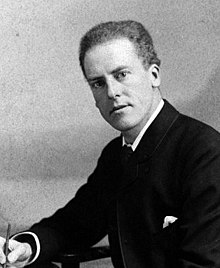
Karl Pearson
MathematicianWikipedia
31
MENTIONS
15
EPISODES
15
PODCASTS
Search complete. 31 mentions across 15 episodes found for "Karl Pearson".
Sep 15, 2026

Diane CastilloNARRATOR
He does not stand alone.
Diane CastilloNARRATOR
Many others deserve mention, and particularly W.K. Clifford and later Karl Pearson in England.
Diane CastilloNARRATOR
But Mach appears to have had a direct influence upon Einstein.
Diane CastilloNARRATOR
The problem which engaged him may be described as the application of the principles of Berkeley and Hume to the actual work which the physicist does in his scientific research.

Jay SingletonHOST
It was statistics.
Jay SingletonHOST
Just like Newton had invented calculus to study physics, people like Francis Galton and Karl Pearson developed modern statistics, in large part, to further eugenics.
Jay SingletonHOST
Because they knew that they didn't fully understand genetics.
Jay SingletonHOST
And we still don't.

Jay SingletonHOST
It was statistics.
Jay SingletonHOST
Just like Newton had invented calculus to study physics, people like Francis Galton and Carl Pearson developed modern statistics in large part to further eugenics.
Jay SingletonHOST
Because they knew that they didn't fully understand genetics.
Jay SingletonHOST
And we still don't.

David KippingHOST
I mean, it precedes the first unambiguous discovery by well over a century.
David KippingHOST
Indeed, this claim comes so early that it even precedes the birth of Karl Pearson, whose famous chi-square test is one of the bedrocks of statistical tests one might use nowadays to check for the validity of a detection.
David KippingHOST
In other words, Jacob's claim comes so early that modern statistics hadn't been invented yet, and Jacob was forced to look at things like the maximum and average residual after including his planet.
David KippingHOST
I think we have to give Jacob an enormous amount of credit for being so open-minded and bringing exoplanets into the forefront of astronomy.

Valerie VeatchGUEST
The very nature of statistics, the very mathematical tool of statistics was invented by scientists.
Valerie VeatchGUEST
Carl Pearson, who was the protege of Francis Galton, building on his mathematical tools.
Valerie VeatchGUEST
And it was Francis Galton was looking to this French mathematician, who I can't remember his name, who was trying, who was looking at mountain ranges.
Valerie VeatchGUEST
And he was trying to find what the ideal... like ratios of amount and range should be, it's a silly project.

Ray ClareNARRATOR
Such are the hereditary delusions bred by a Syrian doctor marrying a Quaker lady from York.
Ray ClareNARRATOR
Suppose Dr. Karl Pearson had said to Shelley, From what I see of your temperament, you are running great risks in forming a connection with the daughter of a fanatic and eccentric like Godwin.
Ray ClareNARRATOR
Shelley would be employing the strict rationalism of the older and stronger freethinkers if he answered, From what I observe of your mind, you are rushing on destruction in marrying the great-niece of an old corpse of a courtier and dilettante like Samuel Rogers.
Ray ClareNARRATOR
It is only opinion for opinion.
Ray ClareNARRATOR
Nobody can pretend that either Mary Godwin or Samuel Rogers was mad, and the general view a man may hold about the healthiness of inheriting their blood or type is simply the same sort of general view by which men do marry for love or liking.
Ray ClareNARRATOR
There is no reason to suppose that Dr. Karl Pearson is any better judge of a bridegroom than the bridegroom is of a bride.
Ray ClareNARRATOR
An objection may be anticipated here, but it is very easily answered.
Ray ClareNARRATOR
It may be said that we do, in fact, call in medical specialists to settle whether a man is mad, and that these specialists go by technical and even secret tests that cannot be known to the mass of men.

Robert EvansHOST
As a wealthy child of a wealthy family in the Victorian era, he had grown up extremely conservative, and this colored his interpretations of all he saw.
Robert EvansHOST
His biographer, Michael Burl- Bulmer, describes him as having little sympathy for liberal causes, like Chartism.
Robert EvansHOST
The Chartist movement was a working class attempt to reform UK politics that was active from 1838 to the late 1840s.
Robert EvansHOST
It was a-... kind of proto-socialist-y, right?
21 MINS LATER
Robert EvansHOST
Galton spent years in North Africa and the Middle East sowing his wild oats, in his own words.
Robert EvansHOST
There is evidence that during this period he did things that later ashamed him.
Robert EvansHOST
His biographers will note that almost none of his letters survive from the years right before, right after his dad died.
Robert EvansHOST
Uh, his first biographer, Karl Pearson, calls this period of his life the fallow years of his life, because there's n- we don't have anything to know about them, right? 'Cause he, it, you're kind of led to believe he destroyed the letters he sent home.

Richie AllenHOST
He talked about selective breeding to improve the human race.
Richie AllenHOST
He had Carl Pearson, University College London, another one.
Richie AllenHOST
He wanted to use biometric data to promote what he called aggressive racial hygiene, Jesus, Mary and Joseph.
Richie AllenHOST
So you have all of this stuff.

Larry WilsonNARRATOR
The heaviest, perfectly healthy brain was that of a mechanic which weighed just above 70 ounces.
Larry WilsonNARRATOR
In the Journal of the Biometrical Society, June 1905, Professor Carl Pearson, FRS, and Dr. Raymond Pearl give the results of an analysis of 2,100 adult male and 1,034 adult female brain weights belonging to five races, Swedish, Bavarian, Hessian, Bohemian, and English, with the conclusion that, quote, there is no evidence that brain weight is sensibly correlated with intellectual ability.
Larry WilsonNARRATOR
Of the five races investigated by the biometricians, the English have the smallest mean brain weight.
Larry WilsonNARRATOR
The mean of the adult Englishman is 27 grams less than the Bavarian mean, 57 grams less than the Hessian mean, 65 grams less than the Swedish mean, and 120 grams less than the Bohemian mean, unquote.

Patrick CurranHOST
Pascal and Fermat and Bayes and Laplace, who set the stage for computing advanced probability and probability theory.
Patrick CurranHOST
And then good old Carl Pearson came along and had the chi-squared goodness of fit test that introduced the first notion of what did we observe and what did we expect.
Patrick CurranHOST
And
Greg HancockHOST
that's the core of all of our hypothesis tests, right? That there is something that we expect based on a particular theory, and there is something that we observe in the data, and everything we do is about assessing how well those two things fit.
Patrick CurranHOST
Yeah.
Patrick CurranHOST
But who then trots out on the field to
Greg HancockHOST
complicate things? Well, two people trot out onto the field together, right? There's Naaman and Pearson Jr., Pearson's boy, Egon.
Greg HancockHOST
And so we get Naaman and Pearson who round out things that Fisher had by thinking about things more formally in terms of errors and an explicit alternative hypothesis, right? Exactly.
5 more episodes mention Karl Pearson.
Create an account to see the whole feed, search across every transcript, and follow the entities you care about.