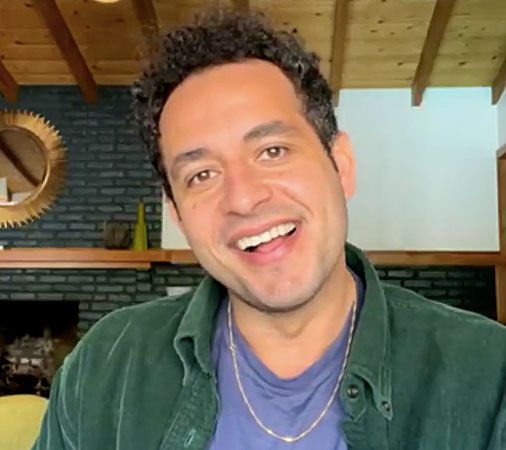
Kareem Rahma
Egyptian-American comedian and artist
17
APPEARANCES
15
PODCASTS
Oct 30, 2026


Kareem RahmaGUEST
i i just think that in an era that there there was a you know there was a longevity for a long time there was a the ability to create longevity right like things were on tv and they would become institutions and saturday night live as an institution 60 minutes as an institution your shows were institutions And now, it's hard to become an institution because we're living in this culture.
Kareem RahmaGUEST
And so it creates this anxiety within me where I'm like, yeah, sure, I'm doing well right now.

Maury PovichHOST
Do you look at who's... who's getting big, who's not getting big, what they're, you know.
Kareem RahmaGUEST
On YouTube, the beauty of YouTube compared to anything else is that it's free and it's global, worldwide.
Kareem RahmaGUEST
So if I'm shooting an episode of Keep the Meter Running in Syria, and someone says, "Where can I watch this?" I go, "YouTube." They go, "Of course." They, there's no explaining that, "Oh, it's, it's, you know, it's gonna be on HBO, and then, but internationally it might be on Sky TV or..." Y- y- I don't have to explain that.
17 MINS LATER


Kareem RahmaGUEST
And even though, but my penis hurt, or my balls hurt so much that I knew I wasn't gonna get a boner.
Kareem RahmaGUEST
And then the pain, like, went away, and then I went to my regular doctor in New York C- so it, it just went away.
Kareem RahmaGUEST
Went back to my regular doctor in New York and he goes, "I see this all the time in Wall Street guys.
Kareem RahmaGUEST
Some people hold their stress in their shoulders, other hold it in their backs.
31 MINS LATER


Kareem RahmaGUEST
It started to feel that way when I would get, you know, approached at the urinal.
Kareem RahmaGUEST
And then after about 100 episodes, we started having, like, record labels and studios and people starting to pitch talent.


Ashan SinghCORRESPONDENT
Kareem says he moved to New York without a job, but talked his way into making content for media companies like Vice and The New York Times before striking out on his own.
Kareem RahmaGUEST
I kinda had a, a midlife enlightenment where I realized that I could no longer think about the fact that, like, my life would be compromised of emails for the next 50 years.
Kareem RahmaGUEST
That's the moment I was like, "Okay, maybe I should just try something." And that's when I kinda got the, that's when I got the itch.
Kareem RahmaGUEST
And after he passed away, I found myself always trying to connect with kind of older men for guidance.
Kareem RahmaGUEST
One time, I was having a particularly bad moment in New York City, was going through a b- breakup, driving over the Williamsburg Bridge, and this cabbie was giving me the best advice I'd ever received.


Kareem RahmaGUEST
It was the minute that they got ahead of their skis and decided to launch a TV channel that has 24/7 programming, that is when things, in my opinion, started going downhill, and it's also this endless fundraising that didn't need to happen 'cause there were several profitable parts of the business, uh, whether that be Vice on HBO, which was a profitable part of the business, the internet business, you know, the YouTube business, that was profitable.
Kareem RahmaGUEST
It, they really started getting into trouble when they g- like went too big in a weird direction.
Kareem RahmaGUEST
We're the new TV," and then eventually being like, "We need to start a TV channel" was a really horrible decision.
16 MINS LATER


Matt NegliaHOST
What was the initial concept? What was the initial pitch? Where were you at in your life when the idea for the show started?
Kareem RahmaGUEST
I was, uh, where many people develop their best, uh, ideas, AKA in a period of desperation and about to give up.
Kareem RahmaGUEST
Um, I had spent about two years developing, uh, premium scripted long-form podcasts, and I was on my last breath, uh, with my partner, Andrew Quo, who is a producer on Subway Takes and in this company that we had both started together.
Kareem RahmaGUEST
Last breath, final 30 or $40,000, might have even been 20, and was like, "Maybe we should do the exact opposite of what we've been trying." So we set out to make premium scripted long-form podcasts.
Kareem RahmaGUEST
Sorry, it wasn't, it wasn't, it w- that was what we were doing, and I always said, "Let's pivot to shows instead of podcasts and do something tiny, micro, and short." And then over the course of time, that developed into Subway Takes.


Kareem RahmaGUEST
And I think, you know, cab drivers and, and, and, and so many other working-class people are invisible.

Kareem RahmaGUEST
Its center stage front camera auto-adjusts the frame to fit everyone into group selfies.
19 MINS LATER

Kareem RahmaGUEST
You know, everyone wants to know what's next after Subway Takes, and I'm like, "Well, what's next is the thing that I first started with, so let me finish that first." And so now I finally, because we shot...


Kareem RahmaGUEST
Um, and I think to a certain extent, like we are replacing an element of late night, which is the interview or the celebrity interview.
Kareem RahmaGUEST
I think what differs from my show compared to all those other shows is that like I don't o- I have 5% of my show is celebrities, and 95% are like working class creative types, whether that be comedians or filmmakers or artists or authors or writers.
1 HR 29 MINS LATER
Kareem RahmaGUEST
The show really represents the fact that everybody's interesting if you give them the time to tell their story.
Kareem RahmaGUEST
You get into a cab, you're crying, it's raining out, you're getting broken up with your girlfriend.


Kareem RahmaGUEST
Look, here's what happened, is when I walked away from the TV deal, I was really sad that I wasn't going to get driven around in, like, a, a Cadillac Escalade all day, and, like, go to my big party.
34 MINS LATER


JackHOST
Is there validity, fact or fiction?
Kareem RahmaGUEST
I think we did the show in 2022, the first time, like December 2022 or something.
JackHOST
Cause I ended up watching it for more than five seconds.


12 MINS LATER


Kareem RahmaGUEST
I started making music when I was, like, 35 or 36, and I had just premiered a movie at Tribeca with Nico, and I was riding on a bicycle, and I was like, "You know what I should do? I should make a song." And then I made a funny song, and I made a couple other funny songs, and I was like, "Not everything has to be funny.

speaker_6ADVERTISER
Yeah
Kareem RahmaGUEST
So this is, like, I think I was, like, in New York, uh, for, like, maybe seven or eight years, and at that point I was like, "Okay, I know enough people, I have enough information and knowledge and, like, maybe some access to money, that I can actually go start my thing."
speaker_6ADVERTISER
Yeah.
Kareem RahmaGUEST
Um, and it just didn't work, and then I shifted that into something called Nameless Network, which, which was like...
Kareem RahmaGUEST
Do you remember, like, NowThis News? Like, these, they're, they kind of, like, made, like, thousands of viral videos every month that would be like, "This guy is selling yams in Japan-


Kareem RahmaGUEST
... having the dual cross coverage like a real television show would differentiate me.
Kareem RahmaGUEST
So I, I, I really came into it from a quality perspective first and a storytelling perspective first, and I know that's a cliche word and everyone uses it all of the time.
Kareem RahmaGUEST
But it was never for me, it was like, let me engineer, let, let me create a GMO, like a, like a viral object.
Kareem RahmaGUEST
It was always, like, the virality wi- will be the outcome if the show is good and if the show is sticky and if I, you know, I'm having a good time.
Kareem RahmaGUEST
Like, people wanna watch other people have a good time, and every time I get into a cab or jump on the subway to talk to these people, I'm having a good time.
16 MINS LATER