Karakorum
66
MENTIONS
23
EPISODES
20
PODCASTS
Search complete. 66 mentions across 23 episodes found for "Karakorum".
Sep 7, 2026

Stephen SeidelNARRATOR
Toward the beginning of the 13th century, Chinchis Khan, leader of a small Tatar tribe, conquered most of Central and Eastern Asia, including China.
Stephen SeidelNARRATOR
under his son okhodai these mongol taitars turned from china to the west conquered armenia and one of the mongol generals named batu ravaged south russia and poland and captured budapest twelve forty one it seemed as if the prophesied end of the world had come and the mighty nations gog and magog had at last burst forth to fulfil the prophetic words but okadai died suddenly and these armies were recalled universal terror seized europe and the pope as the head of christendom determined to send ambassadors to the great khan to ascertain his real intentions He sent a friar named John of Plenocarpini from Lyon in 1245 to the camp of Batu on the Volga, who passed him on to the court of the great Khan at Karakorum, the capital of his empire, of which only the slightest trace is now left on the left bank of the Orkhon, some hundred miles south of Lake Baikal.
Stephen SeidelNARRATOR
here for the first time they heard of a kingdom on the east coast of asia which was not yet conquered by the mongols and which was known by the name of cathay fuller information was obtained by another friar named william roysbroeck or rubrici a fleming who also visited caracorum as an ambassador from st louis and got back to europe in twelve fifty five and communicated some of his information to roger bacon he says these cathayans are little fellows speaking much through the nose and as general with all those eastern people their eyes are very narrow The common money of Cathay consists of pieces of cotton paper, about a palm in length and breadth, upon which certain lines are printed, representing the seal of Mangu Khan.
Stephen SeidelNARRATOR
They do their writing with a pencil, such as painters paint with, and a single character of theirs comprehends several letters, so as to form a whole word." He also identifies these Cathayans with the Ceres of the ancients.

Nicholas CliffordNARRATOR
By this time contact with China had somewhat abated the savagery of the first conquerors.
Nicholas CliffordNARRATOR
Kublai removed his capital from Karakorum in Mongolia to Peking.
Nicholas CliffordNARRATOR
He built walls like those which still surround the city and established on the walls an observatory which is preserved to this day.
Nicholas CliffordNARRATOR
Until 1900 two of the astronomical instruments constructed by Kublai were still to be seen in this observatory, but the Germans removed them to Potsdam after the suppression of the Boxers.

Pamela NagamiNARRATOR
There was no attempt to push farther into Europe, apart from one reconnaissance into Austria, which strangely enough was carried out under an English Knight Templar who held command in the Mongol army.
Pamela NagamiNARRATOR
But at the end of the year, Ogdai died at Karakorum, and the princes were all eager to compete for the succession.
Pamela NagamiNARRATOR
On this account, the Mongol armies and their leaders decided to return east.
Pamela NagamiNARRATOR
The evacuation of Hungary was carried out systematically and without interference.

Nicholas CliffordNARRATOR
By this time, contact with China had somewhat abated the savagery of the first conquerors.
Nicholas CliffordNARRATOR
Kublai removed his capital from Karakorum in Mongolia to Peking.
Nicholas CliffordNARRATOR
He built walls like those which still surround the city and established on the walls an observatory which is preserved to this day.
Nicholas CliffordNARRATOR
Until nineteen hundred, two of the astronomical instruments constructed by Kublai were still to be seen in this observatory, but the Germans removed them to Potsdam after the suppression of the Boxers.

speaker_6NARRATOR
At all events, he was a very great and powerful prince, and he reigned over a wide extent of country.
speaker_6NARRATOR
The name of his capital was Karakorum.
speaker_6NARRATOR
The distance which Temujin had to travel to reach this city was about ten days' journey.
speaker_6NARRATOR
He was received by Vang Khan with great marks of kindness and consideration.
6 MINS LATER
speaker_6NARRATOR
If any one of us spares them when we have them in our power, or if we fail to keep the promise that we have made to destroy them, may we meet with the same fate that has befallen these beasts that we have now cut to pieces.
speaker_6NARRATOR
They uttered this imprecation in a very solemn manner, standing among the mangled and bloody remains of the beasts which lay strewed all about the ground.
speaker_6NARRATOR
These preparations had been made thus far very secretly, but tidings of what was going on came, before a great while, to Karakorum, Vang Khan's capital.
speaker_6NARRATOR
Temujin was greatly excited when he heard the news.

Stephen SeidelNARRATOR
Toward the beginning of the 13th century, Chinchis Khan, leader of a small Tatar tribe, conquered most of Central and Eastern Asia, including China.
Stephen SeidelNARRATOR
under his son okhodai these mongol taitars turned from china to the west conquered armenia and one of the mongol generals named batu ravaged south russia and poland and captured budapest twelve forty one it seemed as if the prophesied end of the world had come and the mighty nations gog and magog had at last burst forth to fulfil the prophetic words but okadai died suddenly and these armies were recalled universal terror seized europe and the pope as the head of christendom determined to send ambassadors to the great khan to ascertain his real intentions He sent a friar named John of Plenocarpini from Lyon in 1245 to the camp of Batu on the Volga, who passed him on to the court of the great Khan at Karakorum, the capital of his empire, of which only the slightest trace is now left on the left bank of the Orkhon, some hundred miles south of Lake Baikal.
Stephen SeidelNARRATOR
here for the first time they heard of a kingdom on the east coast of asia which was not yet conquered by the mongols and which was known by the name of cathay fuller information was obtained by another friar named william roysbroeck or rubrici a fleming who also visited caracorum as an ambassador from st louis and got back to europe in twelve fifty five and communicated some of his information to roger bacon he says these cathayans are little fellows speaking much through the nose and as general with all those eastern people their eyes are very narrow the common money of cathay consists of pieces of cotton paper about a palm in length and breadth upon which certain lines are printed representing the seal of mangookan they do their writing with a pencil such as painters paint with and a single character of theirs comprehends several letters so as to form a whole word He also identifies these Cathayans with the Ceres of the ancients.
Stephen SeidelNARRATOR
Ptolemy knew of these as possessing the land where the silt comes from, but he had also heard of the Sinai and failed to identify the two.

Marie FavereauGUEST
So they start also rebuilding cities and building their own cities.
Marie FavereauGUEST
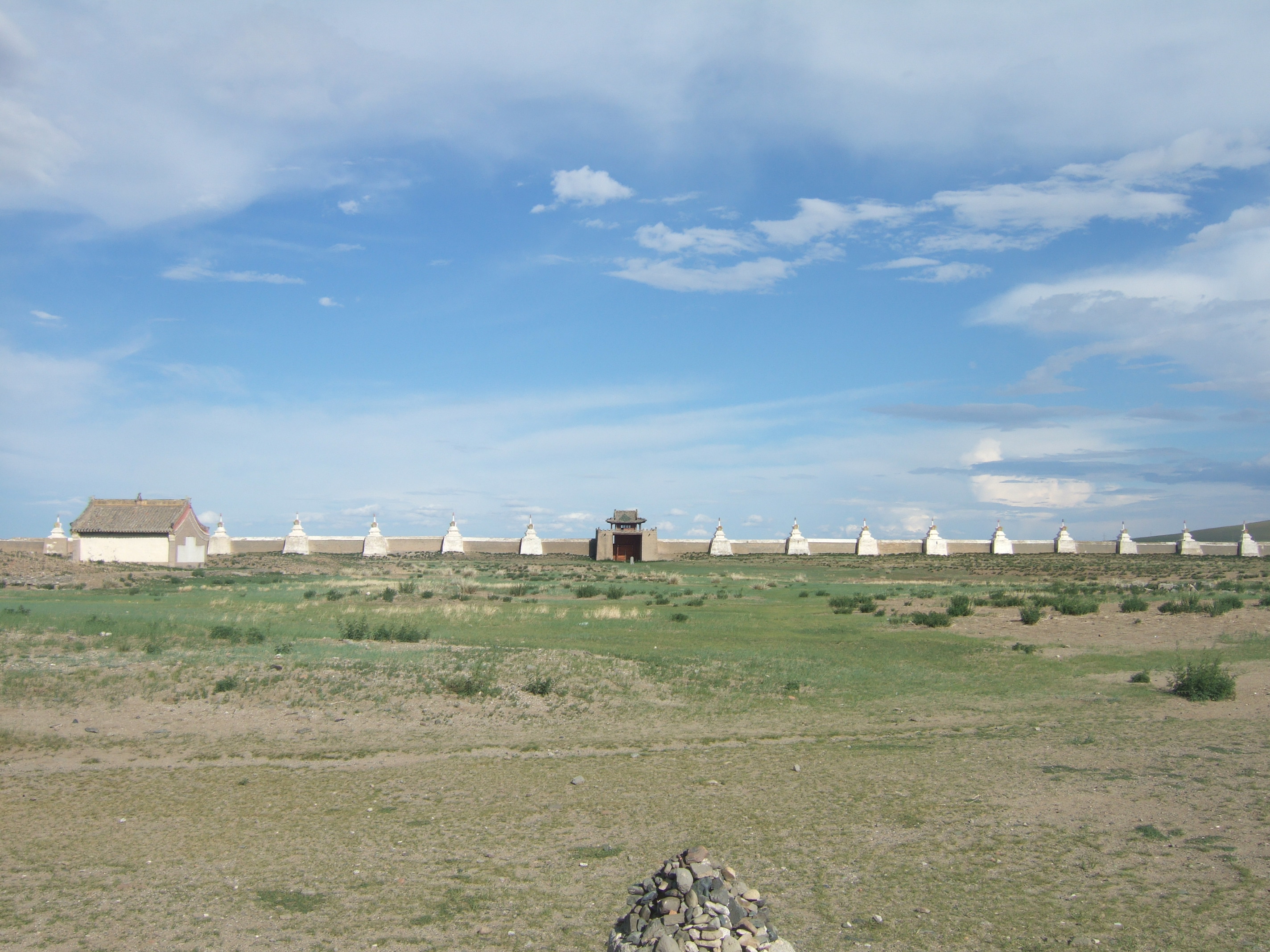
The most famous one is Karakorum in Mongolia today, central Mongolia.
Marie FavereauGUEST
You can visit some of the old monuments, but most of them are from later periods.
Marie FavereauGUEST
It's really thanks to the archaeologists that we can rediscover how big the cities were and how large they were.

Nicholas CliffordNARRATOR
By this time, contact with China had somewhat abated the savagery of the first conquerors.
Nicholas CliffordNARRATOR
Kublai removed his capital from Karakorum in Mongolia to Peking.
Nicholas CliffordNARRATOR
He built walls like those which still surround the city and established on the walls an observatory which is preserved to this day.
Nicholas CliffordNARRATOR
Until 1900, two of the astronomical instruments constructed by Kublai were still to be seen in this observatory, but the Germans removed them to Potsdam after the suppression of the Boxers.

speaker_0HOST
The mechanics of their decline are a masterclass in how force design can become compromised by administrative success.
speaker_1HOST
It begins with Ogodei's disastrous decision to build Karakoram.
speaker_1HOST
He attempted to rule a nomadic, maneuver-based empire from a static, walled capital city.
speaker_0HOST
Ogedei famously believed that an empire conquered on horseback could not be ruled on horseback.
speaker_0HOST
The friction here is absolute.
speaker_0HOST
Static infrastructure breeds vulnerability.
speaker_1HOST
By tethering their mobile, self-sustaining force to fixed nodes, Karakorum, Beijing, Tabriz, they completely inverted their own force designs.
speaker_0HOST
They became the very thing Genghis Khan had violently optimized his army to destroy.
Pamela NagamiNARRATOR
There was no attempt to push farther into Europe, apart from one reconnaissance into Austria, which strangely enough was carried out under an English Knight Templar who held command in the Mongol army.
Pamela NagamiNARRATOR
But at the end of the year, Ogdai died at Karakorum, and the princes were all eager to compete for the succession.
Pamela NagamiNARRATOR
On this account, the Mongol armies and their leaders decided to return east.
Pamela NagamiNARRATOR
The evacuation of Hungary was carried out systematically and without interference.
13 more episodes mention Karakorum.
Create an account to see the whole feed, search across every transcript, and follow the entities you care about.