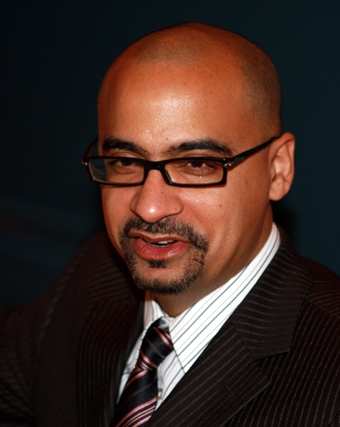
Junot Díaz
Dominican-American writerWikipedia
10
MENTIONS
9
EPISODES
8
PODCASTS
Search complete. 10 mentions across 9 episodes found for "Junot Díaz".
Oct 22, 2026

Raquel BatistaGUEST
Daisy Dominguez, who published the book.
Raquel BatistaGUEST
Junot Diaz, like all of us.
Raquel BatistaGUEST
came together in like 1999-2000 to organize this huge conference at City College to talk about issues impacting the Dominican community and really creating a national agenda.
Raquel BatistaGUEST
And out of that, then, you know, we developed a lot of relationships with a lot of like the power brokers in the community.

speaker_3HOST
There are other architectural choices.
speaker_2HOST
Because if Pachinko handles the weight of history through sheer stoic forward motion, Junot Díaz's The Brief Wondrous Life of Oscar Wao handles it by doing the exact opposite.
speaker_2HOST
I mean, it processes history through absolute frantic hyperactivity.
speaker_3HOST
It is a remarkable structural contrast, because here we are still dealing with the shadow of a brutal regime, in this case, the Trujillo dictatorship in the Dominican Republic.

Jim BraudeHOST
Anand writes the Inc. newsletter at the.inc, and he is appearing tonight at the, uh, Brattle Theatre.
Jim BraudeHOST
There are a few tickets left, so grab them quickly, with Junot Díaz.
Jim BraudeHOST
The website is harvard.com slash events.
Jim BraudeHOST
Have we ever met you in person?
23 MINS LATER
Anand GiridharadasGUEST
The.ink.
Margery EaganHOST
The.ink. The.ink.
Jim BraudeHOST
And Harvard Bookstore sponsored event at the Brattle tonight, as I said, just a few tickets left, with Junot Díaz, and obviously Anand, harvard.com/event.
Anand GiridharadasGUEST
I'd love to, I'd love to meet you.

Aaron CohenGUEST
that happened okay um i was like okay this was the thing that made it it was just i had been doing it and then i would sort of look back and say wow, I guess there's a, you know, similarity, you know, and, and it's funny too, because, you know, I would teach authors and a lot of times these writers who write about, and it's, you know, it's, it's, fictional novels.
Aaron CohenGUEST
Junot Diaz's Three-Quarters Life of Oscar Wao.
Aaron CohenGUEST
Part of the novel is about whether or not one is repeating one's parents.
Aaron CohenGUEST
That's one part of this incredible novel.

Laura McGrathGUEST
She got her start in the 1990s, really committed to representing work that, in her words, straddles cultures.
Laura McGrathGUEST
So some of her earliest clients were people like Junot Diaz and Edwidge Danticat and Colson Whitehead.
Laura McGrathGUEST
It's hard to imagine now when someone like Colson Whitehead wasn't this literary titan that we know him to be, but she represented him very early on in his career, before his first novel sold.
Laura McGrathGUEST
And she's changed the idea of what could be possible and what could be saleable.

Ilan StavansGUEST
How do you edit a book that is in a hybrid language or a mixed language? What constitutes a mistake or a typo? It requires all kinds of added talent and patience and maybe even time, but it will have an impact.
Ilan StavansGUEST
I think when the very first books by some of the authors of the Harlem Renaissance, for or some of the Latino authors like Junot Diaz were writing as manuscripts, those first editors needed to have that open eye and open mind to accept that this material was coming in a very different way and that publishers needed to create the conditions and the forms in order to be able to launch them to an audience.
Sarah RussoHOST
I think that's really interesting.
Sarah RussoHOST
We worked on a book a couple of years ago.

Ilan StavansGUEST
How do you edit a book that is in a hybrid language or a mixed language? What constitutes a mistake or a typo? It requires all kinds of added talent and patience and maybe even time, but it will have an impact.
Ilan StavansGUEST
I think when the very first books by some of the authors of the Harlem Renaissance, for or some of the Latino authors like Junot Diaz were writing as manuscripts, those first editors needed to have that open eye and open mind to accept that this material was coming in a very different way and that publishers needed to create the conditions and the forms in order to be able to launch them to an audience.
Sarah RussoHOST
I think that's really interesting.
Sarah RussoHOST
We worked on a book a couple of years ago.
speaker_0HOST
Y- you just get sucked into the absurdity of it.
speaker_0HOST
And speaking of getting sucked into a uniquely weird life, we have Junot Díaz's The Brief Wondrous Life of Oscar Wao.
speaker_1HOST
A massive Pulitzer-winning bestseller.
speaker_0HOST
Oh, yeah.