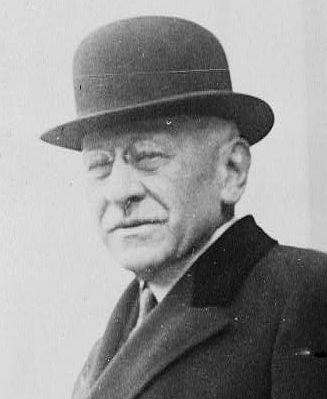
Julius Rosenwald
American business professionalWikipedia
34
MENTIONS
14
EPISODES
14
PODCASTS
Search complete. 34 mentions across 14 episodes found for "Julius Rosenwald".
Sep 12, 2026

Mary PattersonNARRATOR
Yours truly, signed, Andrew Carnegie.
Mary PattersonNARRATOR
One other name must be mentioned, that is Julius Rosenwald of Chicago.
Mary PattersonNARRATOR
Mr. Rosenwald not only gave large sums himself and is still given enormous amounts, not only to Tuskegee, but to the cause of Negro education throughout the South, but frequently left his own business and helped to raise money among his friends for Tuskegee.
Mary PattersonNARRATOR
There were many large gifts from many men and women, all of whom cannot be mentioned here, of
speaker_3ADVERTISER
course.

ScottHOST
That's incredible.
SarahHOST
It became, now it's the Field Columbian Museum, and when the Field moved out, it sat deteriorating until a Sears executive named Julius Rosenwald funded a full restoration, this time in actual stone.
SarahHOST
And it reopened in 1933 as Chicago's Museum of Science and Industry, and it's open right now and is the last building of the White City.
ScottHOST
That's so sad.

Tom ShoesmithNARRATOR
Four million dollars is the amount of money that the Negroes of Philadelphia have on deposit in the various savings institutions in that city, according to addresses made the other evening by leading Negro business and professional men at a banquet given by the board of directors of the People's Savings Bank of Philadelphia, which is the only Negro bank north of the Mason and Dixon line.
Tom ShoesmithNARRATOR
Julius Rosenwald, a prominent Chicago Jew, has offered to give $25,000 to every city that shall raise $75,000 for a colored Young Men's Christian Association building.
Tom ShoesmithNARRATOR
M. W. Harris, a banker, has contributed $25,000 to the colored building for Chicago.
Tom ShoesmithNARRATOR
President Taft has written a commendatory letter.

speaker_1NARRATOR
In our conversation at St. Luke's Hospital, Dr. Washington did not refer to himself except incidentally.
speaker_1NARRATOR
He did discuss Tuskegee in many phases and told me that Mr. Rosenwald was due at Tuskegee that very day and how disappointed he was that he could not be present to welcome him.
speaker_1NARRATOR
I recall how warmly he spoke of Mr. Rosenwald's personal kindness to him and of what he meant to the Negro race through the YMCA and to the rural school building program, which was just then beginning to get underway at Tuskegee Institute.
speaker_1NARRATOR
At his request, I called on Mr. William G. Wilcox, a member of the Board of Trustees of Tuskegee, to discuss with him some matters touching the affairs of the Institute.
speaker_1NARRATOR
And while I expressed my hopes for Dr. Washington's ultimate recovery, Mr. Wilcox, knowing of course what the physicians had said, was not hopeful.
59 MINS LATER
speaker_1NARRATOR
An institution is truly fortunate when men of the type of Mr. William G. Wilcox, formerly chairman of the Board of Education of New York City and representing large business interests there, are willing to give so much of their time and thought to the internal affairs of a school like Tuskegee.
speaker_1NARRATOR
It was soon after my own coming to Tuskegee that Mr. Wilcox consented to accept the chairmanship of the board of trustees following the death of Mr. Seth Low.
speaker_1NARRATOR
Among those associated with Mr. Wilcox on the board of trustees are such men as Mr. Frank Trumbull, chairman of the board of directors of the Chesapeake and Ohio, as well as several other railroads, Mr. Julius Rosenwald, president of Sears, Roebuck and Company, Chicago, Dr. William J. Schieffelin of New York, Mr. Charles E. Mason of Boston, and Mr. William M. Scott of Philadelphia.

Mary PattersonNARRATOR
Yours truly, signed, Andrew Carnegie.
Mary PattersonNARRATOR
One other name must be mentioned, that is Julius Rosenwald of Chicago.
Mary PattersonNARRATOR
Mr. Rosenwald not only gave large sums himself and is still given enormous amounts, not only to Tuskegee, but to the cause of Negro education throughout the South, but frequently left his own business and helped to raise money among his friends for Tuskegee.
Mary PattersonNARRATOR
There were many large gifts from many men and women, all of whom cannot be mentioned here, of
Mary PattersonNARRATOR
course.

Mary PattersonNARRATOR
Signed, Andrew Carnegie.
Mary PattersonNARRATOR
One other name must be mentioned, that is Julius Rosenwald of Chicago.
Mary PattersonNARRATOR
Mr. Rosenwald not only gave large sums himself, and is still given enormous amounts, not only to Tuskegee, but to the cause of Negro education throughout the South, but frequently left his own business and helped to raise money among his friends for tuskegee there were many large gifts from many men and women all of whom cannot be mentioned here of
speaker_15NARRATOR
course
Mary PattersonNARRATOR
But most of the money that was given to Tuskegee came in small amounts from a large number of people, from churches, Sunday schools, missionary societies, and other organizations, from preachers, teachers, lawyers, doctors, farmers, from every class of people came gifts, sometimes large and sometimes small.

Mary PattersonNARRATOR
So glad to be able to assist this good work in which you and others are engaged.
Mary PattersonNARRATOR
Yours truly, signed Andrew Carnegie." One other name must be mentioned, that is Julius Rosenwald of Chicago.
Mary PattersonNARRATOR
Mr. Rosenwald not only gave large sums himself and is still given enormous amounts, not only to Tuskegee, but to the cause of Negro education throughout the South, but frequently left his own business and helped to raise money among his friends for Tuskegee.
Mary PattersonNARRATOR
There were many large gifts from many men and women, all of whom cannot be mentioned here, of course, but most of the money that was given to Tuskegee came in small amounts from a large number of people, from churches, Sunday schools, missionary societies, and other organizations.

Mary PattersonNARRATOR
Yours truly, signed, Andrew Carnegie.
Mary PattersonNARRATOR
One other name must be mentioned, that is Julius Rosenwald of Chicago.
Mary PattersonNARRATOR
Mr. Rosenwald not only gave large sums himself and is still given enormous amounts, not only to Tuskegee, but to the cause of Negro education throughout the South, but frequently left his own business and helped to raise money among his friends for Tuskegee.
Mary PattersonNARRATOR
There were many large gifts from many men and women, all of whom cannot be mentioned here, of

Tom ShoesmithNARRATOR
the pullman company pays its colored porters fifteen dollars and twenty dollars a month occasionally twenty five dollars for the larger part of their income these porters depend on tips the increased cost of living and the disposition of the public to stop tipping have led the porters to petition for higher wages Four million dollars is the amount of money that the Negroes of Philadelphia have on deposit in the various savings institutions in that city, according to addresses made the other evening by leading Negro business and professional men at a banquet given by the board of directors of the People's Savings Bank of Philadelphia, which is the only Negro bank north of the Mason and Dixon line.
Tom ShoesmithNARRATOR
Julius Rosenwald, a prominent Chicago Jew, has offered to give $25,000 to every city that shall raise $75,000 for a colored Young Men's Christian Association building.
Tom ShoesmithNARRATOR
M. W. Harris, a banker, has contributed $25,000 to the colored building for Chicago.
Tom ShoesmithNARRATOR
President Taft has written a commendatory letter.

speaker_2NARRATOR
Commerce One of the largest cotton gins owned by Scott Bond, Negro.
speaker_2NARRATOR
Our leading industrialists include Astor, Vanderbilt, and Rockefeller, Germans, Julius Rosenwald, Chicago Mail Order Executive, German Jew, Alfred Knudsen, Dane, Automobile Manufacturing Executive.
speaker_2NARRATOR
Leading rug merchants are Karagussian, Gulbenkian, Kalekian, and Pushman, Armenians.
speaker_2NARRATOR
Leading linen and lace merchants are Malouk Kassab, Bardwill, Jabara, Mamary, and Boutros, Syrians.
19 MINS LATER
speaker_2NARRATOR
First to fight for conservation of our forests was Karl Schurz, German.
speaker_2NARRATOR
Philanthropy Astor Library, now part of New York Library, founded by John Jacob Astor, German, in 1848.
speaker_2NARRATOR
4,000 Negro schools founded by Julius Rosenwald, German Jew.
speaker_2NARRATOR
Chautauqua movement begun by Louis Miller, German.
4 more episodes mention Julius Rosenwald.
Create an account to see the whole feed, search across every transcript, and follow the entities you care about.