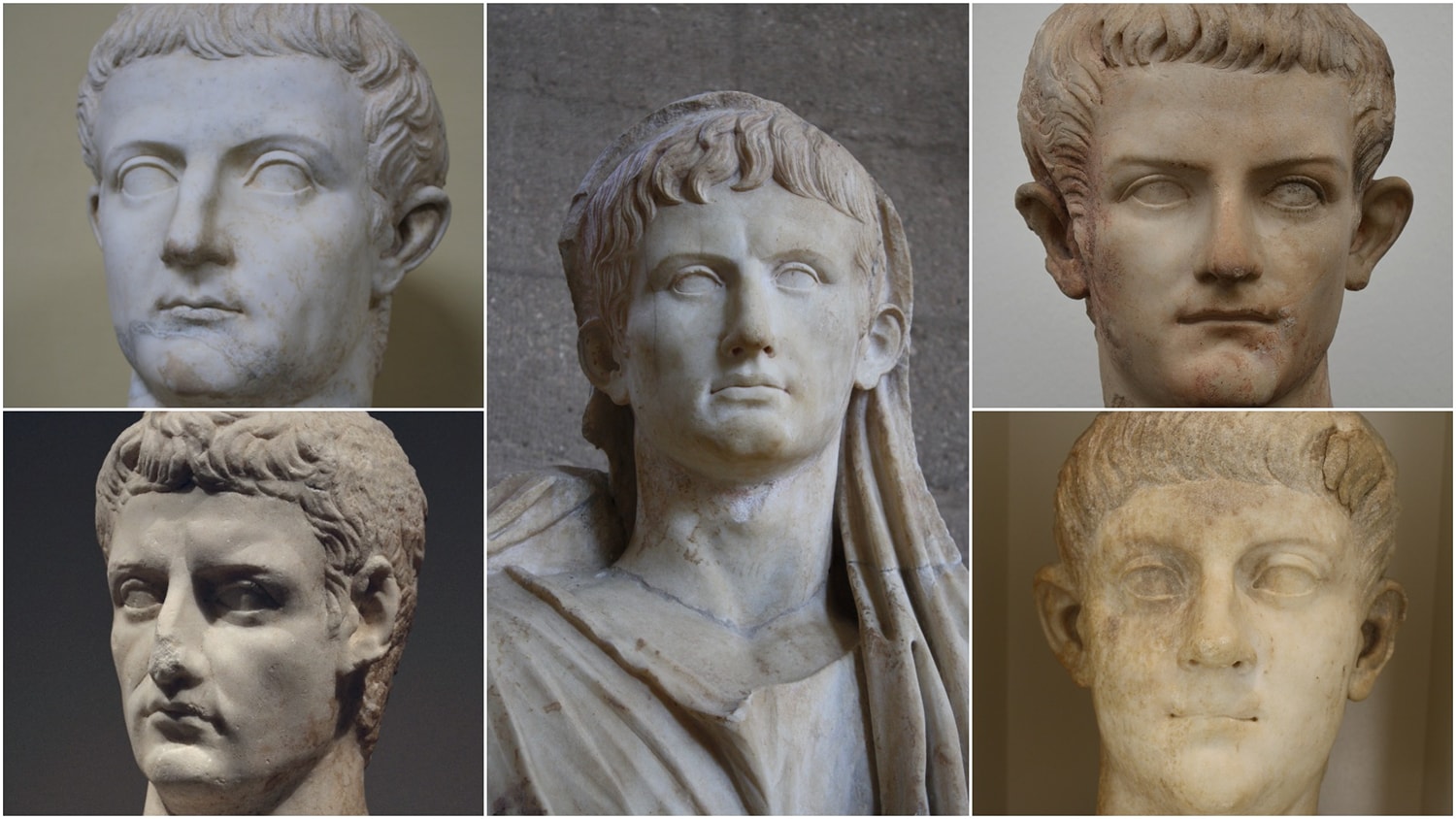
Julio-Claudian dynasty
DynastyWikipedia
19
MENTIONS
15
EPISODES
13
PODCASTS
Search complete. 19 mentions across 15 episodes found for "Julio-Claudian dynasty".
Nov 2, 2026

Phoebe RoyHOST
We've already had one.
Phoebe RoyHOST
We've had the Julio-Claudians.
Phoebe RoyHOST
The idea that it was going to be anyone other than Vespasian's two sons who was going to succeed him It's a moot point by this point.
Phoebe RoyHOST
No one is seriously arguing that there's any kind of meritocracy now.
29 MINS LATER
Patrick WymanHOST
There's like that, that is kind of the underlying thing that runs through this biography is like, there is a job to do.
Patrick WymanHOST
Um, there are, there are things that the emperor is supposed to, the emperor is supposed to handle natural disasters, right? Like if there's a fire or Vesuvius erupts, like that's, it's the emperor's job to take care of that.
Patrick WymanHOST
And that you can kind of see over the course of the now hundred ish years that Suetonius has covered in this hundred plus years that, um, that idea gets lost with the Julio-Claudians, that there are actual tasks that you're supposed to perform.
Patrick WymanHOST
You don't want

Alexander MeddingsGUEST
And soon after becoming emperor, she'll give birth to another child, Britannicus, a boy who will also, spoiler alert, go on to be murdered by Nero.
Alexander MeddingsGUEST
And what Messalina does, we're told, at the very beginning of Claudius's reign, is she has several people put to death, really in following in the tradition of Julio-Claudian women.
Alexander MeddingsGUEST
You'd like to
Kate ListerHOST
think you wouldn't, but if you were suddenly catapulted from the sidelines into the main event, it would take a very strong person not to go, actually, all of those bitches who've got on my nerves over the years.

Helen GabayHOST
I won't spoil anything else about the plot, but he also happens to be a famous chariot racer.
Helen GabayHOST
That much you learn in the first couple of pages, as you also learn you have landed in the fascinating time a few decades after Julius Caesar's assassination, and you're firmly in a society ruled largely through the incredibly messy, slightly incestuous family that historians call the Julio-Claudian dynasty, and the Roman Republic is now a memory.
Helen GabayHOST
By the way, give the family tree for these guys a quick look, but don't try too hard to understand it because it simply raises more questions than answers because no tree in the real world resembles this thing.
Helen GabayHOST
If this were pure fiction and not historical fiction, you'd be forgiven for writing some of the bigger events off as too outlandish to be believable.

Andrew DoyleGUEST
Maybe.
Andrew DoyleGUEST
I, I should say that the reason I don't quite ca- believe this argument, because those sorts of behaviors go right back to, like, Nero and the early emperors and the Julio-Claudians.
Andrew GoldHOST
Right.
Andrew DoyleGUEST
They-

Simon ElliottGUEST
So, so the important thing in the governorship of Cerialis is that he's given the task by the new emperor, Vespasian, of winning martial glory for the new dynasty.
Simon ElliottGUEST
It's the end of the Julio-Claudians, Year of the Four Emperors, the Flavians.
Simon ElliottGUEST
He's won a civil war.
Simon ElliottGUEST
There's no martial glory in winning a civil war for an emperor.

CamHOST
Several people were buried there before Augustus himself died, including his right-hand man and son-in-law, Agrippa, and two of his three grandsons.
CamHOST
Augustus himself is laid to rest there as well, and then later, all of the Julio-Claudian emperors and their close family members were buried there, too.
CamHOST
So basically, all of the emperors up until the Flavian dynasty.
CamHOST
At that point, things change a little bit, and the Flavians would use their own space elsewhere in Rome on the Quirinal Hill.

Dave FarinaHOST
Augustus responded to this tension by allowing a new cult of Roma, the personification of the city itself, to develop in the East, and it became common for emperors, beginning with Julius Caesar, to be declared divine after their deaths.
Dave FarinaHOST
This was the source of a joke made by the emperor Vespasian on his deathbed that he feared he was about to become a god.
Dave FarinaHOST
The dynasty that began with Augustus is known as the Julio-Claudians after the two families that supplied the first emperors.
Dave FarinaHOST
While Tiberius, and especially Claudius, were considered by later writers to have been competent rulers, Caligula was described as dangerously unstable and an example of the risks that came of choosing a successor from within one's family as opposed to adopting the best person for the job.
Dave FarinaHOST
Because Roman historians tended to class emperors as either good or bad, they had a particular problem in the case of Nero, who seemed to have been very promising at the beginning of his reign in fifty-four when he was just sixteen years old.

speaker_0HOST
It's not that he is demonized by Plutarch, and there's probably a reason for that that I could even say is political.
speaker_0HOST
Let's face it, Mark Antony's bloodline is in that of the Julio-Claudians [laughs] thanks to his relationship with Octavian's sister, brief though it was.
speaker_0HOST
But also, I don't think anyone would want to completely trash his reputation, nor is it entirely in Octavian's interest to completely trash his reputation.
speaker_0HOST
Just like they don't want to wholly undermine Cleopatra.
Dave FarinaHOST
Constantine eventually defeated both of these men, and despite the fact that he did not himself become a Christian until the end of his life, both of these victories were portrayed by the Christian historians who later wrote about this period as the triumph of the church over the paganism of its opponents.
Dave FarinaHOST
Constantine's acceptance of and even favoritism toward the church came after 250 years of sporadic persecutions, the first of which took place under the Julio-Claudian emperor Nero.
Dave FarinaHOST
At that time, Christianity was only starting to emerge as a faith distinct from Judaism and had begun to spread among the pagan communities of the eastern Mediterranean and Rome itself.
Dave FarinaHOST
By the second century, we find that the governors of Roman provinces varied in their reactions to the early church, which was often suspected as a secretive and possibly seditious organization whose members were sometimes forced to renounce their faith in public.

Tony RobinsonHOST
His last words were, what an artist dies with me.
Tony RobinsonHOST
He was 30 years and six months old, the last of the Julio-Claudian line that stretched back to Augustus.
Tony RobinsonHOST
Nero marked the end of a dynasty and the end of an era.
Tony RobinsonHOST
The first emperors, Julius Caesar and Augustus, had persuaded the Roman people that one-person rule was a good thing.
Tony RobinsonHOST
He certainly wasn't very good at running an empire, but then what did Rome expect? If you put a messed up 16-year-old in charge of half the known world, you're asking for trouble.
Tony RobinsonHOST
Rome learned the hard way.
Tony RobinsonHOST
From now on, it abandoned the Julio-Claudian line of emperors in favor of skilled administrators.
Tony RobinsonHOST
But Nero did leave his mark on history.
5 more episodes mention Julio-Claudian dynasty.
Create an account to see the whole feed, search across every transcript, and follow the entities you care about.