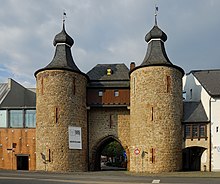
Jülich

Jülich

Town in GermanyWikipedia

Search complete. 8 mentions across 4 episodes found for "Jülich".

Sep 5, 2026

Unknown podcast

September 5, 2026 — The Week in Quantum: Foundries, MOUs, and a Nasdaq Pop

Sep 5 · 2 Mentions

speaker_0UNKNOWN
9:35
Get quantum hardware physically installed before you fully figured out what to run on it.
speaker_0UNKNOWN
9:41
We covered the launch of Jülich's trapped ion machine, JION, earlier this week.
speaker_0UNKNOWN
9:46
The short version is that Forschungszentrum Jülich and Electron officially brought it online at the Jülich Supercomputing Center.
speaker_0UNKNOWN
9:54
What's new this week is the detail.
speaker_0UNKNOWN
9:57
JION runs on ytterbium ion qubits, and it's now linked directly to the Jupiter exascale supercomputer through the Junick platform, pairing a quantum processor with one of the world's fastest classical machines.

Unknown podcast

September 4, 2026 — IBM's Speed Record: Real Fix or Self-Graded Exam?

Sep 4 · 4 Mentions

speaker_0UNKNOWN
0:38
Before that, in the headlines, Quantinuum signs a new energy sector deal with Saudi giant Aramco.
speaker_0UNKNOWN
0:45
Germany flips the switch on a homegrown trapped ion machine in Jülich.
speaker_0UNKNOWN
0:50
UK silicon qubit company Quantum Motion pulls in fresh cash from a growing list of investors.
speaker_0UNKNOWN
0:57
And the G7's top cybersecurity agencies tell industry it's out of excuses on post-quantum encryption.
speaker_0UNKNOWN
2:28
How many of these MOUs actually turn into paid systems within a year? Nobody's tracking that number yet, and it's the one that'll tell you whether this Gulf quantum push is real money or just diplomacy.
speaker_0UNKNOWN
2:40
Germany just turned on its own ion trap.
speaker_0UNKNOWN
2:43
Forschungszentrum Jülich inaugurated JION, its trapped ion quantum computer, built with Siegen-based eleQtron under a partnership called EPIC, which pulled in about twenty-one million euros in state funding over four and a half years.
speaker_0UNKNOWN
2:59
JION holds its qubits in ytterbium atoms controlled with microwaves and magnetic fields rather than the near absolute zero temperatures superconducting chips need.
Sunny BainsHOST
1:34
I'm really pleased to have five great panelists today.
Sunny BainsHOST
1:38
We have Dr. Chiara Bartolozzi from the Italian Institute of Technology, Dr. Federico Caradi from Eindhoven University of Technology, Dr. Jamie Knight, who is our host here at the University of Sussex and who's just run a, a fantastic conference, Dr. Laura Kreiner from the Institute of Neuroinformatics in Zurich, and finally, Dr. Sebastian Siegle from the Peter Grünberg Institute in Jülich.
Sunny BainsHOST
2:08
So let's welcome our panel.
Sunny BainsHOST
2:12
[clapping] So I want to start off by asking a question, then I'm happy to take from other members of the panel, 'cause I kind of told them what we wanted to talk about today, which is engineering hardware that can sense and learn.
Peter SchmidtHOST
3:10
But groups of research engineers are created in other countries as well.
Peter SchmidtHOST
3:14
And so we'll be going to the research center in Jülich and meet a team at the University of Heidelberg, both in Germany.
Peter SchmidtHOST
3:23
Going a bit further east, still, you'll get to Prague and the Charles University, where a new RSE group was set up only October last year.
Peter SchmidtHOST
3:34
Talking of research software engineering, the Software Sustainability Institute in the UK plays a crucial role in putting the importance of digital technologies and competencies on the map, as many of you know.

We value your privacy

We use cookies to understand how you use our platform and to improve your experience. Click “Accept All” to consent, or “Decline non-essential” to opt out of non-essential cookies. Read our Privacy Policy.