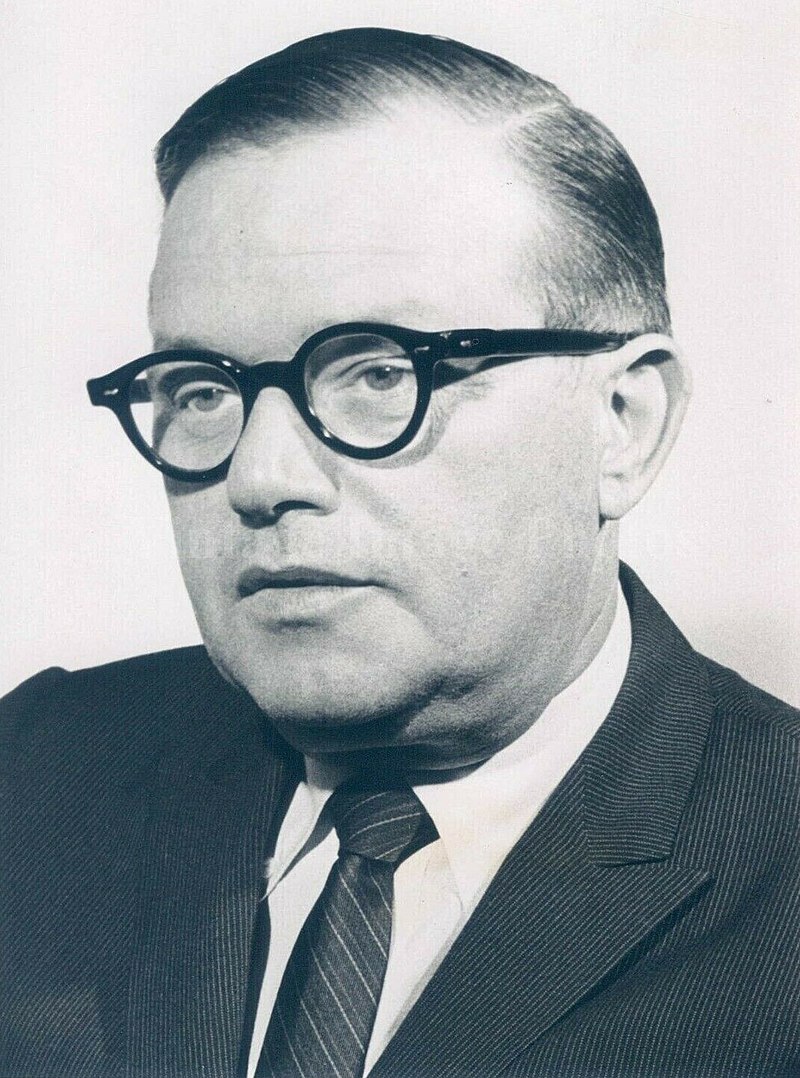
Jule Styne
American songwriterWikipedia
11
MENTIONS
9
EPISODES
9
PODCASTS
Search complete. 11 mentions across 9 episodes found for "Jule Styne".
Oct 5, 2026

Patrick Oliver JonesHOST
And after 30 years of competing over the same customers, the two finally joined forces and Tams-Witmark was born.
Patrick Oliver JonesHOST
[upbeat music] They became a gatekeeper for what happened to many shows after they left Broadway, especially Golden Age musicals from the likes of Cole Porter, Jule Styne, and the Gershwins.
Patrick Oliver JonesHOST
But by the 1960s and '70s, they also began acquiring more contemporary shows like Gypsy and A Chorus Line.
Patrick Oliver JonesHOST
At the same time, high school drama programs were popping up all over the country, and it was Tams-Witmark that held the rights to exactly the kind of shows those programs wanted: big ensembles with familiar songs and stories.

LukeHOST
So now we're gonna step up once again to our virtual turntable, spin another tremendous tune from Come Swing with Me, Sinatra's sublime 1961 Capitol LP.
LukeHOST
This second featured song was written in 1942, music by Jule Styne and words by the inimitable Sammy Cahn.
LukeHOST
Introduced in the 1942 film Youth on Parade, this song was nominated for the Academy Award for Best Original Song, lost out to White Christmas.
LukeHOST
So-
LukeHOST
So check that out, but not right now.
LukeHOST
Anyway, back to the song at hand.
LukeHOST
The most popular version of this Jule Styne-Sammy Cahn tune from 1942 was done by Harry James and his Orchestra with Helen Forrest handling the vocals.
LukeHOST
Now, this song, and I'm talking about that version by Harry James, it was done the last day before the start of a musicians' strike that ran from 1942 into 1944.

Al TapperGUEST
But I didn't know why.
Al TapperGUEST
So I went to see Julie Stein, who was a great, who wrote Gypsy, and he wrote Funny Girl.
Al TapperGUEST
The best, Funny Girl.
Al TapperGUEST
And I knew him.

speaker_0HOST
Jules Stein passed away in 1994 at the age of 88 from heart failure.
speaker_0HOST
Real name, Julius Kerwin Stein.
speaker_0HOST
He was a British-American songwriter and Broadway composer.
speaker_0HOST
He wrote the scores for Broadway shows like Gypsy, Funny Girl, and Gentlemen Prefer Blondes.

Nicholas Van HoogstratenGUEST
So, apparently, not everybody was glad to see it.
Nicholas Van HoogstratenGUEST
And it was the first show Julie Stein did on Broadway.
Nicholas Van HoogstratenGUEST
Busby Berkeley was the, that's Julie calling now, Busby Berkeley was the choreographer, and it had a rough go in Philly, okay? During the first tryout stop, which was Philadelphia, the original leading man survived being hit by a truck, but he had to leave the show.
Nicholas Van HoogstratenGUEST
So it was an immediate replacement.

Zara McDonaldHOST
[laughs]
Michelle AndrewsHOST
[laughs] This saying was introduced in a song written by Bob Merrill and Jule Styne in 1964 called Don't Rain On My Parade.
Zara McDonaldHOST
Don't Rain On My Parade.
Michelle AndrewsHOST
They wrote it for a musical called Funny Girl starring Barbara Streisand.

Rick PenderGUEST
It had a book by Bert Shevelov, who Sondheim had worked with a few years earlier on Funny Thing Happened on the Way to the Forum.
Rick PenderGUEST
There were a couple of others, one by Burt Bacharach and Hal David called On the Flipside, one by Julie Stein with Comden and Green called Getting Unmarried.
Rick PenderGUEST
So they weren't the only musical in this, but the series, as I said, was largely ignored.
Rick PenderGUEST
The idea of doing this appealed to Sondheim because He had been thinking for a while about doing something that he called a horror musical or a suspense musical, which I think eventually became Sweeney Todd or took form in that way.

Jason EarlesHOST
Mm-hmm.
Douglas LiebleinHOST
Um, and it was written by composer Jule Styne and lyricist Bob Merrill, and it was first performed and made famous by none other than Barbra Streisand in the 1964 musical Funny Girl.
Jason EarlesHOST
Funny Girl.
Shannon FlynnHOST
Funny.

Kyle MarshallHOST
You know, you're not the first person to also bring up the comparison to Gypsy, which I do, the more I think about it, is, like, an interesting comparison point for many different reasons.
Kyle MarshallHOST
One, the time in which Sondheim actually wanted to adapt this would've been around the time he was working with Julie Stein on Gypsy.
Shannon DoharGUEST
Right.
Kyle MarshallHOST
But second of all, like, there is this undercurrent of, like, two siblings trying to uphold the directives of a parent [laughs]