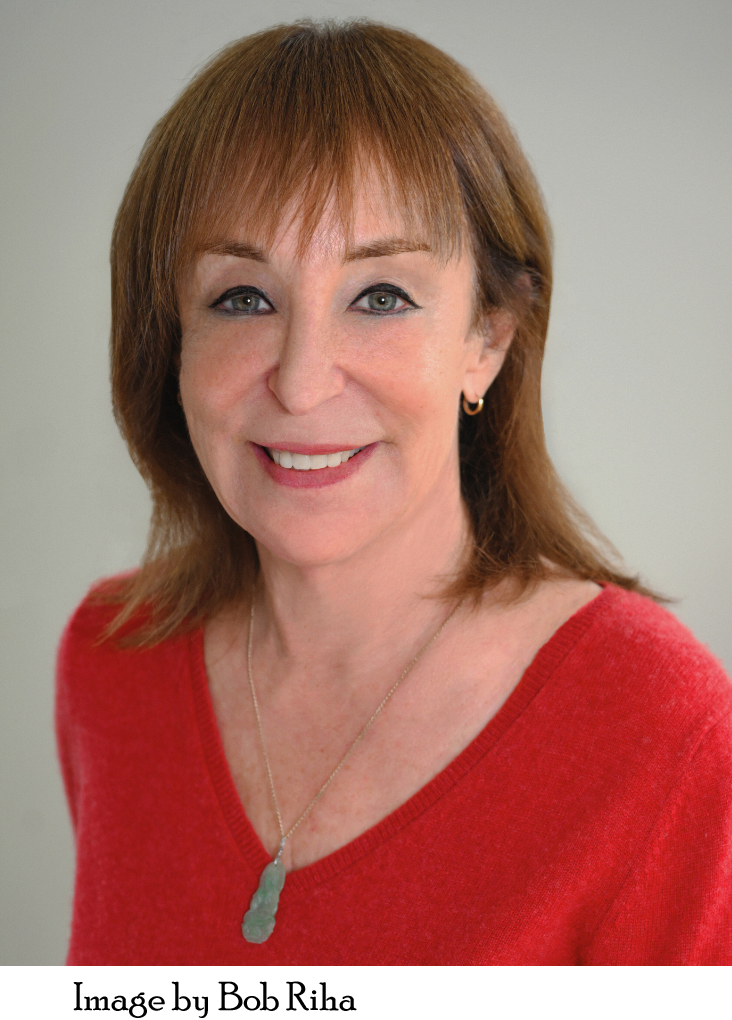
Judith Orloff
American psychiatristWikipedia
12
MENTIONS
8
EPISODES
8
PODCASTS
Search complete. 12 mentions across 8 episodes found for "Judith Orloff".
Oct 28, 2026

Amanda MontellHOST
Now's the time where I share a tidbit of evidence-based advice for how we over thinkers can get out of our own heads this week.
Amanda MontellHOST
This one comes from a psychiatrist named Dr. Judith Orloff, who is the author of a book called The Genius of Empathy.
Amanda MontellHOST
It's a really simple tip for how to interrupt ruminative thought spirals, but I thought it was really sweet.
Amanda MontellHOST
She shares this tip in her book and also in an article that I found on Psychology Today called How to Combat Overthinking.

Catherine BarrettGUEST
But I think that – but to your point, like he's right though, right? Like we have to be able to discern.
Catherine BarrettGUEST
I would point people to Judith Orloff's work and she did a wonderful book called The Empath Survival Guide.
Catherine BarrettGUEST
She's a psychiatrist and an empath, and she has this wonderful book that helps people sort of gauge when the empathy might be becoming pathological and some of the somatic things that we can pay attention to.
Catherine BarrettGUEST
And, you know, Dr. Romney's talked about this, too, and I completely agree with the fact that – That overextension of empathy is often a trauma symptom because a healthy development to the self, meaning that we learned early on how to discern between self-protection and when it's safe to be empathic, that never really gets developed.
Catherine BarrettGUEST
We can be compassionate.
Catherine BarrettGUEST
I can sit beside you, Mark, and hold space for you without going inside you emotionally and sort of carrying that with you.
Catherine BarrettGUEST
And I think for people who have that trauma there, it's like they don't know how to as Judith Orloff talks about, kind of untether from that person's baggage.
Catherine BarrettGUEST
So it becomes this really messy self-abandonment that happens.

Lisa FloraHOST
And we will end this episode.
Lisa FloraHOST
So a little angel affirmation and I'm going to do another empath empowerment card from Dr. Judith Orloff.
Lisa FloraHOST
She's an empath
Lisa FloraHOST
doctor.

Zoe GrecoHOST
And there's nothing I love geeking out about more than... my relationships and dissecting them like almost like anthropologically like almost like from like a like a sociological lens where it's like okay and you grew up in this way and i grew up in this way and then we connected like it's it's just intoxicating to me so thank you for taking this tangent with me because i think that it's i think it's important for people listening as well who may be identifying in either of those identities or somewhere along the spectrum to to understand relationship and what relationships can look like and feel like.
Zoe GrecoHOST
Like we'd recently had Judith Orloff on the show.
Zoe GrecoHOST
Um, I don't know if you're familiar with Judith Orloff, but she's a, um, a psychiatrist and an empath and her work revolves around like supporting yourself as an empath.
Devon PriceGUEST
And
Zoe GrecoHOST
she basically said like, by the way, like you don't actually have to be in a relationship.

Emily FineHOST
I'm listening to The Empath's Survival Guide: Life Strategies for Sensitive People.
Emily FineHOST
This is by Judith Orloff, and the difference between having empathy, which means you feel for people, like a friend calls you and says, "I broke my toe," for example.
Emily FineHOST
You say, "Oh, I'm so sorry to hear that," versus being an empath.
Emily FineHOST
Being an empath means you actually feel people's energy and people's emotions and their physical things.
Emily FineHOST
That's Emily.'" So thank you, friend.
Emily FineHOST
I started listening to it.
Emily FineHOST
Judith Orloff narrates.
Emily FineHOST
She's doing a great job.

Susan StiffelmanHOST
This podcast is an opportunity for me to share what I've learned over the 40-something years I've worked with families as a, a teacher and educator, and a parent coach, and a psychotherapist, all of it rolled into a collection of ideas and strategies and guidance and inspiration delivered to you [chuckles] here on this podcast.
Susan StiffelmanHOST
You'll see so many great episodes with people like Dr. Dan Siegel and Julie Lythcott-Haims, Lenore Skenazy, Eliza Pressman, Ramani Durvasula, Tracy Gillette, Judith Orloff.
Susan StiffelmanHOST
We cover everything related to parenting, so you're, you've landed.
Susan StiffelmanHOST
I'm glad you're here.

Sandi SerlingGUEST
And I should
Jacob CooperHOST
introduce them to Dr. Judith Orloff.
Jacob CooperHOST
I've had her on my podcast, but she is a New York Times bestselling author, but she is a clinical psychiatrist who uses intuition in her practice as well.
Jacob CooperHOST
So she'd be a great resource for those people.

Jen ClarkeHOST
They did.
ClaudeHOST
They both validated the concept of hyper-selectivity, they both explored the empath connection, and they even both referenced Judith Orloff's psychological work on highly sensitive people.
Jen ClarkeHOST
So the intellectual destination was identical.
ClaudeHOST
But the texture of the journey was radically different.