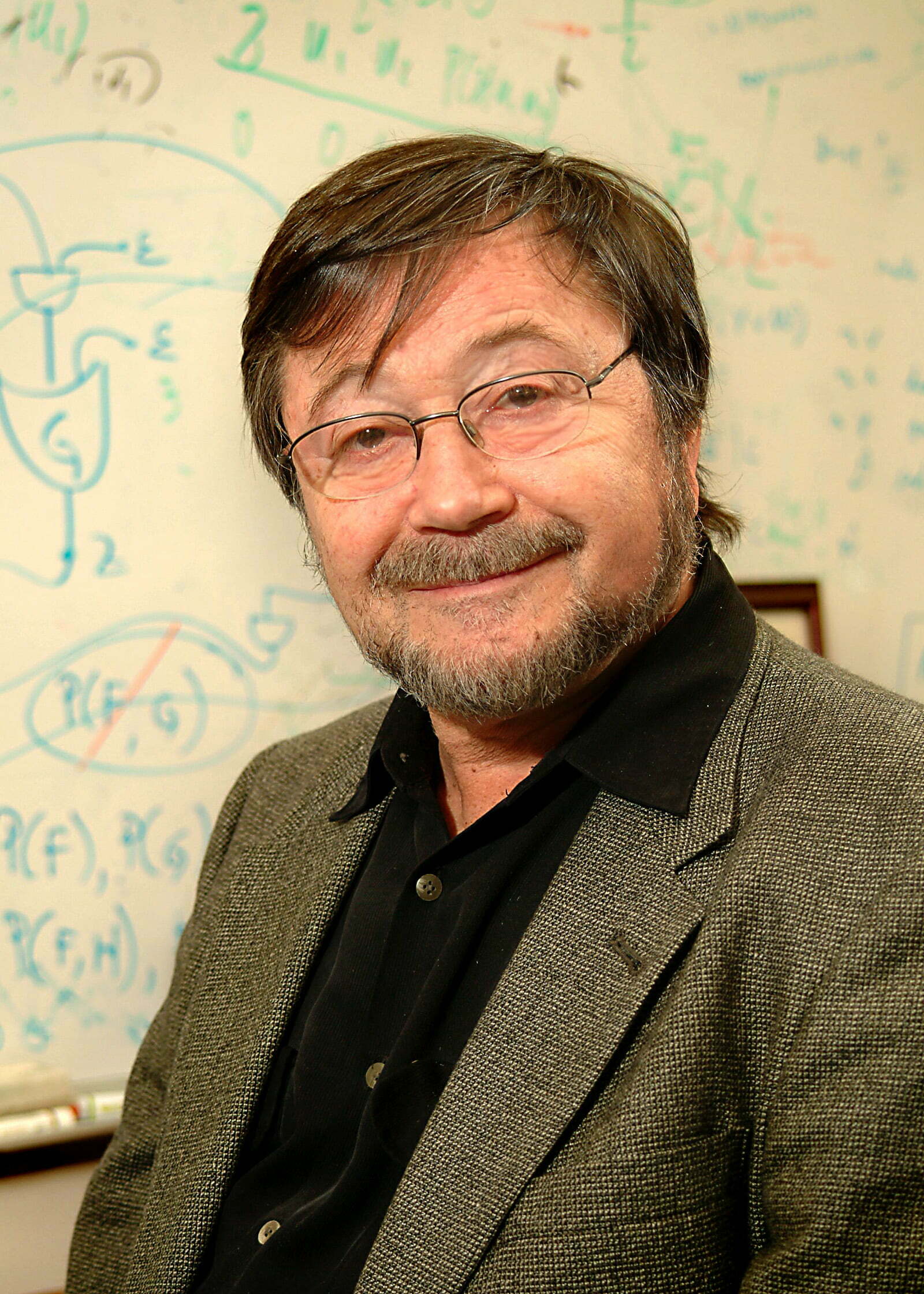
Judea Pearl
Israeli-American engineer and computer scientistWikipedia
13
MENTIONS
6
EPISODES
6
PODCASTS
Search complete. 13 mentions across 6 episodes found for "Judea Pearl".
Oct 12, 2026

speaker_4NARRATOR
Today, we're back in New York City to meet Elias Bareinboim.
speaker_4NARRATOR
When he first met Judea Pearl, he felt that there was truth to what Pearl was saying, and that convinced him to study causality.
speaker_4NARRATOR
Ladies and gentlemen, please welcome Dr. Elias Bareinboim.
speaker_2NARRATOR
Let me pass it to your host, Alex Mola.
21 MINS LATER
Elias BareinboimGUEST
People are discussing causation for hundreds of years.
Elias BareinboimGUEST
And philosophers can do that, and it's very useful in a way, but it is still philosophy.
Elias BareinboimGUEST
Took the genius of someone like Judea, Judea Pearl, right? That, uh, you interviewed.
Elias BareinboimGUEST
They, they say, "Oh, this is kind of after, would be a thousand years discuss.

Peter NorvigGUEST
So I think maybe around '85, you know, there was a big push away from logic and towards probability.
Peter NorvigGUEST
So, uh, Judea Pearl was, was probably the leader of that, and I think everybody else saw, yes, this is the way to go, that we were too constrained by Boolean logic, and AI should really be the study of uncertainty, and probability was the right way to do that.
Peter NorvigGUEST
So that was one change.
Peter NorvigGUEST
And then, uh, machine learning rather than hand coding was another change.

Kal RaustialaHOST
We'll hear next from Dan Gold, the Gilbert Foundation Chair and Executive Director of UCLA Hillel.
Kal RaustialaHOST
Following Dan, Judea Pearl, Daniel's father, one of our esteemed colleagues here at UCLA, will come up and give a few remarks of personal remembrance.
Kal RaustialaHOST
Following that, I will come back and I'll introduce Evan properly, then he and I will sit in those two chairs, have a conversation, talk about his new book, which I urge you to not only read, but also to buy, which is outside, signed copies by Evan.
Kal RaustialaHOST
So we'll talk a bit about that and about some broader issues and then, time permitting, we'll open it up to questions from all of you.
Julio FrenkUNKNOWN
This year, Evan Gershkovich carries that conversation forward.
Julio FrenkUNKNOWN
Like Daniel, he has approached journalism with a determination to understand people and places firsthand and to bear witness to what he encounters, even when doing so comes at great personal cost.
Julio FrenkUNKNOWN
We are especially grateful to Judea Pearl, Daniel's father and a beloved member of our UCLA faculty, and we honor the memory of his late wife, Ruth.
Julio FrenkUNKNOWN
Their resilience in the face of unimaginable loss has helped turn Daniel's legacy into an enduring commitment to dialogue and understanding.

Sreeram KannanHOST
It's, uh, something I have to map in my model.
Sreeram KannanHOST
I'm sure there is some, like, confounded factor example from Judea Pearl [laughs] that, that actually, like, will give you predictive power, but not causal power.
Sreeram KannanHOST
Uh, and you, you don't see it in the samples because you, you have this confounding variable that is operational in, like, a consistent way.
Sreeram KannanHOST
It's just useful in your prediction, but it's not, um, uh, but it's not passing the bar for causality because actually by...

Salvatore PaisGUEST
This AI agent would, yes, would use reinforcement learning, but, but with one caveat.
Salvatore PaisGUEST
Use, uh, Professor or rather Dr. Judea Pearl's idea of, um, causal inference, the relationship between cause and effect, to add to that algorithmic power.
Salvatore PaisGUEST
Use vector databases.
Salvatore PaisGUEST
Again, things from physical review letters rather than from Reddit or crap you found on the internet saying, for example, the Pais effect is wrong.

Jen ClarkeHOST
Because if we are outsourcing our consciousness to AI, we desperately need to understand the limits of what AI actually is.
ClaudeHOST
To understand AI's limits mechanically, we have to look at computer scientist Judea Pearl and his ladder of causation.
Jen ClarkeHOST
This is such a great framework.
ClaudeHOST
Pearl breaks down cognition into three rungs.