JSON Web Token
83
MENTIONS
32
EPISODES
28
PODCASTS
Search complete. 83 mentions across 32 episodes found for "JSON Web Token".
Nov 24, 2026

speaker_0NARRATOR
Engineering puts standard auth middleware on the root.
speaker_0NARRATOR
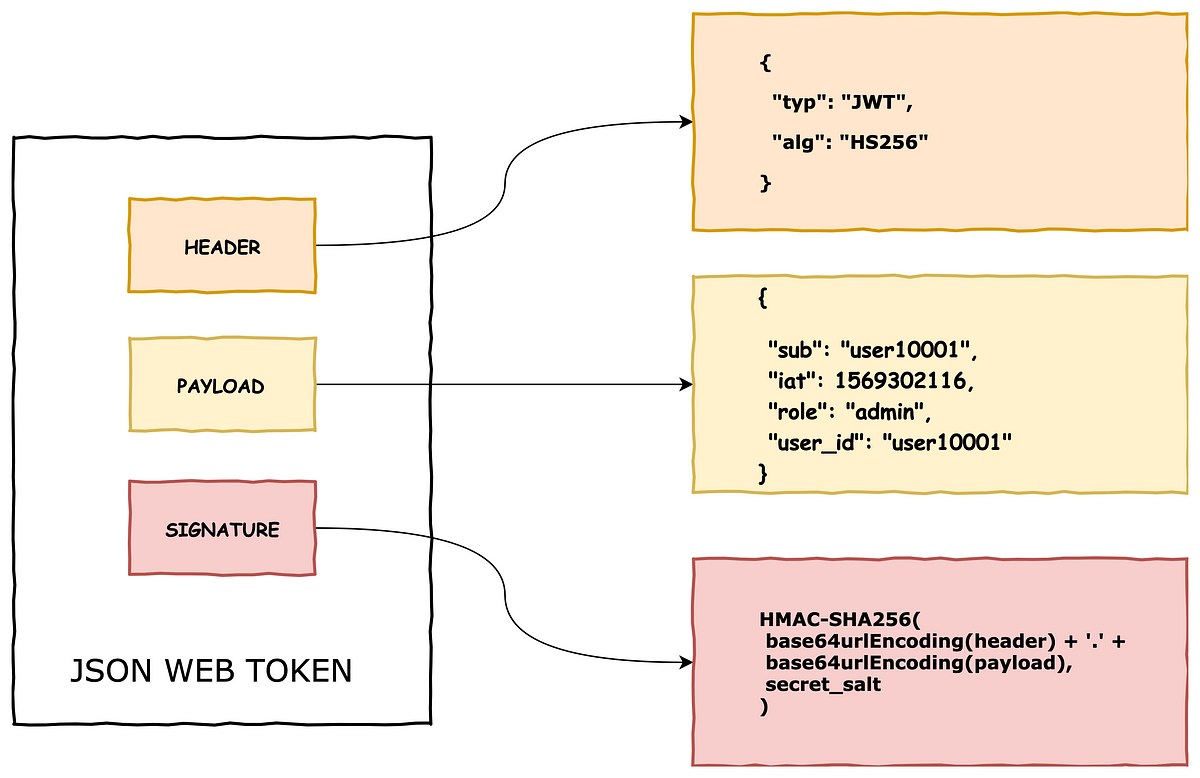
The middleware checks that the user's JWT signature is valid and not expired.
speaker_0NARRATOR
Then the controller runs.
speaker_0NARRATOR
QA tests the happy path in staging, the download works, and the ticket gets closed.
speaker_0NARRATOR
This is broken object level authorization, BOLA, and it is still the number one cause of API data leaks.
speaker_0NARRATOR
How to fix it, product plus eng, in the code, never trust resource IDs from the URL alone.
speaker_0NARRATOR
Pull the ERD directly from the verified JWT claims and force it into the data access layer.
speaker_0NARRATOR
In the PRD, stop allowing sequential integer IDs in external URLs.

Flo MotlikHOST
Interconnect Multicloud is generally available with Microsoft Azure for private cross-cloud connections.
Flo MotlikHOST
REST APIs in API Gateway gain a native JWT authorizer that validates tokens directly in the gateway.
Flo MotlikHOST
Mutual TLS authentication arrives on Network Load Balancer, which now verifies client certificates.
Flo MotlikHOST
Security and identity follow, and Cognito gets the first word there.

EvanHOST
We just need to make sure that the fact that a user is a premium user is encoded in the request.
EvanHOST
This is typically via the JWT token, which is gonna be in the headers.
EvanHOST
And so anything the clients send over should say, in this case via the JWT, that they're a premium user.
EvanHOST
So we have that context.
EvanHOST
We do our rate limiting.
EvanHOST
That wouldn't be good.
EvanHOST
So instead, we're going to use proper API security here and we're going to use either JWT or a session token in the header.
EvanHOST
And this is what we're going to use then server side to validate who the user is making this request.
EvanHOST
Okay, now the next one that we have here is that users can swipe left, no, or right, yes.
EvanHOST
The last thing that I'll say, which I've said in the first two videos as well is, I'm careful to not put user explicitly here in the body.
EvanHOST
Of course, we'll want a user ID on upload, but I usually just mention verbally to an interviewer that the user ID is going to be present in the request via the header, either by a session token or a JWT.
EvanHOST
So that's where we're going to get the user information.
EvanHOST
Um, it's minor.
EvanHOST
User ID, I think you know this and you even alluded to it, but be careful here.
EvanHOST
By passing user ID into the request, it's easy for me to think that this is a security vulnerability if you're not explicit that this is by way of the session token or JWT or something otherwise in your headers.
EvanHOST
So timestamps, user IDs, things like this, be careful and make it explicit that they're not part of the request body or the request query parameters.
EvanHOST
When it comes to your fetch history, if we had more time, this is a place I would have dug deeper.

speaker_0UNKNOWN
Off the critical path.
speaker_0UNKNOWN
sequence gaps invalid signature rate spikes source silence deterministic thresholds not machine learning a local ai audit assistant retrieval augmented restricted to answering questions over retrieved facts never in the verification path runs locally no data leaves the operator environment exactly the right scope for a cip regulated environment and standard security controls, JWT roles, rate limiting, optional mutual TLS on ingest, an append-only audit trail of all API operations.
Oliver BodemerHOST
The US regulatory context is specific, and it's moving fast.
Oliver BodemerHOST
N-E-R-C-C-I-P.

Scott CovertHOST
Like, where do your refresh tokens live? Who and what can access them? If you have not yet gone through some of the security mandates that were required by Salesforce back in May, definitely do that ASAP.
Scott CovertHOST
Is there anything long-lived that doesn't need to be I'd even recommend looking into some, to see if it makes sense for you to move to a different OAuth flow, such as the JWT bearer OAuth flow that does not utilize refresh tokens, because that can simplify a lot of this and reduce a lot of risk for us as partners.
Scott CovertHOST
Next, another piece of homework, you could come up with a playbook of what you would run through if you were the target of a supply chain attack and Salesforce did disable your integration.
Scott CovertHOST
You could come up with the exact steps of who you contacted Salesforce, who you contact in your customer base.

Mackenzie JacksonHOST
Well, think about how often modern web apps decode Base64.
Mackenzie JacksonHOST
Every time a server checks an authorization header, a JWT login token, or an API payload, it is decoding Base64 data from its users.
Mackenzie JacksonHOST
Now, to make that process faster on modern Intel and AMD chips, OpenJDK uses a hardware accelerator shortcut.
Mackenzie JacksonHOST
Feed it a malformed string or an invalid length and enter in an equal sign and the math breaks before Java even validates the input.

Manoj KagithaGUEST
Because so, I mean, that's the core trade-off.
Manoj KagithaGUEST
Like a self-contained JWT is validated locally with the signature token.
Manoj KagithaGUEST
Like they show an audience at expiry.
Manoj KagithaGUEST
Right.
Manoj KagithaGUEST
Right.
Manoj KagithaGUEST
Yeah.
Manoj KagithaGUEST
but uh so uh what um so i mean uh so it's a real trade-off like jwds give you speed and scale uh but location lag uh but what i like in practice is the middle path keep tokens short-lived uh minutes rather than hours and validate them locally at the gateway in apigeex that means uh A verified JWT policy will check signature, issuer organs, and all of those when the JWK is cached so that the key rotation doesn't cost a fetch per call.
Manoj KagithaGUEST
Then the things that really can't wait, like a compromised credential or let's say an off-boarded customer, they add a small deny list in the fast cache like Redis.
22 more episodes mention JSON Web Token.
Create an account to see the whole feed, search across every transcript, and follow the entities you care about.