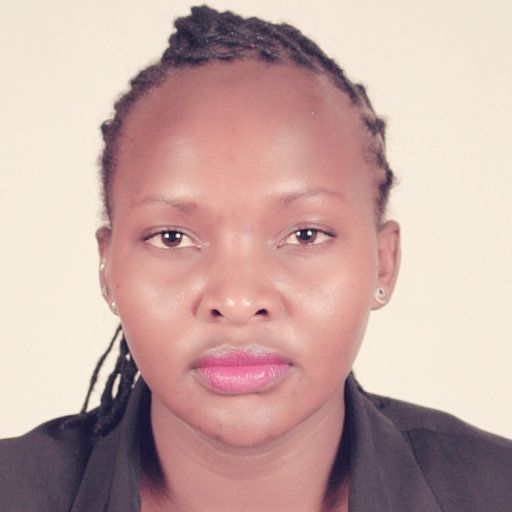
Joyce Kimutai
Climatologist
4
APPEARANCES
4
PODCASTS
Aug 27, 2026


Joyce KimutaiGUEST
so you look at those impacts and you say, "Where were these impacts reported?" Right? So 'cause you're trying to triangulate, understand where these extreme re- event happened.
Joyce KimutaiGUEST
And in observation, you want to know what is the climatology? What is the normal rainfall in that city? So Abidjan, for example, or Lagos, for example, what is the normal rainfall that happens there? And then you want to understand, okay, if the normal rainfall, where we call climatological rainfall, is 50 millimeters, for example, I'm giving an example, but then during this event, what was different? So you know that this was a rare event.
Joyce KimutaiGUEST
You know, like, it's, it's beyond the normal, right? And then the next step you want to do is that you now want to use climate models sort of to simulate that event, right? So you want...
Joyce KimutaiGUEST
'Cause as essentially what we want to do is that we want to compare the weather of now or the event that happened now in this weather of 2026 versus the weather that would have happened in 1850s, right? 'Cause this is what we call the preindustrial climate or the counterfactual climate, which we consider as the climate before the onset of Industrial Revolution, and that is where we base our analysis on.

ChaxyHOST
Yeah.

Joyce KimutaiGUEST
And the response to that question is science is never 100%, and it's not just the weather science or the climate science.
Joyce KimutaiGUEST
And I said even in medicine, in any oth- in, in all science, we just use probabilis- probabilities.
Joyce KimutaiGUEST
So, um, science cannot be 100%, and as I said, you're looking at different parameters and trying to put it together.
Joyce KimutaiGUEST
The- there are things that are very, there are uncertainties that are very inherent to any field of science.
Joyce KimutaiGUEST
And let me just come back to my field of science, which is weather prediction or climate, um, climate science.
23 MINS LATER
ChaxyHOST
But we used to have, watching news, weather used to be the last item on the news.

Iain StrachanHOST
But I think, Joyce, if you'd like to, as our guest, you're very welcome to volunteer your views and opinions first, and then we'll get into it.
Joyce KimutaiGUEST
[laughs]So I have been part of this process, uh, myself as well, and I think I introduced myself by saying that, uh, on top of being a scientist at, at Imperial College London, I do this also, this other sort of technical advice to, um, policy processes in, back in my country.
Joyce KimutaiGUEST
And I happen to be... to work with people in this sort of the space of the COP or the loss and damage.
Joyce KimutaiGUEST
And also, I have been speaking with lawyers, or some lawyers have wanted to speak with me, and I didn't say no.
Joyce KimutaiGUEST
I said, "Okay, we can chat," about how they can use attribution science to support some of the cases that they're trying to build or to pursue.
14 MINS LATER
Iain StrachanHOST
What was your motivation for moving into the world of, of weather and climate science? Was it something that you were always interested in, or did it happen by accident? This is a question I usually ask people, and I'm always interested in the, in the story.

Joyce KimutaiGUEST
So, and, um, what we do at WWA, of course, has really contributed to that because when you, when we do extreme events in, in Africa, we have this, uh, press briefing with journalists.
Joyce KimutaiGUEST
And you'll find that s- journalists from, from, from the region would reach out to me later to say, "Hey, Joyce, can you break down some of the, the stuff that, uh, uh, were discussed in the, in the, in the press briefing? Or from, from those studies, what does that mean for the continent?" Even when you don't do a study, they just ask me all general stuff about climate change, about weather, how could, uh, you know, like, general stuff.
Joyce KimutaiGUEST
And of course I'm involved in not just the, um, the, uh, science of attribution, but I engage with stakeholders a lot as well.
Joyce KimutaiGUEST
So there's a lot of policy science work that I do, uh, in the continent and in Kenya, so I get a lot of, uh, questions, and so that has really improved, um, sort of, um, mainstreaming of climate information.
11 MINS LATER
speaker_4UNKNOWN
Mm-hmm.