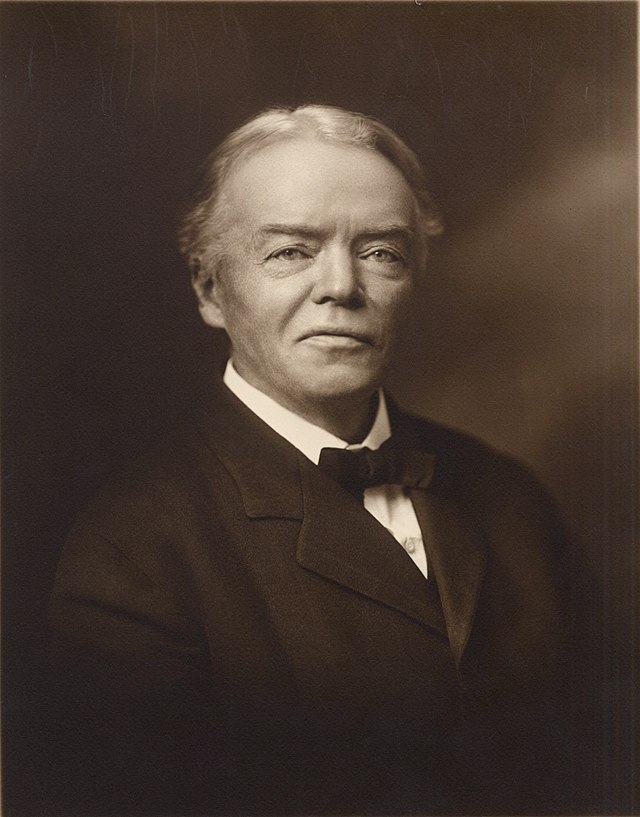
Josiah Royce
American philosopherWikipedia
13
MENTIONS
6
EPISODES
6
PODCASTS
Search complete. 13 mentions across 6 episodes found for "Josiah Royce".
Sep 22, 2026

Michael CeragioliGUEST
And even, even Lonergan, you know, established philosophy or theology, I should say to some degree on the basis of conversion, but our argument is, Here, is it well given the recent experience of this discipline, given this kind of descriptive potentiality that we're talking about, isn't this actually the better fit? So James provides that focal point of conversion.
Michael CeragioliGUEST
But now the other two figures, these are the early American pragmatists, are Josiah Royce and Charles Sanders Peirce.
Michael CeragioliGUEST
And they're in direct conversation with William James.
Michael CeragioliGUEST
In fact, Royce's book, The Sources of Religious Insight, he wrote the book, delivered these lectures as a rejoinder the varieties of religious experience and okay there's a lot of good in there but what william james is doing is basically interpreting religious experience as the experience of an individual, right? In their solitude, he even uses that kind of language, an individual in a space of solitude, that's the epitome.

Michelle FryNARRATOR
what will you say moniteur industriel what will you say disciples of good m f chamans who has circulated with so much precision how much trade would gain by the burning of paris from the number of houses it would be necessary to rebuild i am sorry to disturb these ingenious calculations as far as their spirit has been introduced into our legislation but i beg him to begin them again by taking into account that which is not seen and placing it alongside of that which is seen the reader must take care to remember that there are not two persons only but three concerned in the little scene which i have submitted to his attention one of them james b represents the consumer reduced by an act of destruction to one enjoyment instead of two another under the title of the glazier shows us the producer whose trade is encouraged by the accident the third is the shoemaker or some other tradesman whose labor suffers proportionably by the same cause it is this third person who is always kept in the shade and who personating that which is not seen is a necessary element of the problem it is he who shows us how absurd it is to think we see a profit in an act of destruction it is he who will soon teach us that it is not less absurd to see a profit in a restriction which is after all nothing else than a partial destruction therefore if you will only go to the root of all the arguments which are adduced in its favor all you will find will be the paraphrase of this vulgar saying what would become of the glaziers if nobody ever broke windows End of The Broken Window by Frederick Bastiat Recording by Michelle Fry, Baton Rouge, Louisiana, in September 2018
speaker_8NARRATOR
The Contrite Consciousness from Phenomenology of the Spirit by Georg Wilhelm Hegel Published in 1807 Translated by Josiah Royce This is a LibriVox recording.
speaker_8NARRATOR
All LibriVox recordings are in the public domain.
speaker_8NARRATOR
For more information or to volunteer, please visit LibriVox.org The Contrite Consciousness In skepticism, consciousness learns in truth that it is divided against itself.
47 MINS LATER
speaker_8NARRATOR
But for consciousness, both activity and its own actual deeds remain miserable.
speaker_8NARRATOR
Its satisfaction is its sorrow, and the freedom from this sorrow in a positive joy it looks for in another world.
speaker_8NARRATOR
But this other world, where its activity and its being are to become, even while they remain its own real activity and being, what is this world but the image of reason, of the assurance of consciousness that in its individuality it is and possesses all reality? End of The Contract Consciousness from phenomenology of the spirit by george wilhelm hegel published in eighteen hundred and seven freely translated from the german by josiah royce
Dale GrothmanNARRATOR
dislikes by oliver wendell holmes this is a libervox recording all libervox recordings are in the public domain For more information, or to volunteer, please visit LibriVox.org. Recording by Dale Grothman Dislikes by Oliver Wendell Holmes I want it to be understood that I consider that a certain number of persons are at liberty to dislike me preemptorily, without showing cause, and that they give no offense whatever in doing so.

speaker_0NARRATOR
You are pursuing a course that will certainly drive you to despair if persisted in.
speaker_0NARRATOR
These are all excerpts from Josiah Royce's 1886 book, A History of California from Conquest in 1846 to the Second Vigilance Committee in San Francisco, A Study of American Character, which terminates in 1856.
speaker_0NARRATOR
I've edited only to remove dates, mentions of historical sources, and a few sentences about gold mines.

Michelle FryeNARRATOR
Therefore, if you will only go to the root of all the arguments which are adduced in its favor, all you will find will be the paraphrase of this vulgar saying, what would become of the glaziers if nobody ever broke windows? End of The Broken Window by Frederick Bastiat Recording by Michelle Fry, Baton Rouge, Louisiana, in September 2018
speaker_9NARRATOR
The Contrite Consciousness from Phenomenology of the Spirit by Georg Wilhelm Hegel Published in 1807 Translated by Josiah Royce This is a LibriVox recording.
speaker_9NARRATOR
All LibriVox recordings are in the public domain.
speaker_9NARRATOR
For more information or to volunteer, please visit LibriVox.org The Contrite Consciousness In skepticism, consciousness learns in truth that it is divided against itself.
44 MINS LATER
speaker_9NARRATOR
But for consciousness, both activity and its own actual deeds remain miserable.
speaker_9NARRATOR
Its satisfaction is its sorrow, and the freedom from this sorrow in a positive joy it looks for in another world.
speaker_9NARRATOR
But this other world, where its activity and its being are to become, even while they remain its own real activity and being, what is this world but the image of reason, of the assurance of consciousness that in its individuality it is and possesses all reality? from phenomenology of the spirit by george wilhelm hegel published in eighteen hundred and seven freely translated from the german by josiah royce
Dale GrothmanNARRATOR
dislikes by oliver wendell holmes this is a libervox recording all libervox recordings are in the public domain For more information, or to volunteer, please visit LibriVox.org. Recording by Dale Grothman Dislikes by Oliver Wendell Holmes I want it to be understood that I consider that a certain number of persons are at liberty to dislike me preemptorily, without showing cause, and that they give no offense whatever in doing so.

Dale GrothmanNARRATOR
Kant may be fairly called mixed.
Dale GrothmanNARRATOR
Lotze and Royce were mixed.
Dale GrothmanNARRATOR
The author of this volume is weakly endowed on the rationalist side, and his book will show a strong leaning towards empiricism.
Dale GrothmanNARRATOR
The clash of the two ways of looking at things will be emphasized throughout the volume.
50 MINS LATER
Dale GrothmanNARRATOR
Loyal in our measure to particular ideals, we soon set up abstract loyalty as something of a superior order, to be infinitely loyal to.
Dale GrothmanNARRATOR
And truth at large becomes a momentous issue, compared with which truths in detail are poor scraps, mere crumbling successes.
Dale GrothmanNARRATOR
Footnote, J. Royce, The Philosophy of Loyalty, 1908, particularly Lecture 7, Section 5.
Dale GrothmanNARRATOR
Emerson writes, Each man sees over his own experience a certain stain of error, whilst that of other men looks fair and ideal.

Jen GergenHOST
And so this is from the King center.
Jen GergenHOST
The beloved community is a term that was first coined in the early days of the 20th century by the philosopher-theologian Josiah Royce, who founded the Fellowship of Reconciliation.
Jen GergenHOST
However, it was Dr. Martin Luther King, Jr., also a member of the Fellowship of Reconciliation, who popularized the term and invested it with a deeper meaning, which has captured the imagination of people of goodwill all over the world.
Jen GergenHOST
For Dr.