Joshua tree
PlantWikipedia
50
MENTIONS
11
EPISODES
8
PODCASTS
Search complete. 50 mentions across 11 episodes found for "Joshua tree".
Oct 9, 2026

speaker_0HOST
So I picked it up, started flipping through the pages, looking for any kind of inspiration for something that I could cut out.
speaker_0HOST
And as I was going through the pages, I stopped at this one point where the title said, stop here and take a look at the Joshua Tree.
speaker_0HOST
And beside it was a black and white image of a desert full of Joshua trees.
speaker_0HOST
all surrounded by this foggy setting, and I just thought it was so beautiful.
speaker_0HOST
So I did just that.
Steve StocktonNARRATOR
The park spans more than 790,000 acres, and over half is reserved as wilderness.
Steve StocktonNARRATOR
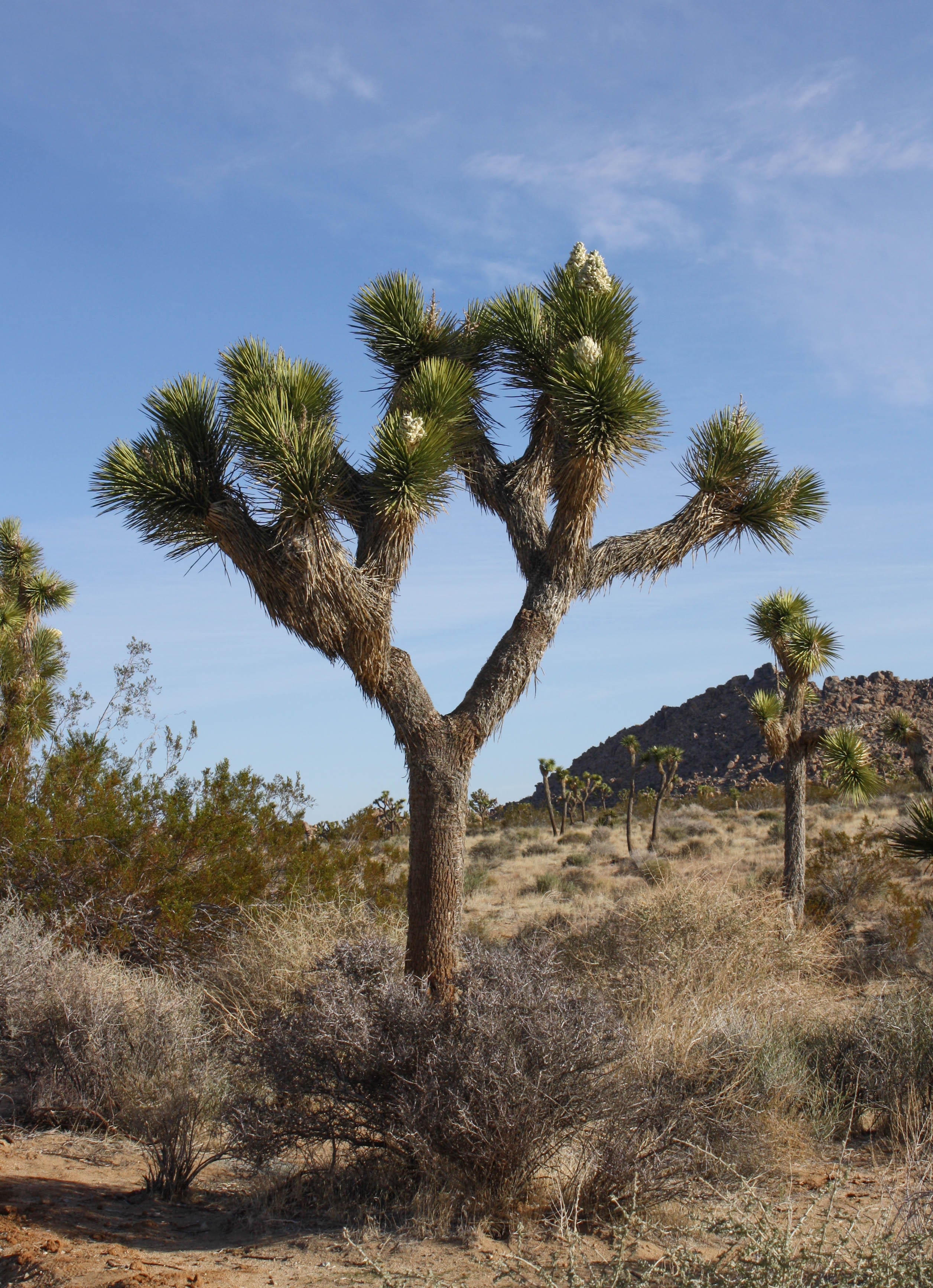
The park is well known for the tree that inspired its name, the Joshua tree.
Steve StocktonNARRATOR
Scientifically, it's known as the Yucca brevifolia and is a member of the agave family.
Steve StocktonNARRATOR
Joshua trees grow in a wide variety of formations from thin and sparsely placed to thick and crowded forests.
Steve StocktonNARRATOR
According to the National Park Service, by the mid-19th century Mormon immigrants had made their way across the Colorado River and into the area that is now the national park.

Steve StocktonHOST
The park is well known for the tree that inspired its name, the Joshua Tree.
Steve StocktonHOST
Scientifically, it's known as the yucca brevifolia and is a member of the agave family.
Steve StocktonHOST
Joshua trees grow in a wide variety of formations, from thin and sparsely placed to thick and crowded forests.
Steve StocktonHOST
According to the National Park Service, by the mid-19th century, Mormon immigrants had made their way across the Colorado River and into the area that is now the National Park.
Steve StocktonHOST
Legend has it that these pioneers named the tree after the biblical figure Joshua, seeing the limbs of the tree as outstretched as supplication, guiding the travelers westward.

Malcolm NanceHOST
I'm doing nothing but running and going to work." That's it.
Malcolm NanceHOST
So, and, well, I, I also rocked out a lot of Joshua Trees.
Wajeeh LionHOST
Yeah, and then black men running, you can get in trouble.
Malcolm NanceHOST
Yeah.

speaker_5SOUNDBITE_SPEAKER
I can still see your blue sky, blue eyes hanging on the mango kiss.
speaker_5SOUNDBITE_SPEAKER
I hear the waves and the breeze in the Joshua trees.
speaker_5SOUNDBITE_SPEAKER
It's just about as good as it gets.
speaker_5SOUNDBITE_SPEAKER
Taste the salt on the wind, feel the sand on your skin.
Steve StocktonHOST
The legend of the crying ghost serves as a poignant reminder of the power of love and loss, etching its spectral presence into the very fabric of this majestic landscape.
Steve StocktonHOST
the beauty of nature and the echoes of the past merge in a haunting harmony next the lost miners of joshua tree national park california nestled within the rugged expanse of joshua tree national park in california lies a tale as haunting as the barren landscape itself the legend of the lost miners This ghostly narrative, whispered through wind sculpted rocks and twisted Joshua trees, recounts a tragic chapter in the region's history, where a group of brave miners met an untimely demise, leaving behind a spectral legacy that continues to captivate the imaginations of those who venture into this otherworldly desert terrain.
Steve StocktonHOST
The story dates back to the late 19th century, during the height of the California Gold Rush.
Steve StocktonHOST
Eager to strike it rich, a group of prospectors ventured into the unforgiving wilderness of what is now Joshua Tree National Park.

KellyHOST
We have to do our homework, and then we get to go play outside.
KellyHOST
so um but we went on a walk this morning which was also really lovely but okay I'm gonna do my last two just like together um so Joshua Tree I've been there twice and both times was like very similar in that um we like went there to camp in the campground because like the campground is really cool and like the stargazing out there is really beautiful um Um, there's just nothing to do if you're not a climber, if you're not like super, I mean, you can like go look at the cactus, you can go look at the Joshua trees.
KellyHOST
There's like two hikes, three hikes, maybe at the very most that are like one or two mile, three miles at the most.
KellyHOST
Um, but yeah, just not my kind of park.

Jeff HarmetzHOST
And this week, an event is taking place at the Joshua Tree Retreat Center that will bring together scientists, artists, historians, filmmakers, and conservationists.
Jeff HarmetzHOST
Reporter Hilary Sloan joins us with more information.
Hillary SloanCORRESPONDENT
Joshua Tree's past, present, and future grew out of an earlier art and science project called Desert Forest, Life with Joshua Trees.
Hillary SloanCORRESPONDENT
Artist and educator Son Kalsa was the founder of that project.
Hillary SloanCORRESPONDENT
She says this new gathering looks beyond the politics surrounding Joshua Tree conservation.

Chris ClarkeHOST
I'm your host, Chris Clark.
Chris ClarkeHOST
And we have a bit of a milestone with this episode.
Chris ClarkeHOST
This is the 150th episode that we've produced.
Chris ClarkeHOST
150 episodes kind of snuck up on us.
Chris ClarkeHOST
We did celebrate our 100th episode last year with a public reading and discussion, which for purposes of publication, we broke up into six smaller episodes because it was a lengthy public event on Zoom that we had.
Chris ClarkeHOST
And we didn't set up anything like that this time around, but I thought it was a good occasion to revisit why we're doing this podcast in the first place.
Chris ClarkeHOST
And we're not going to talk much about the podcast itself and whether or not we lived up to what we want to do Except that at the very end of the episode where we stick our Easter eggs these days, when we find Easter eggs that are appropriate, maybe it's not an Easter egg if I tell you where to find it.
Chris ClarkeHOST
But anyway, we'll do a short report after the closing theme song on what the podcast has done so far in those 150 episodes, counting this one, maybe 5 or 10 minutes.

Scott HarrisHOST
I understand they can live 150 plus years and grow to 40 feet.
Scott HarrisHOST
Tell us about Joshua trees.
Jane RodgersGUEST
Yeah, Joshua trees are really cool plants.
Jane RodgersGUEST
They are really unique in so many ways, you know, starting with their name, the fact that they're called a tree.
Jane RodgersGUEST
Some people assume they're a cactus, which of course they are not.
Jane RodgersGUEST
So they do look like a tree.
Jane RodgersGUEST
We call them trees and they have branches.
Jane RodgersGUEST
What's cool at Joshua Tree is our trees are specifically Western Joshua trees.
1 more episode mentions Joshua tree.
Create an account to see the whole feed, search across every transcript, and follow the entities you care about.